10 Rustic Bottle Garden Edges for a Cottage Style Garden
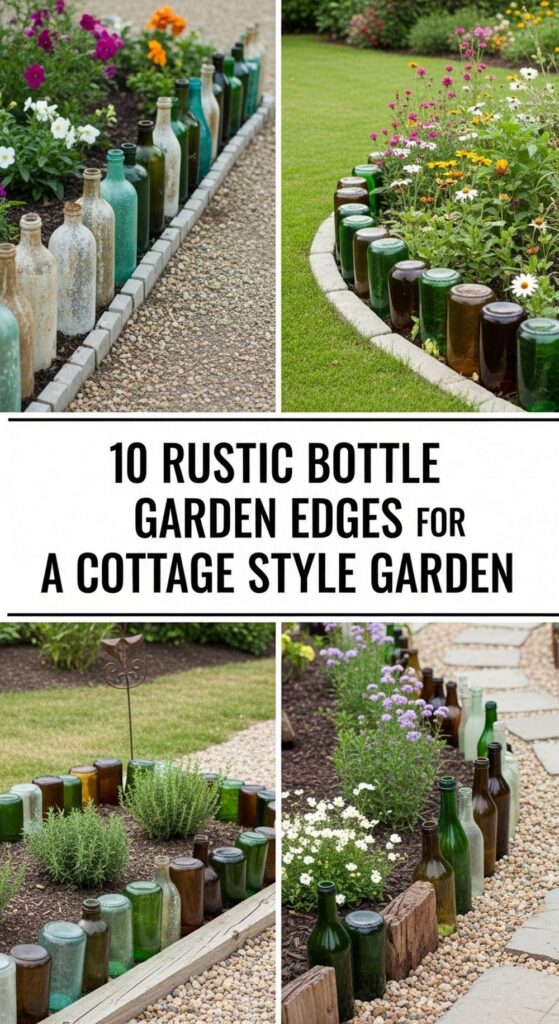
A cottage garden feels most inviting when the details look collected, personal, and a little bit timeworn. That is exactly why bottle edging can work so beautifully. It adds color, texture, and a handmade touch while helping flower beds, herb patches, and pathways feel more defined.
This post is for home gardeners, cottage-style lovers, and anyone who wants a budget-friendly way to make their outdoor space feel more charming. These ideas are simple to try, easy to adapt, and especially useful if you like decorating with salvaged materials. The result is a garden that feels warmer, softer, and full of character without looking too polished.
Quick List
- Buried Glass Bottle Border Around Flower Beds
- Mixed Vintage Bottle Edge Along A Garden Path
- Blue Bottle Border For A Cottage Herb Patch
- Bottle Edge Around A Soft Rose Bed
- Half-Buried Bottle And Stone Garden Border
- Rainbow Bottle Edge In A Wildflower Corner
- Bottle Border With Lavender And Old Brick
- Short Bottle Edge For A Tiny Cottage Path
- Bottle Edge Framing A Birdbath Bed
- Weathered Bottle Edge Under Climbing Flowers
Buried Glass Bottle Border Around Flower Beds

A simple row of upside-down glass bottles can turn an ordinary flower bed into a lovely cottage feature. Press the bottles evenly into the soil so the necks disappear and the rounded bases create a repeating shape along the edge. Mixed green, amber, and clear glass looks especially natural beside daisies, lavender, or soft ground covers. The result feels rustic and practical at the same time, while giving the bed a neat outline without losing that relaxed cottage charm.
- Best For: Curved flower beds, informal front gardens, and spaces that need a gentle border.
- Budget Tip: Save bottles over time or ask friends and family to collect a few matching tones for you.
- Styling Idea: Mix muted bottle colors with soft pink, white, and purple flowers for a romantic cottage mood.
- Practical Note: Push each bottle to a similar depth so the border looks tidy and stays more stable.
Mixed Vintage Bottle Edge Along A Garden Path

If you want your garden path to feel more storybook and inviting, a mixed bottle edge is a beautiful option. Line one or both sides of a gravel or stepping-stone path with old bottles in slightly different shapes and tones. The variety gives it a collected-over-time look that suits cottage gardens perfectly. Tuck in a few low plants beside the glass so the border feels softened by greenery rather than stiff or overly arranged.
- Best For: Narrow pathways, side gardens, and paths leading to a shed or seating area.
- Budget Tip: Thrifted or recycled bottles work well even when they are not perfectly matched.
- Styling Idea: Pair the glass with weathered wood, gravel, and overflowing cottage blooms for extra warmth.
- Care & Maintenance: Brush away soil and fallen leaves now and then to keep the bottle colors visible.
Blue Bottle Border For A Cottage Herb Patch

Blue glass bottles can give a herb patch a cooler, richer contrast against all that green. Use them to edge a bed filled with rosemary, thyme, sage, or mint, and the whole area starts to feel more decorative without losing its usefulness. The deep glass tones look especially striking in bright daylight and can make a small herb bed feel more intentional. This is a nice way to blend edible planting with cottage style in a simple, low-cost way.
- Best For: Herb gardens, kitchen garden corners, and small backyard beds.
- Budget Tip: Start with just the front edge of the herb patch instead of bordering the whole bed.
- Styling Idea: Blue glass looks beautiful with silver-green herbs, terracotta pots, and aged stone.
- Practical Note: Leave enough room between edging and herbs so plants do not flop directly over the bottles.
Bottle Edge Around A Soft Rose Bed

Roses already bring that classic cottage feeling, and a glass bottle edge makes the bed feel even more special. Use earthy-toned bottles around the base of a rose border to create a subtle frame that catches the light. It helps define the planting area while still looking relaxed and handmade. Add mulch inside the border and a few low companion plants, and the whole rose bed will feel layered, finished, and full of gentle old-fashioned charm.
- Best For: Rose borders, focal flower beds, and traditional cottage gardens.
- Budget Tip: Use bottles only along the front-facing side if you want the effect without needing too many.
- Styling Idea: Choose amber and green bottles with blush, cream, or deep pink roses for a soft romantic look.
- Care & Maintenance: Keep fallen petals and damp mulch from building too high around the glass.
Half-Buried Bottle And Stone Garden Border

For a more textured look, combine glass bottles with rough natural stones. Alternate the materials or group them in sections to create a handmade edge that feels older and more settled into the garden. The stones add weight and earthiness, while the glass brings a little sparkle. This mix works well in cottage gardens because it feels practical, imperfect, and layered. It is also useful when you do not have enough bottles to complete a full border on their own.
- Best For: Informal beds, sloped edges, and gardens with rustic hardscaping already in place.
- Budget Tip: Use found stones from around the yard to stretch the number of bottles you need.
- Styling Idea: This border suits a softer palette of white flowers, ferns, and mossy textures.
- Practical Note: Place heavier stones where the soil shifts most to help anchor the edge.
Rainbow Bottle Edge In A Wildflower Corner

A mix of bottle colors can feel surprisingly natural in a cottage garden when it is balanced with loose, airy planting. Use green, blue, amber, and clear bottles around a wildflower patch to add interest and a little glow. The border does not need to look perfect; in fact, a slightly uneven arrangement suits the relaxed style better. With daisies, foxgloves, and grasses nearby, the color variation feels cheerful, artistic, and full of old-garden personality.
- Best For: Wildflower corners, pollinator beds, and playful cottage-style spaces.
- Budget Tip: This is a great option when your bottle collection includes lots of different colors and shapes.
- Styling Idea: Let the bright glass sit against soft meadow-style flowers so the overall look stays balanced.
- Extra Idea: Add a small rustic sign or weathered pot nearby to make the corner feel even more intentional.
Bottle Border With Lavender And Old Brick
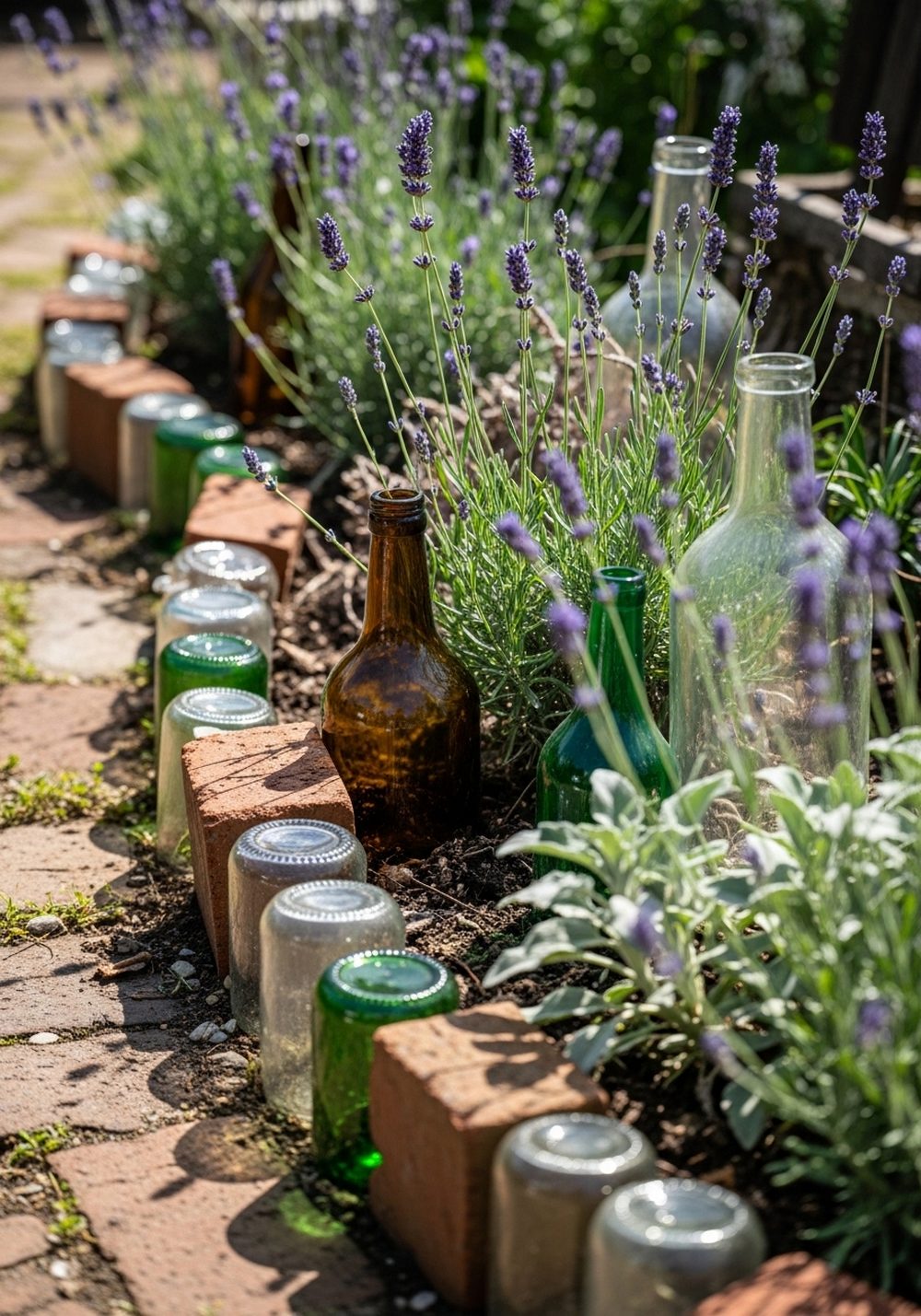
Lavender and bottle edging are a lovely pair because both bring color and structure in a gentle way. Add a row of glass bottles along the front of a lavender bed, then tuck old bricks behind or beside them for extra texture. The cool tones of the lavender contrast beautifully with aged brick and green glass, creating a border that feels both rustic and refined. It is especially pretty near a path where the scent and detail can be enjoyed up close.
- Best For: Sunny beds, cottage walkways, and dry garden areas.
- Budget Tip: Use leftover bricks or broken pieces from other projects instead of buying new edging materials.
- Styling Idea: This combination works well in rustic, French-country, or classic cottage gardens.
- Care & Maintenance: Trim lavender regularly so the plants keep their shape and do not hide the edging completely.
Short Bottle Edge For A Tiny Cottage Path

Even a very small garden can carry cottage charm, and a short bottle edge is perfect for that. Line a tiny path or compact bed with shorter bottles placed close together for a neat but handmade border. Because the scale is smaller, the edging feels sweet rather than busy. Pair it with miniature roses, low herbs, or trailing plants to keep the area soft and inviting. This is an easy way to add personality to a tight space without major work.
- Best For: Small gardens, narrow side yards, balconies with planters, or tiny front paths.
- Budget Tip: A short edge needs only a small number of bottles, making it one of the cheapest ideas here.
- Styling Idea: Choose muted green and amber glass for a softer, more vintage cottage feel.
- Practical Note: Keep the path clear enough for safe walking and avoid bottles sticking out too far.
Bottle Edge Framing A Birdbath Bed

A birdbath naturally draws the eye, so edging the bed around it with bottles helps make it feel like a proper focal point. Arrange the bottles in a gentle circle or oval and fill the space with cottage flowers, herbs, or low greenery. The glass catches sunlight while the birdbath adds height and structure, creating a layered look that feels thoughtful but still relaxed. This idea works especially well in a quiet corner where you want a little charm without needing a big feature.
- Best For: Center beds, bird-friendly gardens, and quiet sitting areas.
- Budget Tip: Use a small ring of bottles around an existing birdbath rather than redesigning the whole area.
- Styling Idea: Combine soft white flowers, silver-green foliage, and clear or pale green bottles for a calm mood.
- Extra Idea: Add a small bench nearby so the space becomes a peaceful garden pause point.
Weathered Bottle Edge Under Climbing Flowers

For a truly romantic cottage look, place weathered bottles along the base of a bed beneath a trellis or arch with climbing flowers. The vertical blooms above and the glass edging below create a lovely sense of layering. It feels soft, old-fashioned, and full of detail without requiring expensive materials. Choose bottles with slightly worn character and let nearby plants soften the line. This idea is especially pretty with rambling roses, clematis, or sweet peas overhead.
- Best For: Trellises, fences, archways, and cottage garden entrances.
- Budget Tip: Antique-looking bottles from secondhand shops can be mixed with plain recycled ones to save money.
- Styling Idea: Pair the edging with weathered wood and pastel climbing flowers for a dreamy cottage mood.
- Care & Maintenance: Check that stems and roots do not loosen the bottles as climbing plants fill out through the season.
Conclusion
Rustic bottle edging is a simple way to give a cottage garden more shape, character, and charm. Whether you use a few saved bottles around a small path or create a fuller border around flowers and herbs, these ideas can make the whole space feel warmer and more personal. Start with one small section, see what suits your garden, and build from there as your style grows.
FAQs
What is the cheapest way to make bottle garden edging?
The most affordable option is to use recycled bottles you already have or collect from friends and family. You can also start with a short section around one bed instead of edging the whole garden. Mixing bottle colors and shapes helps make the design look intentional even when the collection is not perfect.
Is bottle edging a good idea for renters?
Yes, it can be a useful non-permanent decorating idea if you place bottles shallowly or use them around temporary beds and large planters. You can also create short decorative borders in movable garden areas rather than digging deeply into the ground. That makes it easier to remove later.
Which bottle colors look best in a cottage style garden?
Green, amber, soft blue, and clear glass usually work best because they blend nicely with plants and natural materials. These colors feel softer and more timeless than very bright tones. Mixing a few muted shades often creates the most natural cottage look.
How do I keep bottle edging safe and practical?
Make sure each bottle is pressed firmly into the ground and placed where it will not become a tripping point. Avoid using cracked pieces, and keep the edging slightly back from main walking areas. It also helps to check the border after heavy rain or after digging nearby.
Can bottle edging work in very small gardens?
Yes, it works especially well in small gardens because even a short border adds charm and definition. Try edging a tiny herb bed, a compact flower border, or one side of a narrow path. In a small space, a little detail goes a long way.
What plants look best next to rustic bottle borders?
Soft cottage plants such as lavender, daisies, thyme, roses, foxgloves, and trailing ground covers all work beautifully. The key is choosing plants that soften the edge without hiding it completely. A mix of airy flowers and textured leaves usually gives the nicest balance.