10 Spring Garden Border Ideas for a Prettier Yard
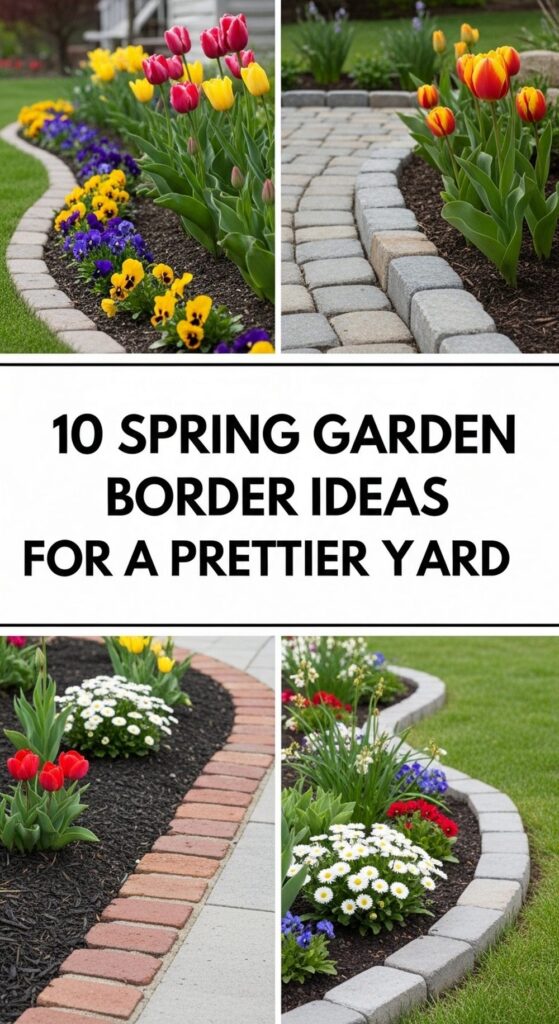
Spring is the perfect time to freshen up your yard, and a beautiful garden border can make the whole space look more polished and inviting. Whether you have a large front lawn, a narrow side yard, or a simple fence line that needs more charm, the right border can add color, texture, and structure without making the garden feel complicated.
This list is for home gardeners, beginners, and anyone who wants easy ways to make their outdoor space look prettier. You will find simple border ideas, practical styling tips, and budget-friendly touches that can help your yard feel brighter, softer, and more put together for the season.
Quick List
- Layered Tulip And Daffodil Border
- Curved Cottage-Style Flower Edge
- Boxwood And Bloom Mixed Border
- White And Green Classic Border
- Low-Maintenance Perennial Border
- Purple And Yellow Spring Border
- Brick-Edged Front Yard Border
- Shady Border With Ferns And Primroses
- Pastel Border Along A White Fence
- Stepping Stone Border With Spring Color
Layered Tulip And Daffodil Border
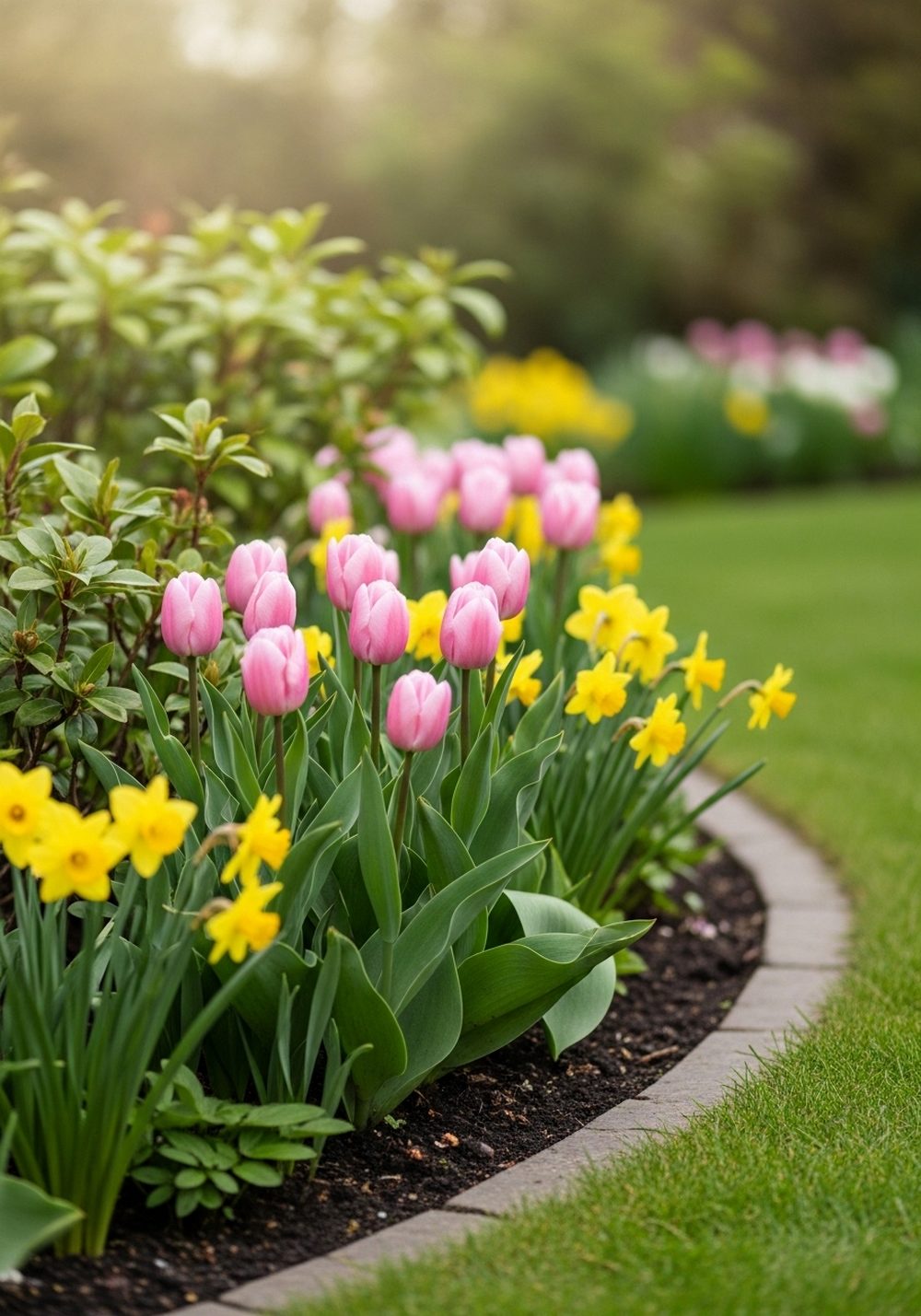
A layered tulip and daffodil border instantly gives a yard that cheerful early-spring look people notice right away. Plant taller tulips toward the back and place daffodils in front so both flower shapes are easy to see. The mix of upright stems and softer leaves creates good movement, while the yellow, pink, or white blooms brighten the edge of a lawn beautifully. A gently curved shape makes the planting look more natural and softens straight yard lines.
- Best For: Front yards, walkway edges, and sunny borders that need strong spring color.
- Budget Tip: Buy bulbs in one or two colors only for a fuller look without overspending.
- Styling Idea: Pair bright blooms with dark mulch for crisp contrast and a cleaner finish.
- Care & Maintenance: Let foliage die back naturally after blooming so the bulbs store energy for next year.
Curved Cottage-Style Flower Edge
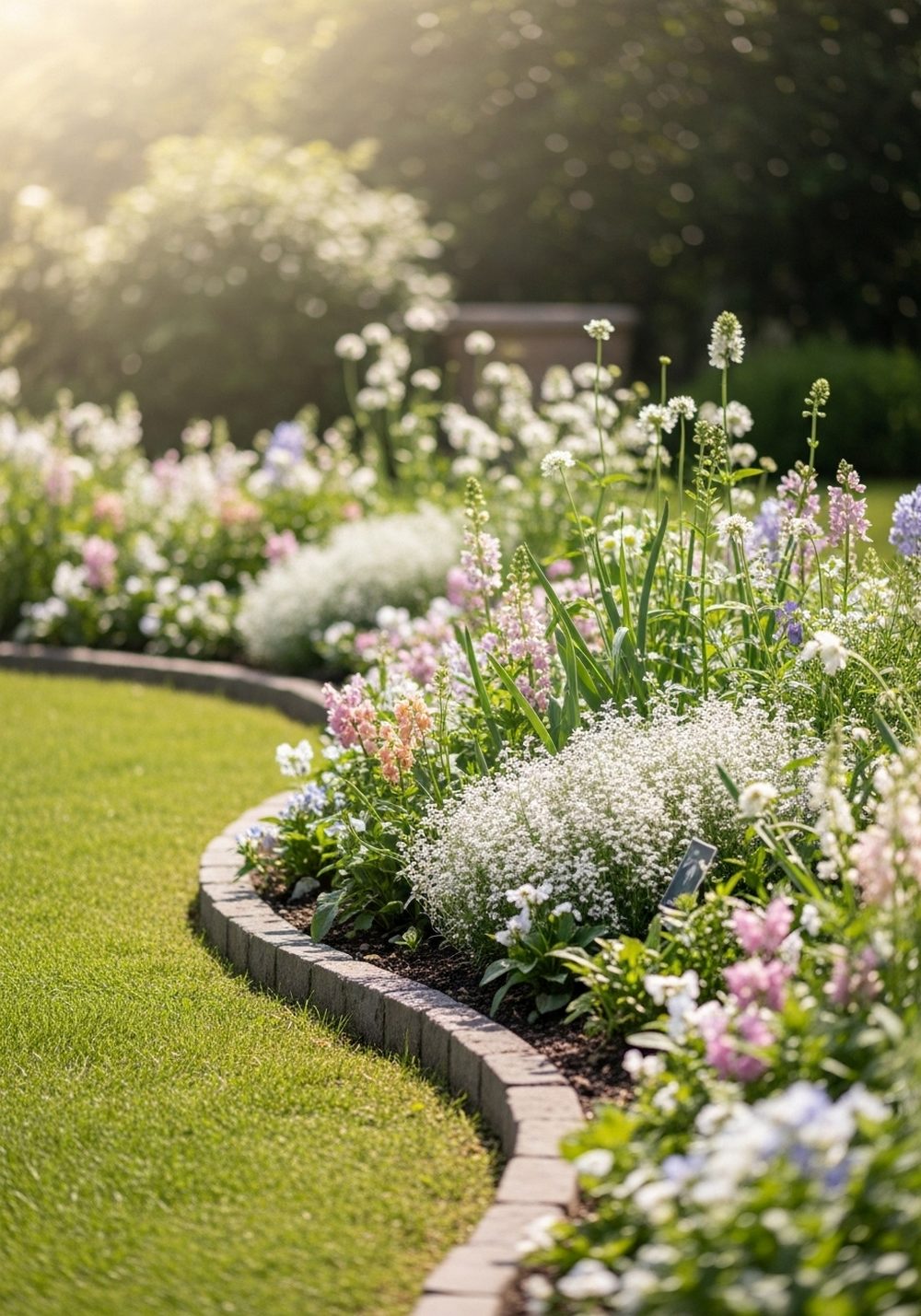
A curved cottage-style flower edge feels relaxed, romantic, and full of spring charm. Instead of planting in straight rows, blend a few flower types with slightly different heights and let the border follow a soft curve. This makes the yard feel more welcoming and less formal. Light pink, pale yellow, and white blooms work especially well here, especially when mixed with soft green foliage. The look is pretty without feeling too perfect, which gives it that easy cottage garden appeal.
- Best For: Informal gardens, older homes, and anyone who likes a soft, natural look.
- Budget Tip: Start with a small curved section and expand the border each season.
- Styling Idea: Use pastel flowers and weathered edging materials for a classic cottage mood.
- Practical Note: Keep taller plants toward the back so smaller blooms do not disappear.
- Extra Idea: Add one small decorative birdbath nearby to complete the scene.
Boxwood And Bloom Mixed Border
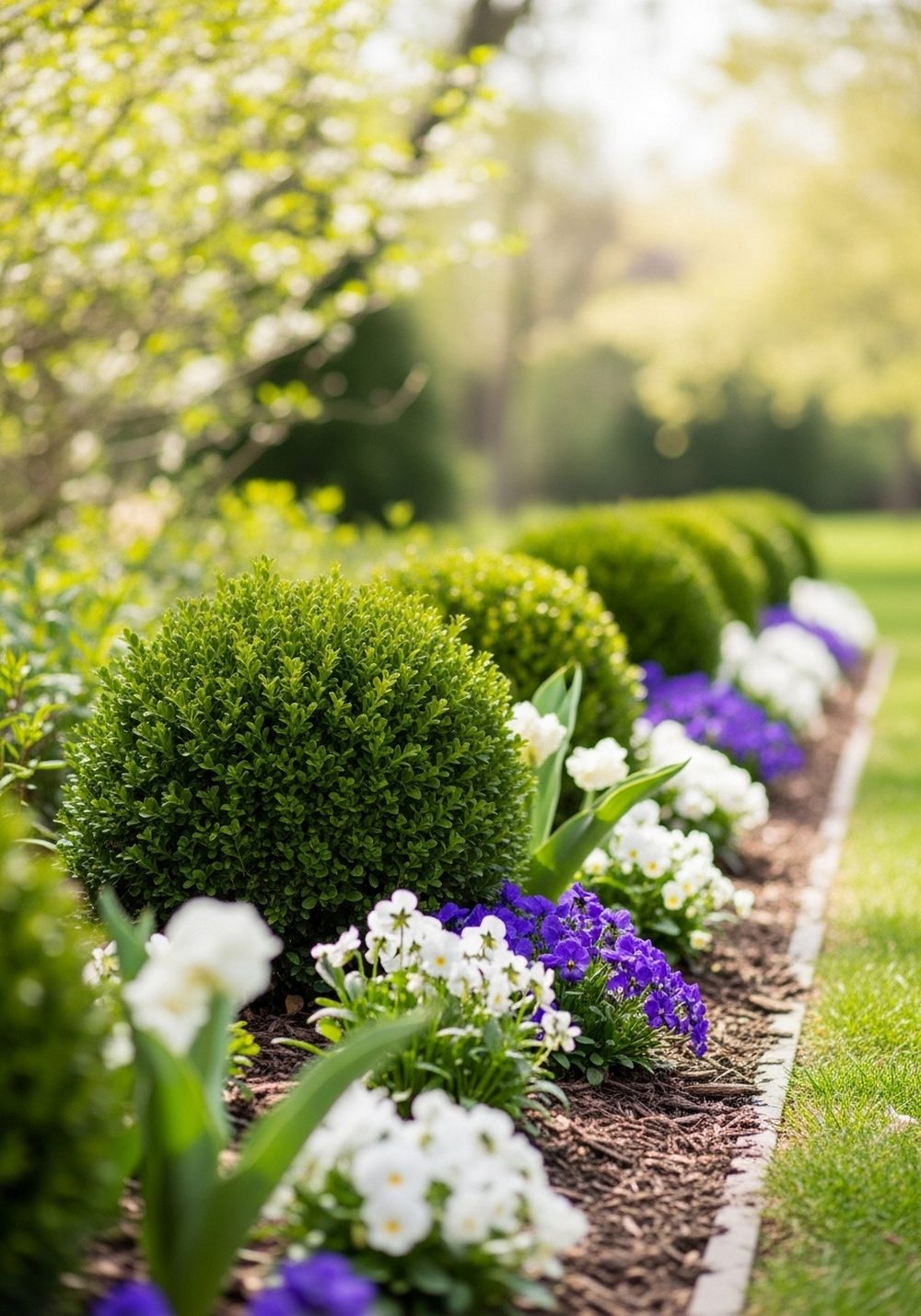
If you want a garden border that looks neat in every season, combine boxwood with spring flowers. The evergreen shape gives the border structure, while flowers soften the look and add seasonal color. Try small rounded shrubs spaced evenly, then tuck blooms like tulips, pansies, or hyacinths between them. The result feels tidy, balanced, and polished without being stiff. It is a great way to make the yard look more designed, even when the planting area is not very large.
- Best For: Formal front yards, entry gardens, and homeowners who like clean lines.
- Budget Tip: Use fewer shrubs and fill the gaps with affordable seasonal flowers at first.
- Styling Idea: This looks especially good with white, lavender, or blush flowers for a calm elegant finish.
- Practical Note: Leave enough room around each shrub so air can move through the planting.
- Care & Maintenance: Light shaping once or twice a year keeps the border looking crisp.
White And Green Classic Border
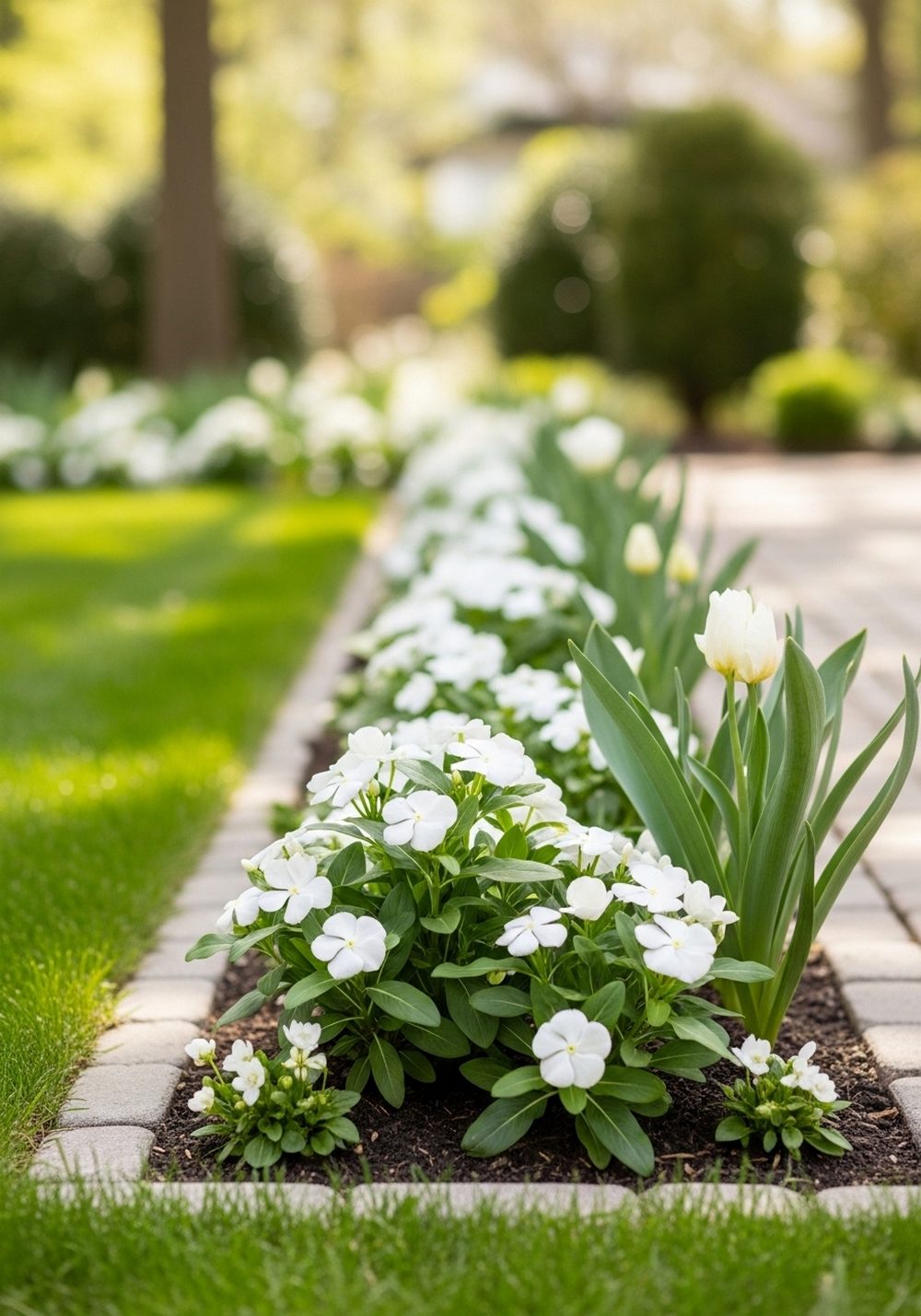
A white and green border has a fresh, peaceful look that never feels too busy. White spring flowers stand out beautifully against different green leaf shapes, which makes even a small border look bright and refined. This style works well near patios, front entries, and places where you want the yard to feel calm and pulled together. Choose a few repeating plants rather than too many varieties, and keep the edging simple so the planting itself becomes the main feature.
- Best For: Small yards, elegant front gardens, and spaces that need a lighter look.
- Budget Tip: Repeat the same white flowering plant in clusters for a bigger impact at lower cost.
- Styling Idea: Pair this border with black, gray, or natural stone accents for a timeless mood.
- Practical Note: A simple border line helps the clean color palette stand out more clearly.
- Care & Maintenance: Remove spent blooms regularly to keep the white flowers looking fresh.
Low-Maintenance Perennial Border
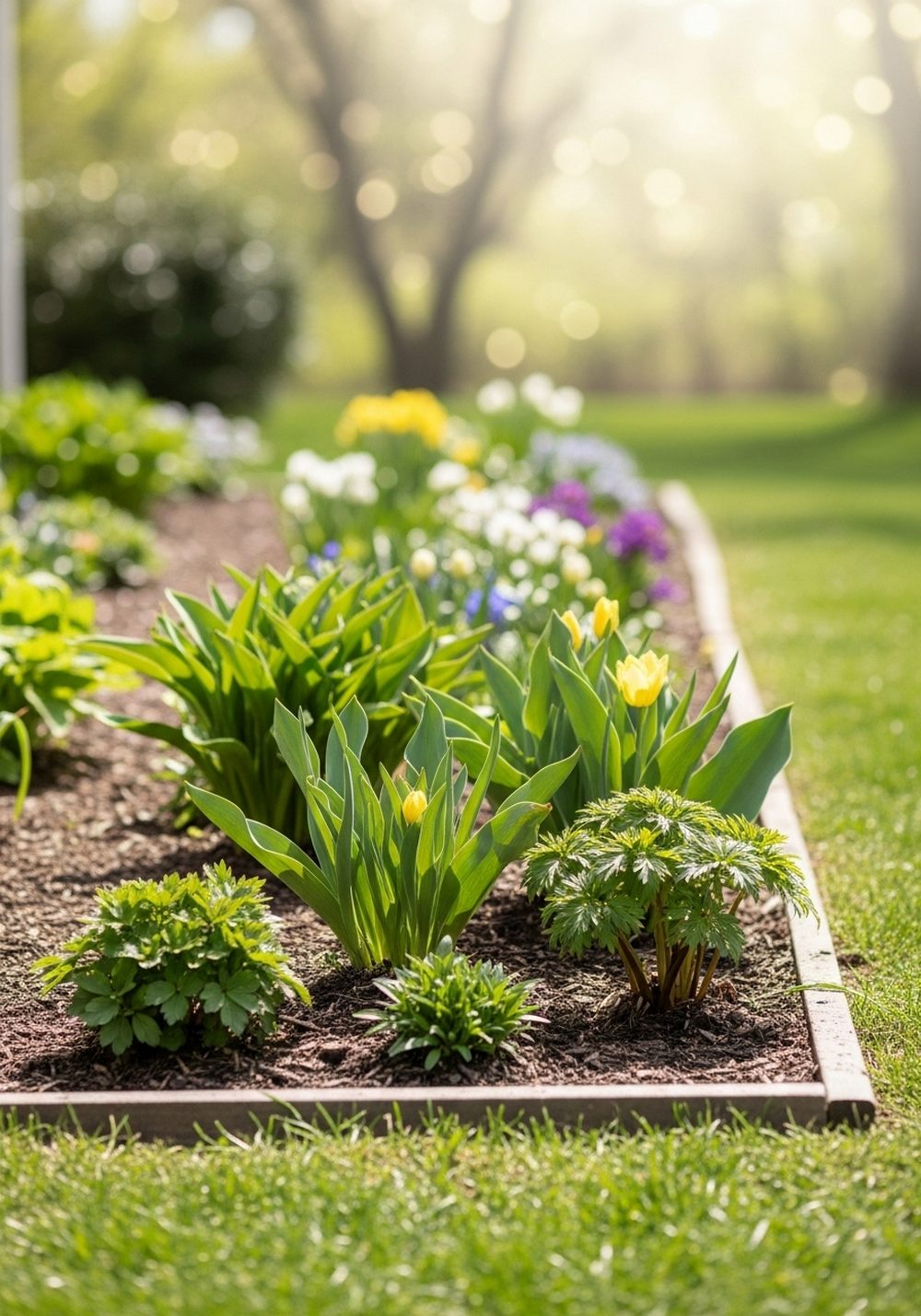
A low-maintenance perennial border is ideal if you want a pretty yard without replanting everything each spring. Use dependable plants that return year after year, then arrange them in layers so the border still looks full and intentional. Early bloomers in front, leafy fillers in the middle, and slightly taller plants at the back will give the border shape and depth. Add mulch to reduce weeds and keep the bed looking finished. It is practical, attractive, and much easier to manage over time.
- Best For: Busy homeowners, beginner gardeners, and larger borders that need simple upkeep.
- Budget Tip: Perennials cost more at first but save money over time because they come back.
- Styling Idea: Keep the palette soft and cohesive for a border that feels calm rather than crowded.
- Practical Note: Group plants with similar sun and water needs to make care easier.
- Care & Maintenance: Refresh mulch in spring to lock in moisture and give a tidy appearance.
Purple And Yellow Spring Border
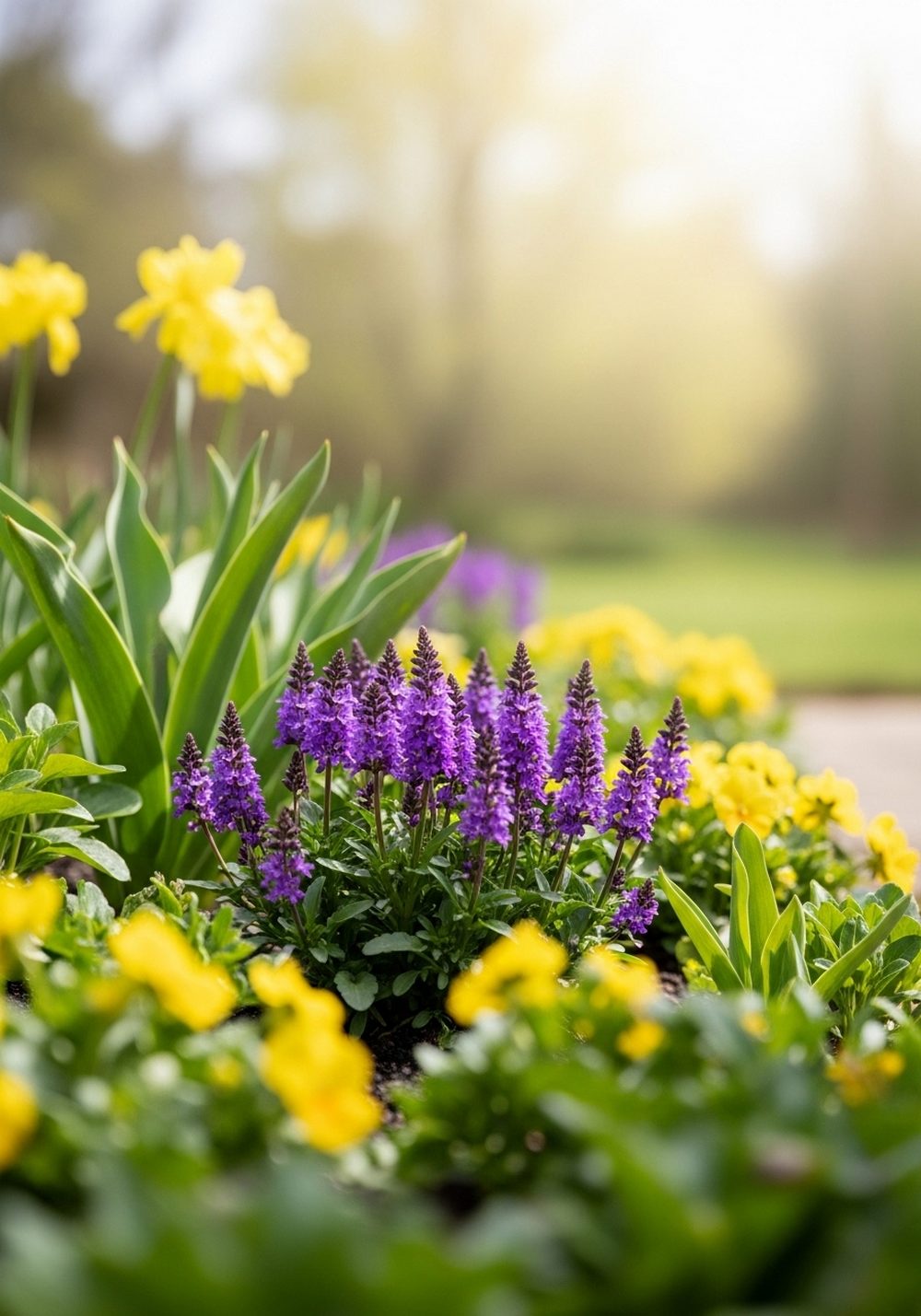
Purple and yellow make one of the happiest color combinations for spring. The rich cool tones of purple flowers create depth, while yellow blooms bring in brightness and energy. Together they make a border that feels lively and eye-catching from a distance. This is a great choice if your yard needs more personality or if you want the border to frame a lawn in a cheerful way. Keep the shapes simple and repeat colors in drifts so the planting still feels organized.
- Best For: Sunny borders, family yards, and anyone who wants brighter seasonal color.
- Budget Tip: Choose two main flower varieties instead of many mixed colors to keep costs down.
- Styling Idea: This palette suits cottage, traditional, and cheerful country-style gardens.
- Practical Note: Repeat the same colors along the border so the design feels connected.
- Extra Idea: Add a simple bench nearby where the bright border can be enjoyed up close.
Brick-Edged Front Yard Border
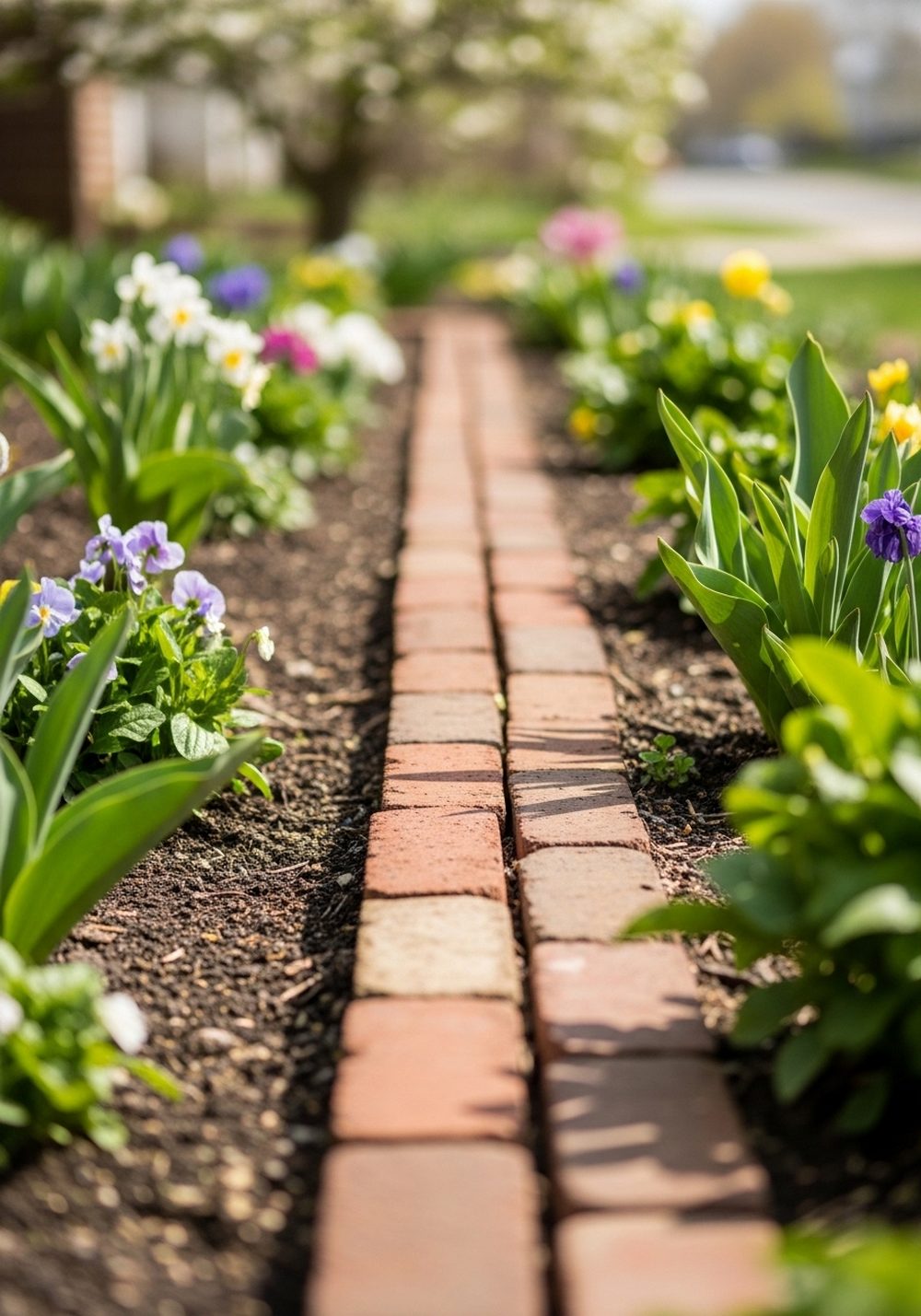
A brick-edged border gives a spring garden a more finished and intentional look. The edging creates a clear line between lawn and planting bed, which instantly makes the whole yard appear neater. Bricks also add warm texture, especially when paired with soft flowers and fresh green leaves. You can use straight rows for a formal feel or a gentle curve for something more relaxed. It is one of the easiest ways to improve curb appeal while also helping keep mulch and soil in place.
- Best For: Front yards, driveway edges, and gardens that need more definition.
- Budget Tip: Reclaimed brick can be a lower-cost option with lots of character.
- Styling Idea: Warm brick looks especially pretty with pink, white, or blue spring flowers.
- Practical Note: Set the edging securely so it stays even and safe near walkways.
- Care & Maintenance: Sweep or rinse the brick edge occasionally to keep it looking clean.
Shady Border With Ferns And Primroses
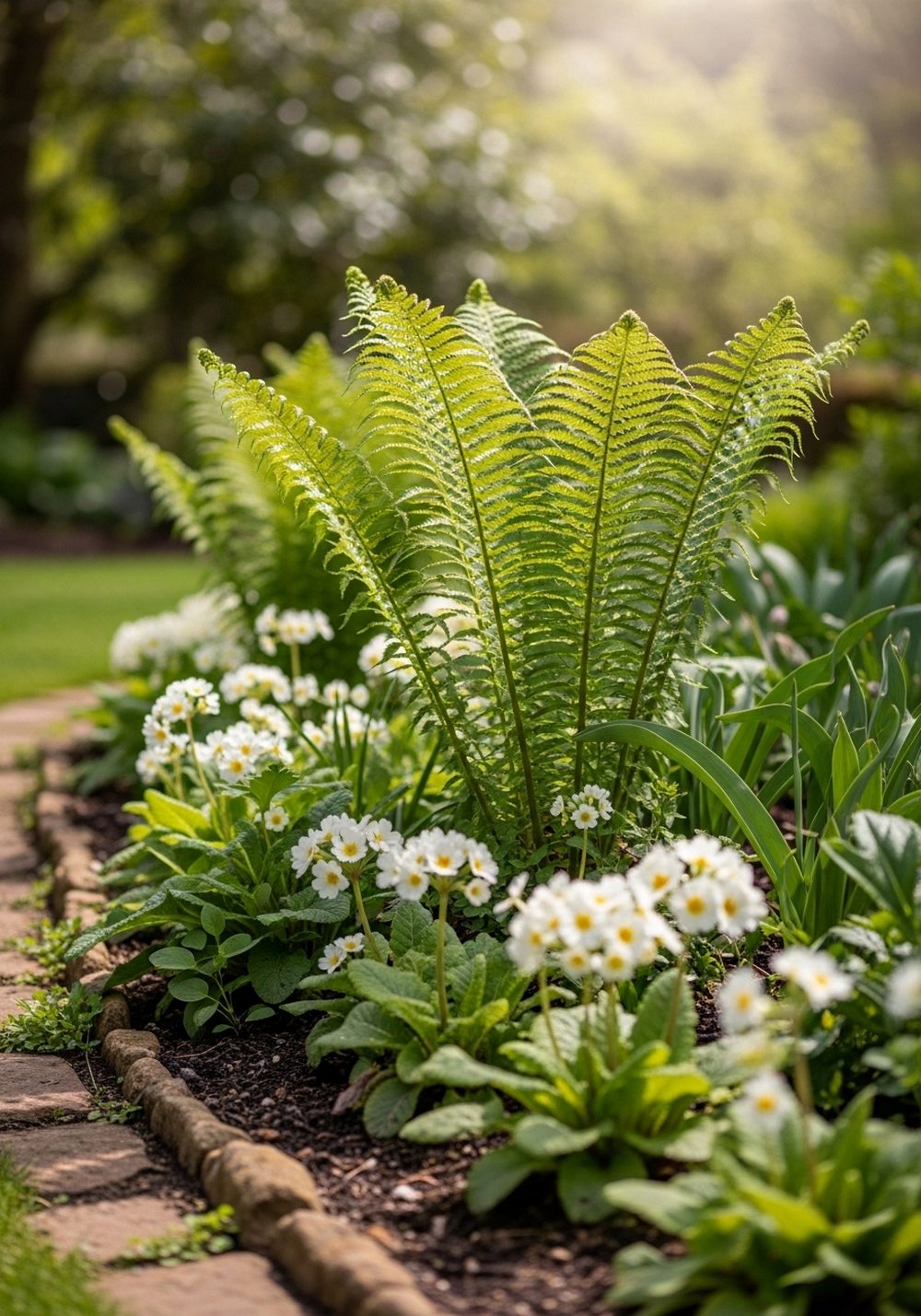
A shady area can still become one of the prettiest parts of the yard with the right border planting. Ferns add soft texture and layered greenery, while primroses bring cheerful pockets of spring color close to the ground. This mix feels cool, fresh, and peaceful, especially under trees or beside the house where direct sun is limited. Use bark, stone, or simple natural edging to match the woodland feel. The result is a border that looks lush and settled rather than sparse.
- Best For: Shady corners, side yards, and spots under trees or tall fences.
- Budget Tip: Fill most of the space with affordable ferns and use flowering plants as highlights.
- Styling Idea: This border suits woodland, cottage, and relaxed natural garden styles.
- Practical Note: Improve soil with compost so shade-loving plants establish more easily.
- Care & Maintenance: Keep the area evenly moist, especially during dry spring weeks.
Pastel Border Along A White Fence
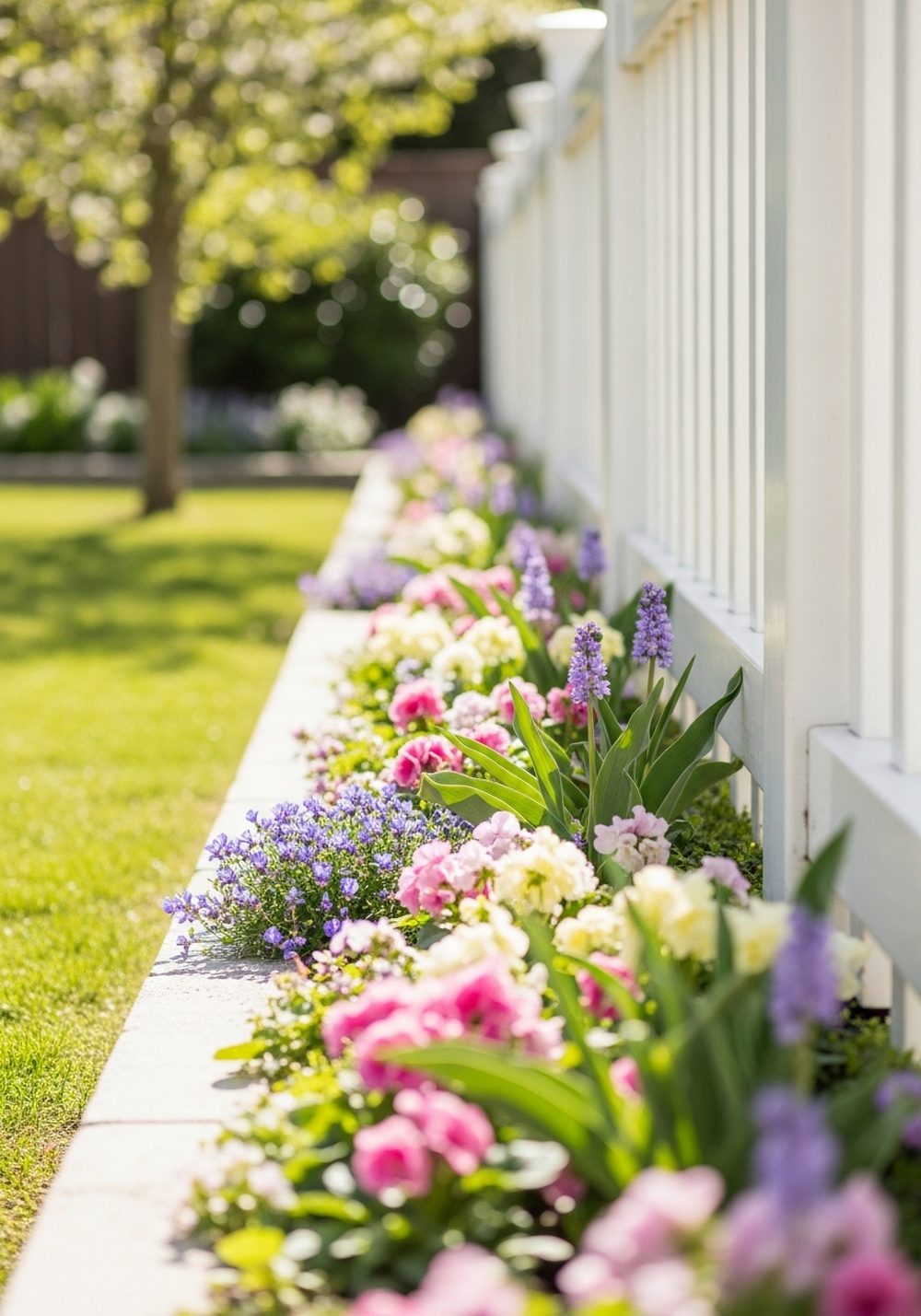
A pastel border along a white fence feels airy, soft, and very welcoming. The fence gives the flowers a bright backdrop, which helps pale pink, lavender, cream, and light blue tones stand out more clearly. This is a lovely way to turn a plain fence line into something decorative without making the yard feel crowded. Layer plants by height and repeat a few colors along the length so the border looks calm and cohesive rather than random.
- Best For: Fence lines, side yards, and compact gardens that need more charm.
- Budget Tip: Plant in sections and repeat the same few pastel flowers for a fuller look over time.
- Styling Idea: This works beautifully with cottage, farmhouse, and soft romantic garden themes.
- Practical Note: Leave a little breathing room between the fence and plants for airflow.
- Extra Idea: Add a light gravel strip or narrow stepping path for a cleaner finish.
Stepping Stone Border With Spring Color
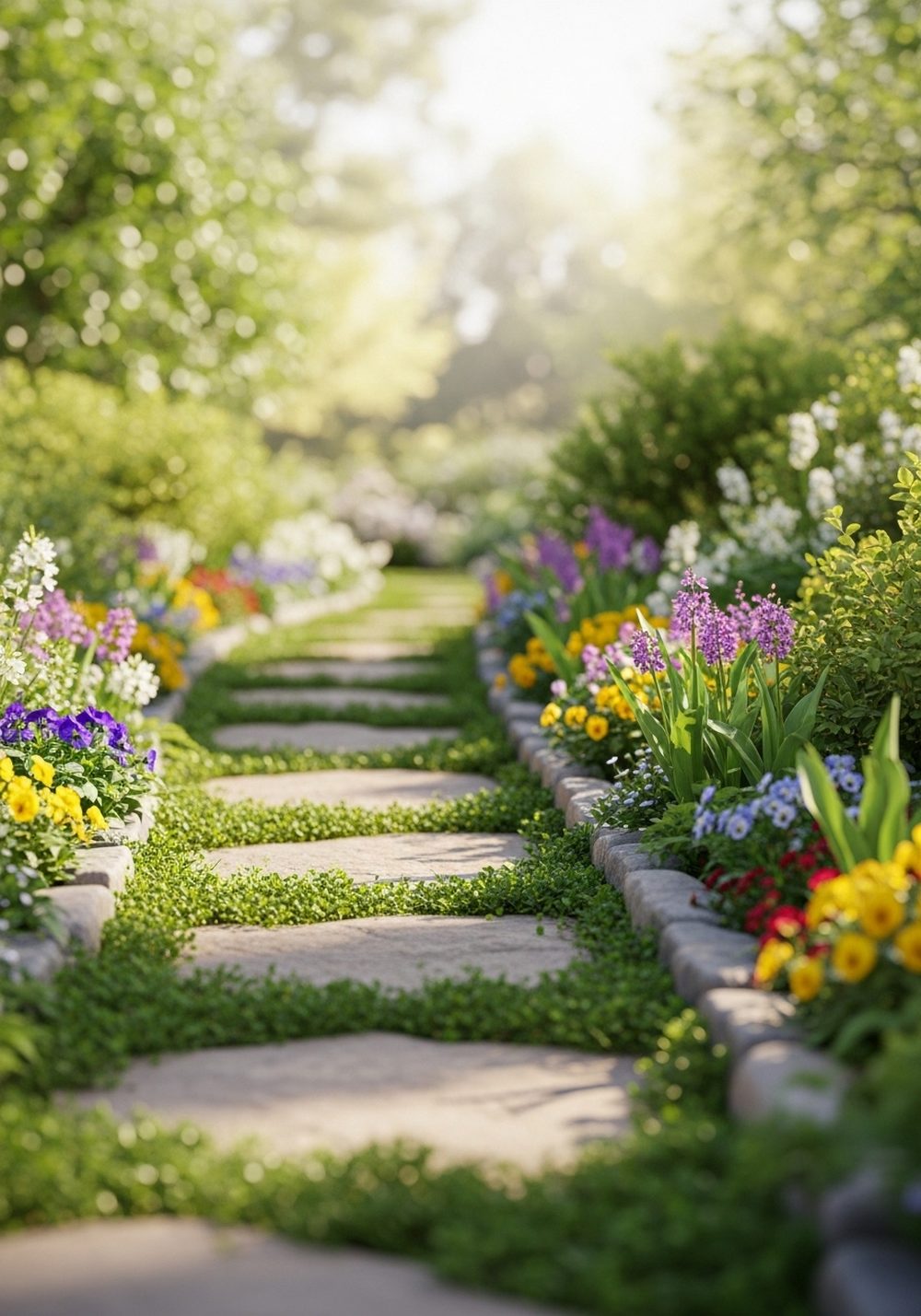
A border beside stepping stones adds charm and makes the garden feel more inviting to walk through. Low spring flowers tucked along the path soften the hard edges of the stones and create a nice mix of texture. As the flowers spill gently toward the walkway, the whole area feels more natural and less plain. This idea works especially well in front yards, side gardens, or backyard paths where you want both beauty and function. Keep the planting low enough so the path stays easy to use.
- Best For: Garden paths, side yards, and small areas that need more personality.
- Budget Tip: Use a few repeating low-growing plants instead of many different types.
- Styling Idea: Natural stone paired with soft blooms creates a relaxed, storybook feel.
- Practical Note: Make sure plants do not grow too wide and crowd the walking space.
- Care & Maintenance: Trim back any overhanging foliage to keep the path neat and safe.
Conclusion
A spring garden border can completely change how your yard feels, even with just a few simple updates. The right mix of flowers, shape, edging, and color can make the space look brighter, softer, and more welcoming. Start with one border idea that fits your yard and budget, then build from there. Small changes in spring often lead to the prettiest results by early season.
FAQs
What is the easiest way to make a garden border look better on a budget?
Start by improving the shape and edge of the border first, because that alone makes a big visual difference. Then add a few repeating plants or bulbs in clusters instead of buying many different varieties. Mulch can also help the bed look fuller and more finished at a low cost.
Which garden border ideas are best for beginners?
Simple bulb borders, low-maintenance perennial borders, and brick-edged beds are great for beginners. They are easier to plan, do not require complicated plant combinations, and give quick visual results. Choosing plants with similar light and water needs also makes care much easier.
How can renters decorate a yard without making permanent changes?
Use movable pots, temporary edging, and simple seasonal flowers that do not require major digging. You can also define a border shape with mulch or lightweight edging materials that are easy to remove later. This keeps the space attractive while staying flexible.
What works best for a very small yard or narrow border?
Stick to a limited color palette and repeat a few plants instead of mixing too many types. Layer by height, with taller plants at the back and smaller ones in front, so the space still feels full. A white and green border or a fence-line pastel border can work especially well in compact areas.
How do I choose low-maintenance plants for a spring border?
Look for reliable perennials and bulbs that return each year and suit your local light conditions. Group plants with similar needs together so watering and care stay simple. Adding mulch around them will also cut down on weeds and help the border stay neat longer.
Is it safe to mix decor elements like edging and stepping stones with flowers?
Yes, as long as you leave enough space for roots, airflow, and safe walking areas. Keep stones stable, avoid crowding pathways, and choose border plants that will not spread too aggressively. The best results come when hard materials and flowers balance each other without competing for space.