10 DIY Garden Plant Marker Ideas You’ll Love

Creating your own garden plant markers is one of the easiest ways to make an outdoor space feel more personal, organized, and charming. Whether you grow herbs on a balcony, vegetables in raised beds, or flowers in a cottage-style border, handmade markers add both function and personality.
This post is for home gardeners, renters, and anyone who wants simple DIY ideas that look attractive without costing much. You’ll find easy marker projects made from everyday materials, along with practical tips to help them last outdoors. These ideas can make your garden feel more polished while helping you keep track of what is growing where.
Quick List
- Painted River Stone Plant Markers
- Wooden Spoon Herb Labels
- Vintage Clothespin Pot Markers
- Wine Cork Garden Labels
- Slate Tile Plant Tags
- Paint Stick Garden Markers
- Tin Can Lid Marker Stakes
- Clay Tag Plant Markers
- Popsicle Stick Seedling Labels
- Copper Wire And Cork Marker Picks
Painted River Stone Plant Markers

Smooth river stones make beautiful plant markers because they look natural in a garden and hold up well in rain. Paint each stone in soft white, sage, or terracotta tones, then add plant names with a paint pen or small brush. Tuck them beside herbs, vegetables, or flowers so they peek through the soil and leaves. The weight of the stones keeps them in place, and their earthy texture blends especially well with cottage, rustic, or relaxed garden styles.
- Best For: Garden beds, herb patches, and borders where you want markers that stay put in wind.
- Budget Tip: Collect smooth stones locally or reuse decorative pebbles you already have at home.
- Styling Idea: Use muted colors for a soft natural look, or brighter shades for a playful kitchen garden feel.
- Care & Maintenance: Seal painted stones with an outdoor-safe clear coat to help lettering last longer.
Wooden Spoon Herb Labels

Wooden spoons can become charming herb labels with just a little paint or marker. Write the herb names on the spoon heads and place the handles into the soil of raised beds or large pots. The shape is easy to read from above, which makes them both decorative and practical. Their warm wood tone pairs nicely with terracotta pots, galvanized containers, and leafy herbs like basil, thyme, and mint for a cozy kitchen-garden look.
- Best For: Herb gardens, raised planters, and patio containers near the kitchen door.
- Budget Tip: Use thrifted or mismatched wooden spoons instead of buying a new set.
- Styling Idea: Leave some wood visible for a rustic feel, or paint the tops in soft pastel shades.
- Practical Note: Keep labels a little taller in dense herb pots so they remain visible as plants fill out.
Vintage Clothespin Pot Markers

Clothespins are a clever choice for labeling potted plants because they clip right onto the rim of a pot. You can paint them, stain them, or leave them natural for a simple vintage look. Add plant names with a fine marker, then clip them onto terracotta or ceramic containers. This idea keeps the label off the soil, which looks neat and helps small spaces feel less cluttered. It is especially useful for seed-starting setups or grouped herb pots.
- Best For: Small pots, seedling trays, and balcony gardens where space is limited.
- Budget Tip: Use plain household clothespins and decorate only the front side to save time and supplies.
- Styling Idea: Pair natural wood clothespins with aged terracotta for a warm, old-fashioned garden mood.
- Care & Maintenance: Recoat with outdoor sealer if you keep them outside through wet weather.
Wine Cork Garden Labels

Wine corks make sweet little markers that are lightweight, easy to personalize, and perfect for casual garden spaces. Simply write the plant names on the corks and push them onto wooden skewers, twigs, or thin stakes. Place them beside herbs, salad greens, or young vegetable starts for a relaxed handmade touch. The soft cork texture contrasts nicely with dark soil and bright green leaves, giving the garden a friendly, collected-over-time feel.
- Best For: Raised beds, herb gardens, and small vegetable patches.
- Budget Tip: Save corks over time or ask friends to collect a few for your next planting project.
- Styling Idea: Use natural cork for a simple rustic look, or paint the tops for a more colorful display.
- Practical Note: Make sure the stake is secure enough so the cork does not wobble in loose soil.
Slate Tile Plant Tags

Slate tile markers bring a more polished and long-lasting look to the garden. The dark surface makes white or light lettering stand out clearly, which looks especially striking among soft green herbs and flowers. You can use broken slate pieces, small craft tiles, or leftover stone samples and write on them with a chalk-style paint pen. These tags feel neat, timeless, and slightly upscale, while still being simple enough for a DIY weekend project.
- Best For: Formal herb beds, perennial borders, and tidy raised gardens.
- Budget Tip: Check for leftover tile pieces from home projects instead of buying new materials.
- Styling Idea: Pair dark slate with gravel, wood edging, and clipped greenery for a clean structured look.
- Care & Maintenance: Refresh faded lettering seasonally so the markers stay easy to read.
Paint Stick Garden Markers

Wooden paint sticks are one of the easiest materials to turn into garden markers. Their flat shape gives you plenty of room for names, and they are easy to paint in colors that match your pots or outdoor decor. Slide them into the soil in rows of vegetables, herbs, or flowers for a cheerful and organized effect. This idea works well if you want a simple project with a little more visible color in the garden.
- Best For: Beginner gardeners, family gardens, and larger beds with many plant varieties.
- Budget Tip: Reuse leftover stir sticks or inexpensive craft sticks instead of buying decorative tags.
- Styling Idea: Paint just the top edge in one accent color for a clean, modern look.
- Practical Note: Use waterproof pens or outdoor paint so names do not blur after watering.
- Extra Idea: Color-code herbs, vegetables, and flowers to make the bed easier to navigate.
Tin Can Lid Marker Stakes

Tin can lids can be repurposed into creative round marker tops that stand out in a fun, slightly rustic way. Attach the lids to wooden dowels or metal rods and paint or label the front with plant names. Their circular shape adds variety among the usual straight marker styles, and the metal catches light nicely in the garden. This project works especially well in vegetable plots where you want markers that are easy to spot from a distance.
- Best For: Vegetable beds, larger plots, and gardeners who like upcycled decor.
- Budget Tip: Reuse clean lids from pantry items instead of buying new garden markers.
- Styling Idea: Go for a farmhouse look with neutral paint, black lettering, and weathered wood stakes.
- Practical Note: Smooth any sharp edges carefully before using them outdoors.
Clay Tag Plant Markers

Air-dry or baked clay can be shaped into lovely handmade tags that feel soft, natural, and a little more decorative. You can stamp plant names into the clay or press them in by hand, then attach the tags to short stakes or tie them around pots with twine. The matte finish looks beautiful in herb gardens and flower containers, especially when paired with terracotta, wicker, or weathered wood. These markers bring texture and a thoughtful handmade quality to the space.
- Best For: Decorative pots, herb corners, and giftable garden projects.
- Budget Tip: Make several tags from one small batch of clay to keep costs low.
- Styling Idea: Choose soft neutral clay shades for a calm Mediterranean or cottage-inspired mood.
- Care & Maintenance: Keep them in more sheltered spots if your climate is very wet.
- Extra Idea: Add tiny leaf or flower impressions for extra detail without making the design busy.
Popsicle Stick Seedling Labels
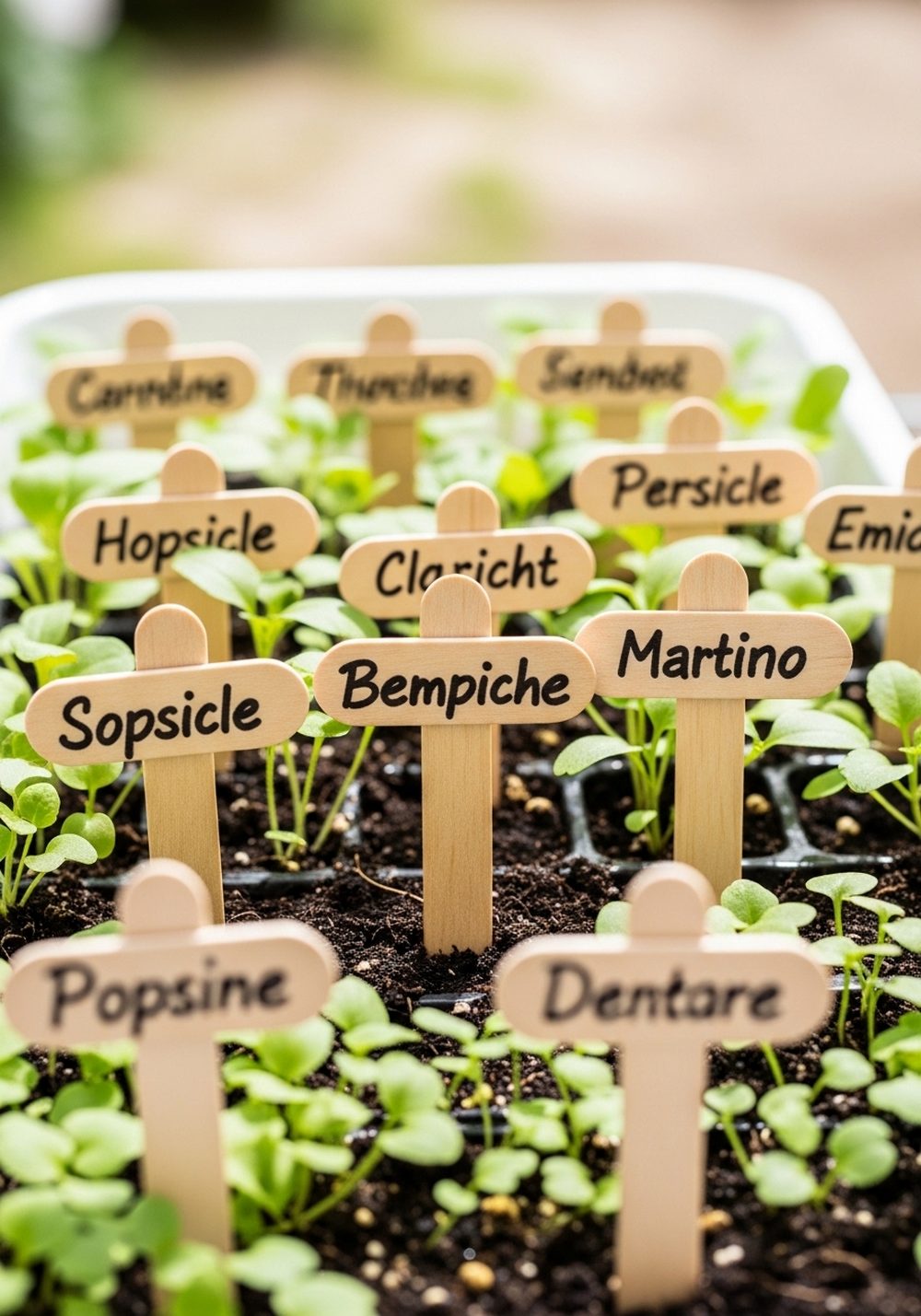
Popsicle sticks are simple, familiar, and especially useful for seedlings and starting trays. They are lightweight, easy to write on, and perfect when you need quick labels for many small plants at once. You can leave them plain for a clean practical look or paint the tops in soft colors to make them feel more decorative. In a potting area or greenhouse shelf, these neat little labels help keep everything organized while still looking cheerful and handmade.
- Best For: Seed starting, small containers, and beginner-friendly garden setups.
- Budget Tip: Buy a bulk pack once and keep extras on hand for every planting season.
- Styling Idea: Dip the tops in muted green, cream, or dusty blue paint for a softer look.
- Practical Note: Replace them as needed in very damp soil, since thin wood wears faster outdoors.
Copper Wire And Cork Marker Picks

Copper wire and cork markers have a stylish handmade look that feels both rustic and slightly modern. Wrap copper wire into a simple pick or loop, then attach a cork labeled with the plant name. The warm metal catches sunlight beautifully, while the cork softens the overall look and keeps it garden-friendly. These markers look especially attractive in herb pots, tabletop planters, or curated patio gardens where even small details help create a more finished atmosphere.
- Best For: Patio pots, herb containers, and small decorative garden displays.
- Budget Tip: Use short leftover pieces of craft wire and a few saved corks to make a full set cheaply.
- Styling Idea: Pair copper accents with dark planters, stone surfaces, or lush green herbs for a refined mood.
- Care & Maintenance: Let the copper age naturally for character, or polish it occasionally for more shine.
- Extra Idea: Shape the top of the wire into a small loop or leaf form for extra charm.
Conclusion
DIY plant markers are a small detail, but they can make a big difference in how your garden looks and feels. They add order, personality, and a handmade touch that makes even a simple planting area more inviting. Start with one easy idea using materials you already have, then add more as your garden grows. Little upgrades like these can make the whole space feel more thoughtful and enjoyable.
FAQs
What is the cheapest way to make DIY plant markers?
Some of the most affordable options are popsicle sticks, paint sticks, wine corks, and reused stones. These materials are easy to find and often available at home already. A waterproof marker and a little sealer can be enough to turn them into practical garden labels.
Which plant marker ideas are best for renters?
Clip-on clothespin markers, cork picks, and spoon labels are great for renters because they work well in pots and planters. They do not require permanent changes to the space and can move easily with your containers. This makes them ideal for balconies, patios, or temporary garden setups.
What type of plant marker lasts best outdoors?
Stone and slate markers usually hold up best in outdoor conditions because they are heavier and less affected by rain. Metal-based options can also last well if they are prepared safely and used properly. Adding an outdoor sealer to painted or written surfaces helps extend the life of most marker styles.
Are DIY plant markers suitable for very small spaces?
Yes, they work especially well in small gardens because they keep containers and planters organized without adding clutter. Clip-on markers, slim sticks, and compact cork labels are particularly useful for balconies or windowsill herb gardens. Choosing a simple matching style can also make a small space look more polished.
How can I make plant markers look decorative and not just practical?
Focus on materials, colors, and texture. Natural wood, slate, clay, copper, and painted stones all add visual interest while still being useful. Keeping your markers in a consistent style or color palette helps them blend into the garden decor instead of looking random.
What is the easiest DIY plant marker idea for beginners?
Popsicle stick labels and painted river stones are two of the easiest starting points. They need very few supplies, take little time, and do not require special tools. Both are simple enough for a first project but still look attractive when finished well.