10 DIY Rain Gutter Herb Wall Ideas

If you want a simple way to grow herbs without taking up much ground space, a DIY rain gutter herb wall is a smart project to try. It works especially well for small backyards, patios, side yards, balconies, and even rental-friendly outdoor spaces where every inch matters.
These ideas are perfect for home gardeners who want something practical but still attractive. You will find easy ways to turn basic gutters into useful vertical planters that add greenery, texture, and charm to your outdoor area. Whether you like rustic wood, modern lines, or colorful painted finishes, these herb wall ideas can help you create a garden setup that feels fresh, organized, and personal without a huge budget.
Quick List
- Tiered White Rain Gutter Herb Wall
- Rustic Wooden Frame Gutter Herb Display
- Colorful Painted Gutter Herb Wall
- Balcony Rail Rain Gutter Herb Garden
- Pallet Backed Rain Gutter Herb Wall
- Copper Look Gutter Herb Accent Wall
- Labelled Kitchen Door Herb Wall
- Corner Fence Rain Gutter Herb Station
- Minimal Black And White Gutter Herb Wall
- Mixed Herb And Flower Rain Gutter Wall
Tiered White Rain Gutter Herb Wall

A tiered white rain gutter herb wall gives your garden a clean and fresh look while making it easy to grow several herbs in one compact spot. Mount white-painted gutters in evenly spaced horizontal rows on a fence or wall, making sure each level gets enough light. The bright finish looks crisp against green leaves, and it suits both modern and cottage-style gardens. Plant easy kitchen herbs like basil, parsley, and mint for a simple setup that is both practical and decorative.
- Best For: Small patios, narrow side yards, and beginner gardeners who want a tidy vertical planter.
- Budget Tip: Use leftover exterior paint and secondhand brackets to keep the project affordable.
- Styling Idea: Pair the white gutters with terracotta pots or black hardware for a balanced, polished look.
- Practical Note: Leave enough space between rows so upper gutters do not shade the lower ones too much.
Rustic Wooden Frame Gutter Herb Display
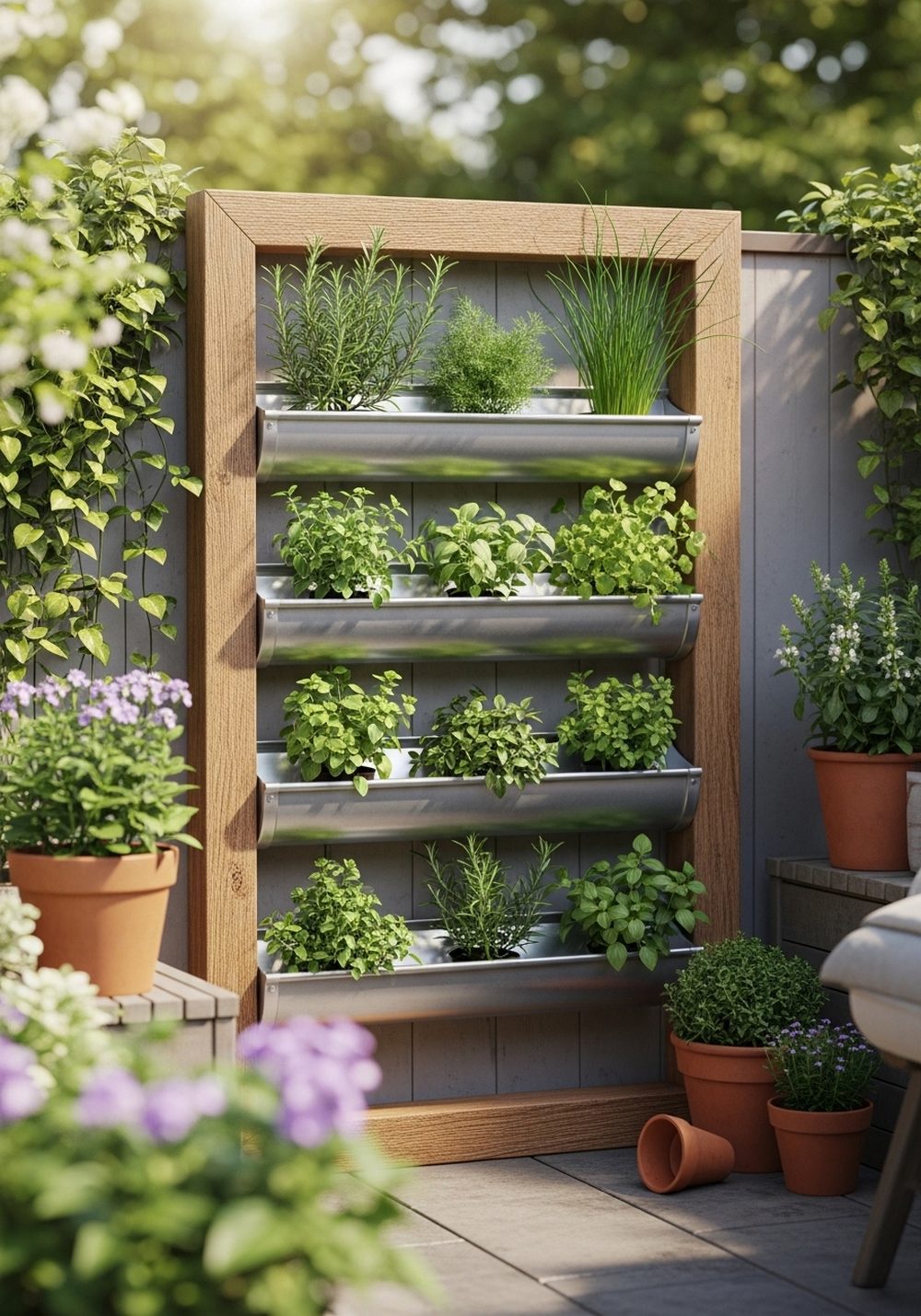
This idea combines the charm of weathered wood with the usefulness of a vertical herb planter. Build or repurpose a simple wooden frame, then attach a few metal or painted gutters across it to create a freestanding or wall-mounted herb display. The wood adds warmth and texture, while the gutters keep the planting area slim and organized. It works beautifully in cozy backyard corners and near outdoor seating areas where you want the garden to feel more inviting and layered.
- Best For: Rustic gardens, farmhouse-style patios, and relaxed outdoor spaces with natural materials.
- Budget Tip: Use reclaimed boards or pallet wood instead of buying new lumber.
- Styling Idea: Add clay pots, woven baskets, or aged metal accessories nearby for a warm cottage feel.
- Care & Maintenance: Seal the wood if it will sit in full weather to help it last longer.
Colorful Painted Gutter Herb Wall

A colorful painted gutter herb wall adds personality and turns a practical garden feature into a cheerful focal point. Paint each gutter in a soft garden-friendly shade like sage green, pale blue, muted yellow, or warm cream. The color helps define the planting rows and can tie into your outdoor furniture or flower palette. This works especially well in family gardens or creative spaces where you want something lively but still neat. Keep the herb selection simple so the design does not start to feel too busy.
- Best For: Playful patios, family gardens, and anyone who wants a more decorative DIY project.
- Budget Tip: Sample pots of exterior paint are often enough for a small gutter project.
- Styling Idea: Stick to two or three coordinated colors for a softer, more finished look.
- Practical Note: Use outdoor-safe paint and let the gutters cure fully before planting.
Balcony Rail Rain Gutter Herb Garden

A balcony rail rain gutter herb garden is one of the easiest ways to bring greenery into a very small outdoor space. Attach narrow gutters securely to a railing or narrow balcony wall to create slim planting rows that do not eat up valuable floor area. Compact herbs like thyme, chives, and basil work especially well here. This setup gives you a fresh, useful planting area right outside the door, and it can make an apartment balcony feel softer, more private, and more lived in.
- Best For: Balconies, apartment patios, and tiny outdoor spaces with limited floor room.
- Budget Tip: Start with just one or two gutters and add more over time as needed.
- Styling Idea: Keep the colors simple with white, silver, or black for a clean urban look.
- Practical Note: Check weight limits and drainage so water does not drip onto lower levels.
Pallet Backed Rain Gutter Herb Wall

Using a pallet as the base for your rain gutter herb wall creates an easy all-in-one structure with lots of character. The pallet gives you ready-made support, and it also adds natural texture behind the clean lines of the gutters. You can lean it against a wall or secure it in place for a more permanent setup. Once planted, the layered combination of wood and greenery feels relaxed and practical, making it a great fit for casual gardens, potting corners, or sunny backyard fences.
- Best For: DIY lovers, upcycled garden spaces, and informal backyard setups.
- Budget Tip: Free or low-cost pallets can make this one of the cheapest vertical herb projects.
- Styling Idea: Let the wood stay natural for a rustic look, or stain it darker for a moodier finish.
- Care & Maintenance: Check that the pallet wood is clean and safe for garden use before planting.
Copper Look Gutter Herb Accent Wall

A copper look gutter herb accent wall gives a simple herb project a more refined and decorative feel. By using a warm metallic finish or copper-tone paint, you can create a planter wall that stands out beautifully against dark fencing, brick, or neutral siding. Herbs with textured leaves, such as rosemary, sage, and thyme, look especially striking in this setup. It feels a little more elevated than basic white gutters, but the build itself can still be simple and beginner-friendly.
- Best For: Modern patios, polished backyard designs, and anyone wanting a more stylish finish.
- Budget Tip: Use copper-look paint rather than real copper to get the effect for much less.
- Styling Idea: Pair with charcoal planters, stone, or dark wood for a rich contrast.
- Care & Maintenance: Touch up the finish every so often if the wall gets strong sun or heavy rain.
Labelled Kitchen Door Herb Wall

Placing a rain gutter herb wall close to the kitchen or back door makes it both decorative and useful in everyday life. You can step outside and quickly snip herbs while cooking, which makes the setup feel especially rewarding. Add simple plant markers or small hanging labels to keep everything organized, especially if you grow several similar herbs. The wall can be neat and compact while still adding texture and freshness near the entrance, helping that area feel more welcoming and purposeful.
- Best For: Busy cooks, beginner gardeners, and homes with a small patio near the kitchen.
- Budget Tip: Handmade labels from leftover wood or simple metal tags keep the cost low.
- Styling Idea: Choose matching labels and hardware for a more pulled-together look.
- Practical Note: Grow the herbs you use most often on the lowest and easiest-to-reach rows.
Corner Fence Rain Gutter Herb Station

A corner fence rain gutter herb station helps you use an awkward outdoor spot that might otherwise go empty. By fitting gutters neatly across one side of a fence corner or wrapping them slightly around both sides, you create a compact herb-growing station with a custom feel. This layout can make the whole garden feel more finished because it turns a forgotten corner into a feature. It is also helpful if your best sunlight hits one side yard or fence angle more than the rest.
- Best For: Small yards, unused fence corners, and gardens that need better space planning.
- Budget Tip: Shorter gutter sections are often easier to source and cheaper to work with in corner spaces.
- Styling Idea: Add one floor pot or a small stool below to make the corner feel styled, not empty.
- Practical Note: Measure carefully so the corner layout stays neat and easy to water.
Minimal Black And White Gutter Herb Wall

For a cleaner and more modern look, a black and white gutter herb wall keeps everything simple and sharp. White gutters paired with black brackets or a dark fence create strong contrast, while the herbs bring in all the color you need. This kind of setup works especially well in modern homes, compact patios, or outdoor spaces with a restrained palette. It feels calm, organized, and easy to maintain, which makes it ideal for gardeners who prefer a less busy decorative style.
- Best For: Modern homes, minimalist patios, and anyone who likes a clean visual style.
- Budget Tip: Basic white gutters with simple black spray-painted hardware can create the same effect for less.
- Styling Idea: Repeat the black-and-white color scheme in pots, furniture cushions, or lanterns nearby.
- Care & Maintenance: Wipe the gutters occasionally so the light finish stays crisp and fresh-looking.
Mixed Herb And Flower Rain Gutter Wall

A mixed herb and flower rain gutter wall softens the practical look of a herb planter by adding a few small blooms among the greenery. Try combining useful herbs with delicate trailing flowers or compact annuals to create more movement and color. This makes the wall feel more like garden decor and less like a utility feature. It is a lovely choice if you want your herb wall to double as a decorative backdrop for a seating area, patio, or garden path.
- Best For: Cottage-style gardens, decorative patios, and gardeners who want beauty and function together.
- Budget Tip: Mix inexpensive annual flowers with herbs rather than filling every gutter with decorative plants.
- Styling Idea: Choose white, purple, or soft pink flowers to keep the whole wall looking calm and cohesive.
- Practical Note: Make sure flowering plants do not crowd out slower-growing herbs.
Conclusion
A DIY rain gutter herb wall can do a lot for a garden without taking up much space or money. It adds greenery, texture, and everyday usefulness while making walls, fences, and corners look more finished. Start with one simple design that suits your space, then build on it over time. Even a small herb wall can make your outdoor area feel more welcoming, practical, and personal.
FAQs
1. Are rain gutter herb walls good for small spaces?
Yes, they are one of the best options for small outdoor areas because they use vertical space instead of floor space. They work well on fences, balcony walls, railings, and narrow side yards. Just make sure the location gets enough light for the herbs you choose.
2. How can I make a rain gutter herb wall on a small budget?
Use basic gutters, simple brackets, and reclaimed materials like pallets or scrap wood. You can also start with only one or two rows and expand later. Growing herbs from small starter plants instead of large nursery pots can also save money.
3. Are these herb wall ideas suitable for renters?
Some of them can be renter-friendly if you use freestanding frames, pallets, or temporary mounting methods that do not damage walls. A balcony version or a leaning pallet design is often easier for renters than drilling into permanent structures. Always choose a setup that can be moved if needed.
4. What herbs grow best in rain gutter planters?
Shallower-rooted herbs such as thyme, chives, parsley, cilantro, oregano, and some basil varieties usually do well. Very large or woody herbs may need more root space over time. It helps to match the herb choice to the depth of the gutter and how much sun the wall gets.
5. How do I keep a gutter herb wall low maintenance?
Add drainage holes, use quality potting mix, and group herbs with similar water needs together. Place the wall somewhere easy to reach so watering and trimming do not feel like a chore. Regular light harvesting also helps herbs stay tidy and productive.
6. Can I mix flowers and herbs in the same gutter wall?
Yes, as long as the plants have similar light and watering needs. Small flowers can make the wall look softer and more decorative, especially in seating areas or cottage-style gardens. Just avoid overcrowding so the herbs still have room to grow well.