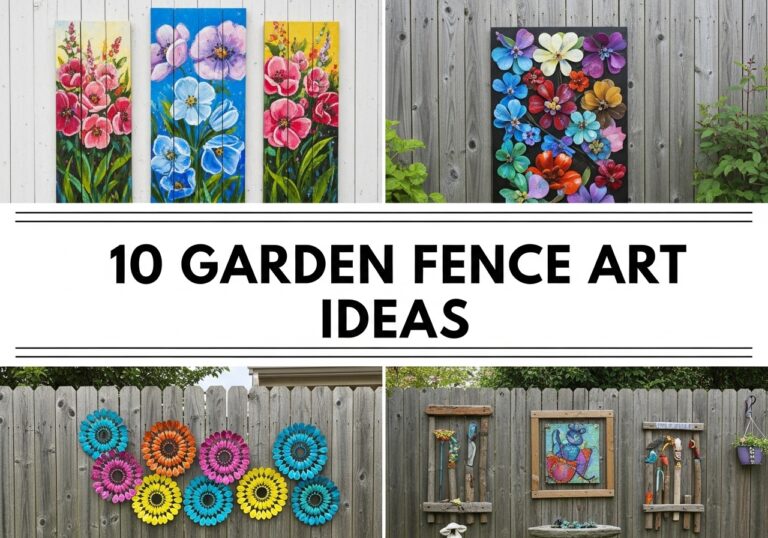
10 Fence Decor Ideas – DIY Paint Techniques

If your fence looks plain, faded, or a little forgotten, a few paint updates can completely change the feel of your garden. These ideas are perfect for home gardeners, renters working with temporary sections, and anyone who wants to make an outdoor space feel more personal without a major renovation.
From simple stripes to soft mural effects, these fence decor ideas can help you add color, texture, and style in a practical way. Many of them are beginner-friendly, budget-conscious, and easy to adapt to small backyards, side yards, patios, or cozy garden corners. A painted fence can become more than a boundary. It can help set the whole mood of your outdoor space.
Quick List
- Color-Blocked Fence Panels
- Stencil Pattern Fence Art
- Ombre Painted Fence Boards
- Painted Arch Accent On Fence
- Half-Painted Rustic Fence
- Geometric Line Design Fence
- Faux Window Frame Paint Effect
- Botanical Silhouette Painted Fence
- Striped Fence In Soft Garden Tones
- Mural-Style Painted Garden Backdrop
Color-Blocked Fence Panels

Painting fence panels in large color blocks is a simple way to make a plain fence feel modern and styled. You can use two or three outdoor paint shades, such as sage, cream, and terracotta, and divide each section with painter’s tape for neat edges. This works especially well behind plant stands, benches, or container groupings because the painted sections create a tidy visual backdrop. It is bold enough to stand out, but still easy for beginners to try over a weekend.
- Best For: Small gardens, patio fences, and spots that need a stronger focal point.
- Budget Tip: Start with leftover paint in complementary shades and test one panel before doing the full fence.
- Styling Idea: Use earthy or muted tones for a calm modern look that blends well with greenery.
- Practical Note: Mark your layout lightly in pencil first so the color blocks feel balanced across the fence.
Stencil Pattern Fence Art
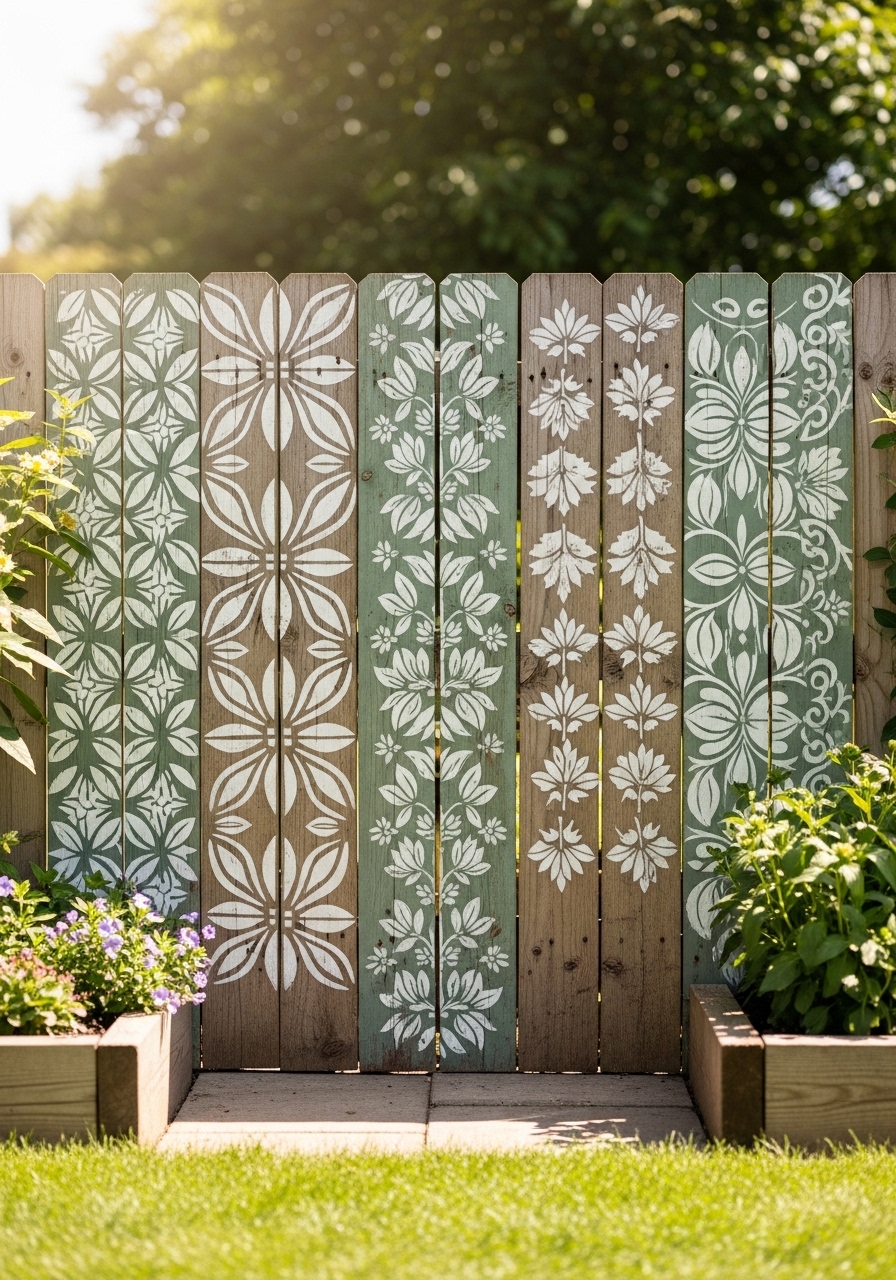
Stencil painting adds decorative detail without requiring freehand painting skills. You can choose simple leaf shapes, vines, or repeating geometric patterns and apply them over a painted or natural wood background. This technique is ideal if you want the fence to feel a little more cottage-like or decorative without becoming too busy. A repeated stencil pattern also helps connect different parts of the garden, especially when used behind flower beds or near a seating area.
- Best For: Cottage gardens, narrow side yards, and decorative corners.
- Budget Tip: Reuse one sturdy stencil across several panels instead of buying multiple designs.
- Styling Idea: White or soft green stencil patterns look fresh against weathered wood or muted painted panels.
- Care & Maintenance: Seal the finished design with an exterior-safe top coat to help it last longer.
- Extra Idea: Repeat the same stencil pattern on nearby pots for a more pulled-together look.
Ombre Painted Fence Boards

An ombre fence uses graduated color to create a soft, artistic finish that still feels natural outdoors. Try moving from a darker earthy tone at the bottom to lighter shades toward the top, which can also help the fence feel less heavy in a small garden. It is a beautiful option for anyone who wants something creative but not overly busy. The blend works especially well with layered planting in front, where leaves and flowers soften the transition even more.
- Best For: Contemporary gardens, relaxed backyard spaces, and artistic outdoor settings.
- Budget Tip: Buy sample pots in the same color family instead of full tins if you are working on a small area.
- Styling Idea: Greens, grays, and soft blue tones create a calm backdrop for flowering plants.
- Practical Note: Blend while the paint is still wet so the fade looks smooth rather than striped.
- Care & Maintenance: Clean the fence first so dust and old residue do not affect the painted finish.
Painted Arch Accent On Fence

A painted arch shape is one of the easiest ways to create a stylish feature wall effect in the garden. You simply paint a large rounded arch directly onto the fence behind a bench, bistro table, planter, or sculpture. The shape brings structure and helps frame whatever sits in front of it. Even one painted arch can make a small patio or seating nook feel intentional and well designed, especially when paired with soft planting and simple furniture.
- Best For: Seating corners, patio dining spots, and small garden focal areas.
- Budget Tip: One can of paint is often enough for a single accent arch, making this a low-cost weekend project.
- Styling Idea: Terracotta, clay, olive, or dusty pink tones add warmth and a soft Mediterranean feel.
- Practical Note: Use string and chalk or a cardboard template to sketch a symmetrical arch before painting.
- Extra Idea: Place matching pots or lanterns in front of the arch to strengthen the styled effect.
Half-Painted Rustic Fence
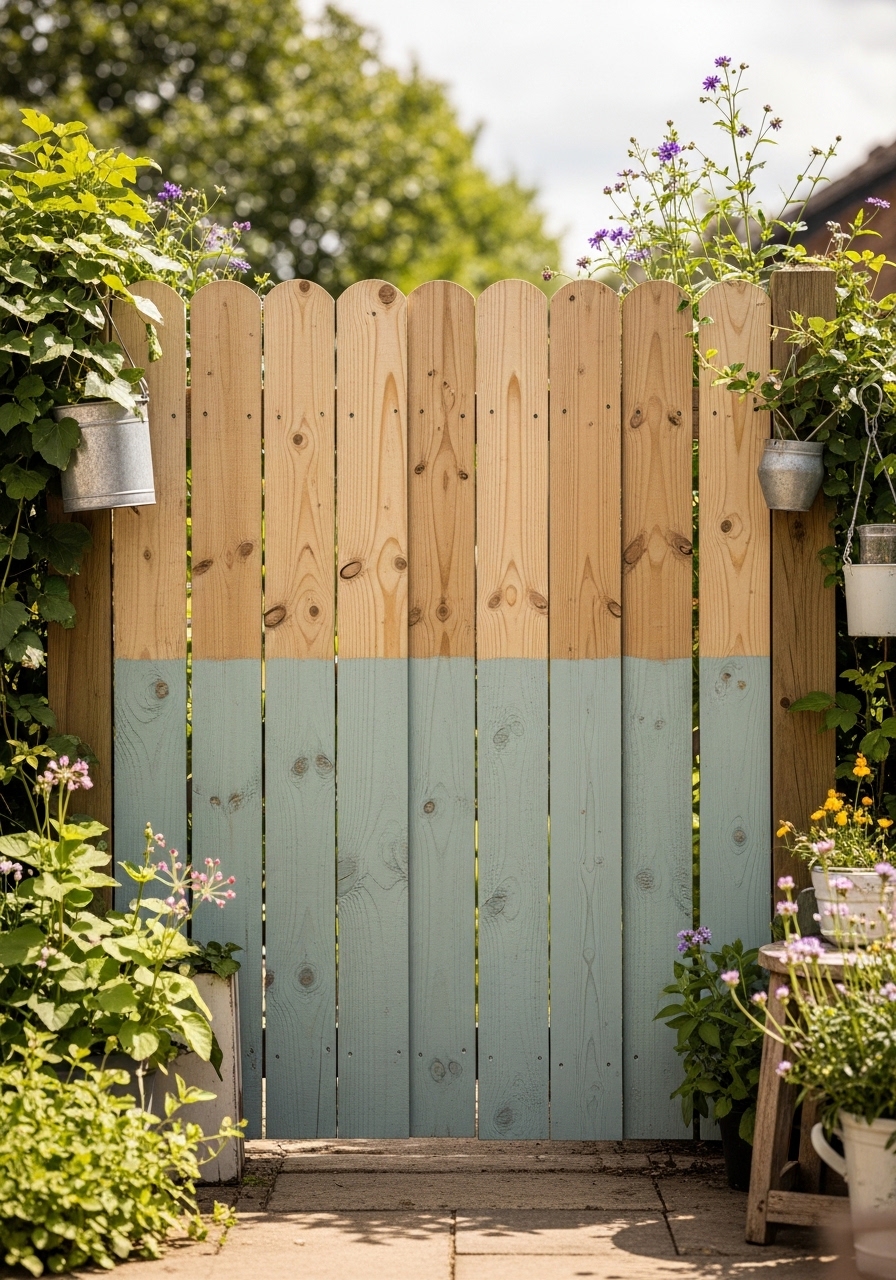
Painting only the lower half of the fence gives you the charm of painted decor while keeping some of the original wood visible. This is a great choice if you like rustic gardens and want a relaxed, less polished finish. The lower painted section can also help disguise mud splashes and wear near the ground. Soft chalky colors combined with natural timber bring texture and contrast without making the fence feel overly formal or heavy.
- Best For: Rustic gardens, casual family spaces, and natural-style backyards.
- Budget Tip: Because you only paint half the surface, this idea uses less paint and stretches your budget further.
- Styling Idea: Sage, dusty blue, stone, or cream shades work beautifully with timber, gravel, and terracotta pots.
- Practical Note: Keep the painted line level across panels so the result feels deliberate.
- Care & Maintenance: Touch up the lower section each season if it gets extra wear from watering or soil.
Geometric Line Design Fence
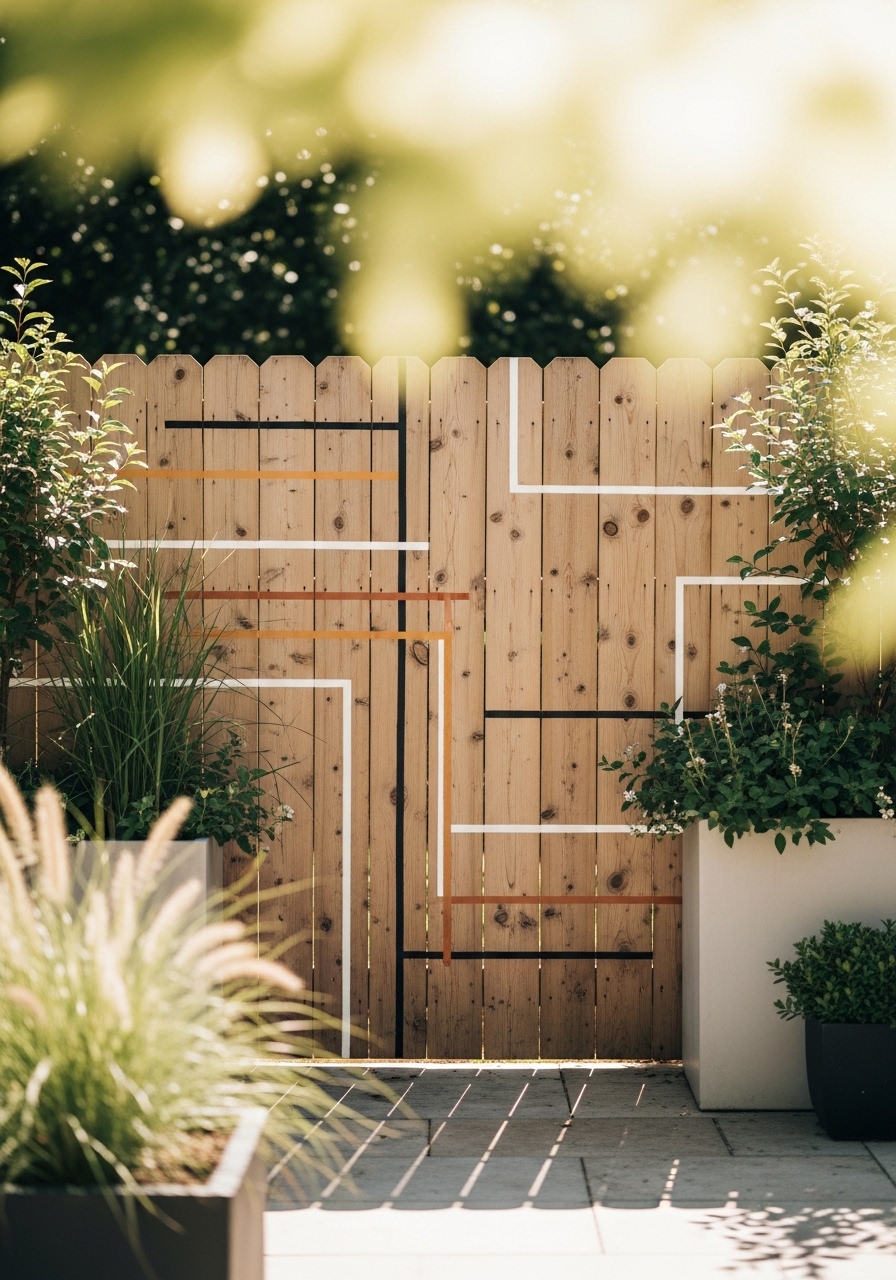
A geometric line design can make an ordinary fence look clean, modern, and custom. You can create triangles, angled lines, or simple panel outlines using painter’s tape and one or two contrasting colors. This works best when the pattern stays fairly open and uncluttered. It adds personality without overwhelming the garden, and it pairs nicely with modern planters, gravel beds, or architectural plants such as grasses and upright shrubs.
- Best For: Modern gardens, minimalist patios, and neat outdoor entertaining areas.
- Budget Tip: Thin line work uses less paint than full coverage designs, so it is an affordable way to add interest.
- Styling Idea: Combine charcoal, white, beige, or muted green for a crisp and contemporary mood.
- Practical Note: Measure carefully before taping so the angles line up from board to board.
- Extra Idea: Echo the same geometric look in cushion patterns or nearby planter shapes.
Faux Window Frame Paint Effect
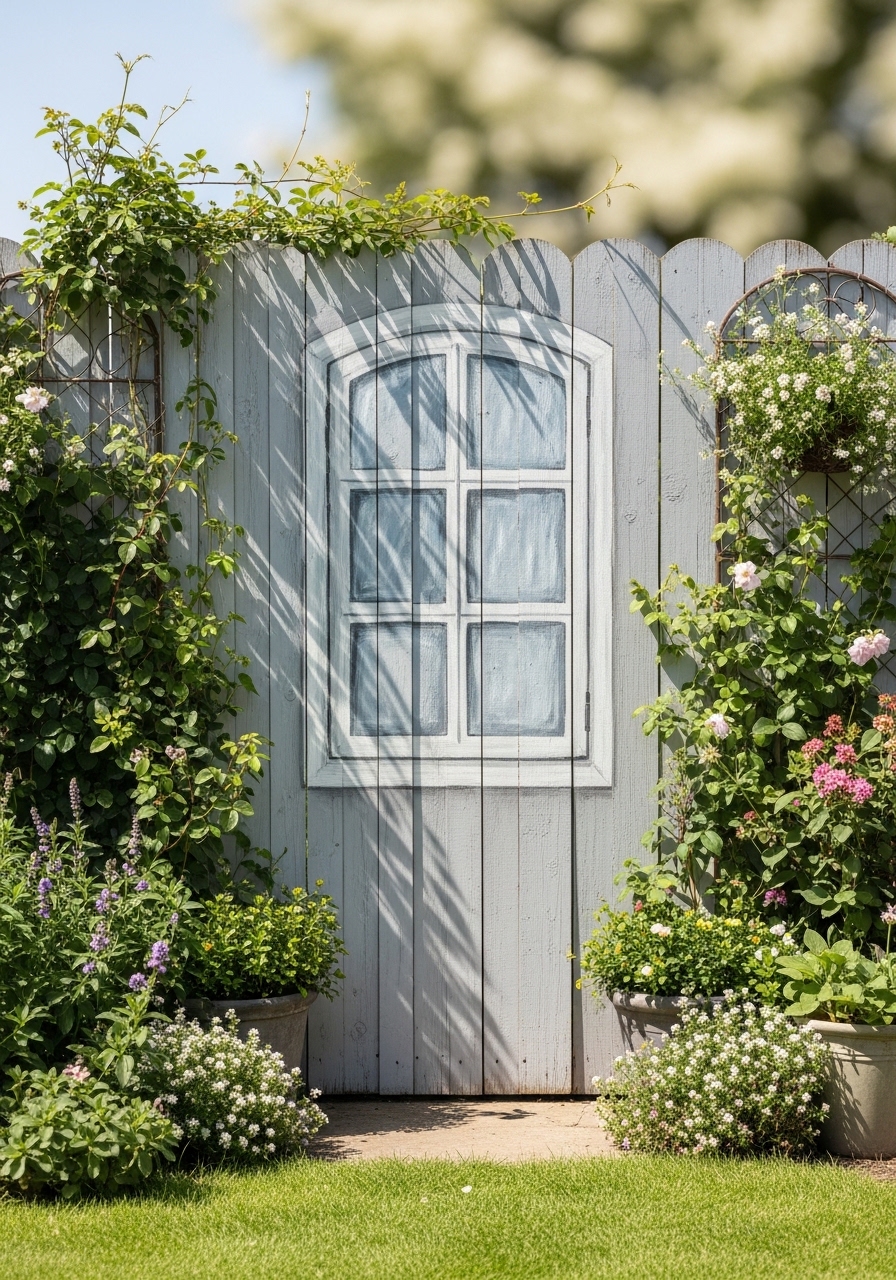
A faux window frame painted onto a fence can make a flat area feel more decorative and charming. The design creates the illusion of structure and can help break up a long stretch of timber. This technique suits cottage gardens especially well, and it looks lovely with climbing plants, lanterns, or flower pots nearby. You do not need advanced painting skills either. A simple paneled outline in a soft color is enough to create the effect.
- Best For: Cottage-style gardens, hidden corners, and long plain fence runs.
- Budget Tip: A simple white or pale gray outline creates the effect without using much paint.
- Styling Idea: Pair the painted frame with trailing plants and soft flowers for a welcoming storybook feel.
- Practical Note: Keep the proportions believable so the faux feature looks intentional rather than awkward.
- Extra Idea: Add a small shelf or planter box below the painted frame to enhance the illusion.
Botanical Silhouette Painted Fence

Botanical silhouettes are a beautiful way to bring an artistic touch to the fence while still keeping the design connected to the garden. You can paint fern fronds, leafy stems, or branch shapes in a single tone or layered shades. This idea looks thoughtful and organic, especially when real plants nearby echo the painted forms. It is a wonderful option for gardeners who want something decorative but still calm and nature-inspired.
- Best For: Leafy gardens, shaded spots, and artistic outdoor retreats.
- Budget Tip: Use one main paint color and vary the shape sizes instead of buying many different shades.
- Styling Idea: Soft green, off-white, or charcoal silhouettes create a natural and slightly elegant mood.
- Care & Maintenance: Choose simple shapes that are easy to touch up if the fence weathers over time.
- Extra Idea: Match the silhouette theme with leaf-print cushions or plant labels nearby.
Striped Fence In Soft Garden Tones

A striped fence is cheerful, tidy, and much easier to paint than it looks. You can go with vertical stripes to make the fence feel taller or horizontal stripes to make a narrow space appear wider. Soft garden-inspired tones keep the design from feeling too sharp, so it still blends well with planting. This is a good middle-ground idea for people who want more character than a plain painted fence but less detail than murals or stenciling.
- Best For: Small yards, balcony privacy screens, and family-friendly gardens.
- Budget Tip: Use narrow stripes on one feature section rather than the whole fence to save paint.
- Styling Idea: Mix sage, beige, cream, and dusty blue for a fresh, gentle look.
- Practical Note: Use good painter’s tape and press edges firmly to keep the stripes crisp.
- Care & Maintenance: Wash off dirt gently now and then so lighter stripe colors stay bright.
Mural-Style Painted Garden Backdrop

A simple mural-style backdrop can turn your fence into the star of the garden. You do not need to paint anything complex. Abstract hills, oversized leaves, or soft floral shapes in earthy colors can look striking and calm at the same time. This kind of design works best as a background for potted plants, outdoor dining, or a bench. It creates atmosphere, adds color, and helps the whole garden feel more layered and finished.
- Best For: Statement walls, entertaining areas, and gardens that need a strong visual anchor.
- Budget Tip: Keep the mural simple and limited to three or four paint colors for an affordable project.
- Styling Idea: Earthy greens, clay tones, cream, and muted blue give the mural a relaxed designer feel.
- Practical Note: Sketch the shapes lightly first and step back often to check scale and balance.
- Extra Idea: Place simple pots and low planting in front so the painted backdrop still remains visible.
Conclusion
A painted fence can do much more than cover old wood. It can add warmth, color, structure, and personality to your whole garden. Even one simple technique, like an arch accent or soft stripes, can make the space feel more inviting. Start with a small section, choose colors that suit your plants and style, and build from there as your confidence grows.
FAQs
What is the cheapest way to decorate a fence with paint?
The cheapest approach is usually a simple accent treatment rather than painting the entire fence. Try one arch, a striped section, or a half-painted lower panel using leftover exterior paint. Focusing on one visible area can still make a big impact without a large budget.
Which painted fence ideas are best for renters?
Renters can try paint techniques on removable fence panels, freestanding screens, or temporary wooden dividers if permanent painting is not allowed. Simple color blocking or stripe designs are easy to refresh or repaint later. It is always best to check the rental agreement before starting.
What kind of fence paint design is easiest for beginners?
Beginners usually do best with stripes, half-painted panels, or a single painted arch. These ideas need minimal drawing skill and can be planned with painter’s tape or simple outlines. They also allow small mistakes to be corrected easily.
How do I choose paint colors that work well in a garden?
Look at the colors already present in your space, including paving, pots, furniture, and plant foliage. Soft greens, warm neutrals, terracotta, and off-whites tend to blend well and keep the garden feeling calm. Very bright colors can work too, but they usually look best as small accents.
Are painted fences hard to maintain?
Most painted fence designs are fairly easy to maintain if you clean the wood first and use exterior-safe paint. A quick touch-up once in a while is usually enough, especially in high-wear or damp areas. Simpler designs are also easier to repair if weathering happens.
Can I mix painted fence decor with real plants safely?
Yes, and it often looks best that way. Just leave enough airflow between dense plants and the fence so moisture does not sit against the painted surface for too long. Using pots, climbers with support, and layered planting in front of the fence can create a balanced and attractive finish.