10 Fun Recycled Garden Planters

Recycled garden planters are a simple way to add personality, color, and creativity to any outdoor space without spending much. They are perfect for home gardeners, renters, families, and anyone who enjoys making their garden feel a little more personal with easy, practical touches.
This list is filled with fun planter ideas made from everyday items you may already have at home. From playful pieces to more rustic and cottage-style looks, these ideas can help you decorate patios, balconies, porches, and backyard corners in a fresh new way. The best part is that recycled planters often bring more character than store-bought containers, making your garden feel welcoming, unique, and full of charm.
Quick List
- Painted Tire Flower Planter
- Tin Can Herb Planter Wall
- Wooden Crate Flower Display
- Old Teapot Succulent Planter
- Plastic Bottle Hanging Planters
- Colander Flower Basket Planter
- Dresser Drawer Garden Planter
- Rain Boot Flower Planters
- Birdcage Planter Centerpiece
- Mason Jar Fence Planters
Painted Tire Flower Planter

An old tire can become a bright and cheerful garden planter with just a coat of outdoor paint and a generous filling of soil and flowers. It works especially well for bold blooms that need room to spread, and the round shape helps create a strong focal point in the garden. Place it near a path, in a corner bed, or on a gravel area where the color can stand out against green foliage and natural textures.
- Best For: Larger gardens, playful family yards, or empty corners that need a pop of color.
- Budget Tip: Use leftover exterior paint and inexpensive annual flowers to keep costs low.
- Styling Idea: Choose one bold color for a fun look, or soft white and sage for a cottage feel.
- Practical Note: Add drainage holes before planting so roots do not sit in excess water.
Tin Can Herb Planter Wall

Recycled tin cans are a smart choice for a vertical herb display that feels both useful and decorative. Once cleaned, painted, or wrapped in simple twine, they can be attached to a fence or wooden board and filled with herbs like mint, thyme, or basil. The neat rows create structure, while the greenery softens the look. This idea adds texture to plain walls and keeps fresh herbs close to the kitchen or outdoor seating area.
- Best For: Small patios, balconies, and compact backyards with limited floor space.
- Budget Tip: Save food cans over time instead of buying matching containers.
- Styling Idea: Mix galvanized finishes with wood for a rustic garden mood.
- Care & Maintenance: Use herbs with similar watering needs so the planter wall is easier to manage.
Wooden Crate Flower Display

Wooden crates make lovely layered planters because they instantly add height, texture, and a relaxed garden-market feel. You can stack them, lean them slightly, or use them side by side for a fuller arrangement. Fill them with potted flowers, trailing vines, or even a mix of blooms and herbs. The weathered wood pairs beautifully with soft petals and green leaves, making this a warm and inviting choice for porches, patios, or sunny corners.
- Best For: Cottage gardens, farmhouse-style spaces, and porches that need more height.
- Budget Tip: Check thrift shops or reuse fruit crates instead of buying new garden stands.
- Styling Idea: Pair with terracotta pots, lavender, and white flowers for a timeless look.
- Practical Note: Line the inside if planting directly to help protect the wood a little longer.
Old Teapot Succulent Planter

An old teapot makes a charming little planter for succulents, especially if you want something whimsical without taking up much space. The curved handle, spout, and compact size give it plenty of character, while the succulents add shape and texture. Place it on a garden table, shelf, or plant stand where it can be appreciated up close. It is a lovely way to reuse a chipped or mismatched teapot that no longer belongs in the kitchen.
- Best For: Tabletops, patio shelves, and small decorative corners.
- Budget Tip: Use succulent cuttings from existing plants to fill the teapot cheaply.
- Styling Idea: A vintage floral teapot suits cottage gardens, while a plain metal one feels more rustic.
- Care & Maintenance: Add a layer of grit or small stones for better drainage and easier succulent care.
Plastic Bottle Hanging Planters

Plastic bottles can be turned into lightweight hanging planters that are ideal for herbs, small flowers, or trailing vines. Once cut neatly and secured with rope or wire, they can hang from fences, railings, or pergolas to create a more vertical and lively garden display. They are especially useful in tight spaces where floor area is limited. With a little paint or simple wrapping, they can look more polished while still being practical and easy to move.
- Best For: Small spaces, balcony gardens, and beginner-friendly DIY projects.
- Budget Tip: Reuse bottles from home and decorate only the visible front side to save time and money.
- Styling Idea: Keep the colors neutral for a tidy look, or use bright shades for a more playful mood.
- Practical Note: Make a few drainage holes and hang them securely so they stay balanced in wind.
Colander Flower Basket Planter

A colander already has built-in drainage, which makes it a clever and attractive recycled planter for flowers. Its shape works beautifully as a hanging basket or as a table planter overflowing with blooms and trailing greenery. The metal surface adds a slightly vintage kitchen-garden charm, while the flowers soften the overall look. This idea feels cheerful and light, especially in a sunny garden where petals, leaves, and metal textures catch the daylight.
- Best For: Hanging displays, patio tables, and cottage-style gardens.
- Budget Tip: Look for secondhand colanders with a little wear instead of buying decorative baskets.
- Styling Idea: Fill it with trailing flowers for a softer, fuller shape.
- Care & Maintenance: Because drainage is excellent, check the soil a bit more often in hot weather.
Dresser Drawer Garden Planter

An old dresser drawer can become a standout garden planter with a slightly whimsical, collected-over-time feel. Its boxy shape is useful for flowers, shallow-rooted herbs, or mixed seasonal displays. Set it on a patio, by a fence, or in a garden bed where the aged wood and blooming plants can contrast beautifully. This kind of planter adds depth and personality, especially when the finish is slightly worn and the planting looks loose and natural.
- Best For: Patios, backyard corners, and anyone who likes vintage garden style.
- Budget Tip: Use a single salvaged drawer instead of repurposing a whole furniture piece.
- Styling Idea: Leave chipped paint as it is for charm, or repaint in a muted tone for a cleaner finish.
- Practical Note: Drill drainage holes and raise the drawer slightly off the ground to help it last longer.
Rain Boot Flower Planters

Rain boots make playful planters that are full of character and especially fun near an entry, along a path, or in a child-friendly garden area. Their tall shape suits compact flowers or trailing plants, and the bright rubber finish brings instant color to the space. This idea is easy to set up and works well when you want something cheerful and unexpected. It also gives worn-out boots a second life instead of throwing them away.
- Best For: Family gardens, front porches, and playful outdoor themes.
- Budget Tip: Use old boots you already own or pick up mismatched pairs secondhand.
- Styling Idea: Bright boots create a lively mood, while faded neutrals look more relaxed and rustic.
- Care & Maintenance: Add drainage holes in the sole so the roots stay healthier after rain.
Birdcage Planter Centerpiece

A recycled birdcage can become a beautiful focal point when filled with moss, ivy, or soft flowers. The open metal frame gives the arrangement height and elegance, while the plants create a romantic garden look with lots of texture. It works well as a centerpiece on a patio table, a decorative accent on a stand, or a feature near a garden path. This planter feels especially charming in vintage, cottage, or slightly formal garden styles.
- Best For: Decorative focal points, romantic gardens, and covered patios.
- Budget Tip: Use a secondhand birdcage and fill it with a simple mix of moss and one flowering plant.
- Styling Idea: White, aged metal creates a soft vintage mood that pairs well with pastel flowers.
- Practical Note: Place a pot or liner inside the cage to make watering and cleanup easier.
Mason Jar Fence Planters
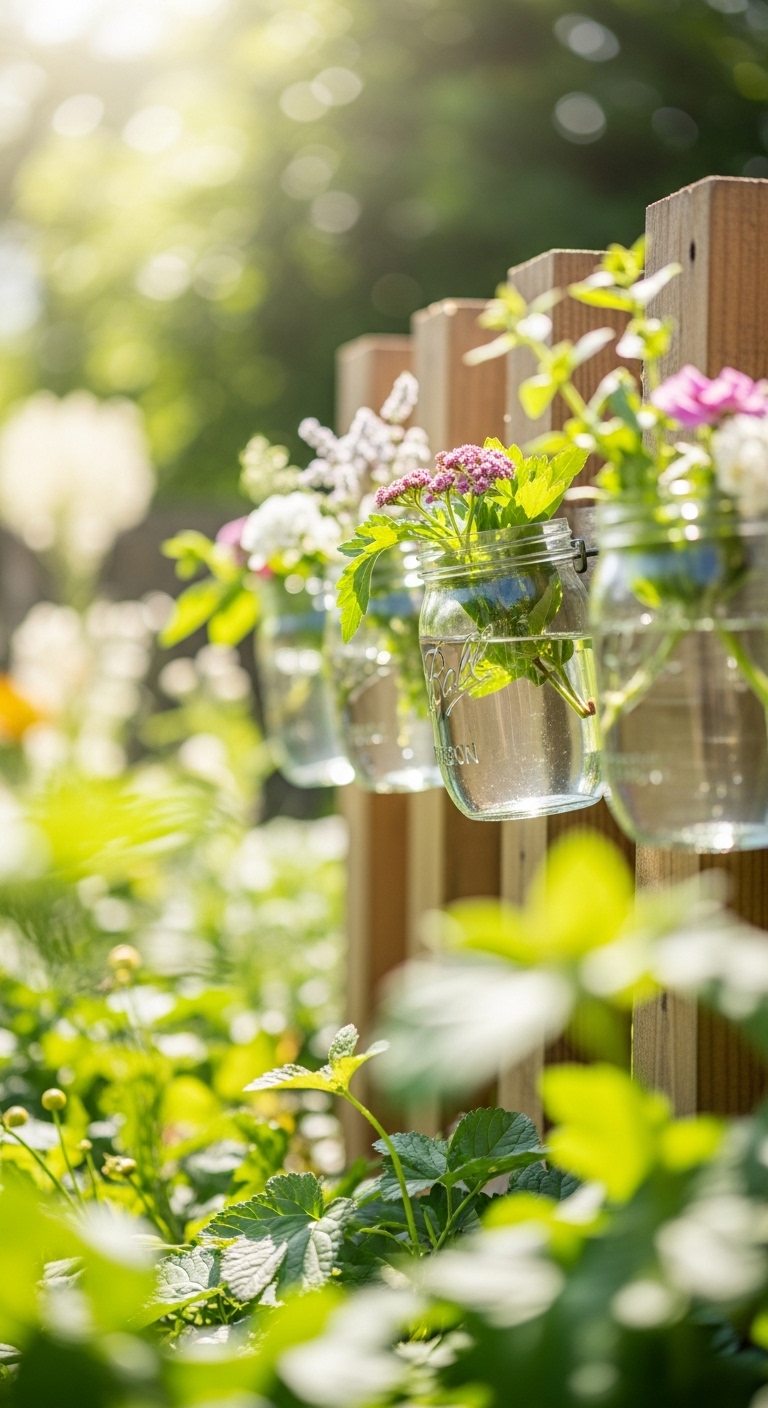
Mason jars attached to a fence or pallet board create a neat, compact planting display that feels fresh and decorative. They are ideal for herbs, small blooms, or leafy cuttings, and the glass adds a light-reflecting quality that looks lovely in the sun. This setup works best in a sheltered area where the jars can be admired up close. It is a simple way to decorate a blank fence while adding a bit of greenery and vertical interest.
- Best For: Small gardens, balconies, and narrow patio areas.
- Budget Tip: Reuse saved jars and mount them gradually instead of creating a full wall at once.
- Styling Idea: Pair clear glass with wood for a clean rustic look, or use mixed jars for a collected feel.
- Practical Note: Make sure the mounting hardware is secure, especially if the jars will be watered often.
Conclusion
Recycled garden planters can make an outdoor space feel more creative, personal, and inviting without requiring a big budget. Even one or two of these ideas can add color, texture, and charm to a patio, balcony, or backyard corner. Start with a simple project that suits your space, then build from there as your garden style begins to grow.
FAQs
1. What are the easiest recycled planters to make on a small budget?
Tin cans, plastic bottles, and old rain boots are some of the easiest and cheapest options. They are simple to prepare, easy to plant, and often use items you already have at home. A little paint or twine can also make them look more decorative without spending much.
2. Which recycled planter ideas work best for renters?
Hanging bottle planters, tin can herb walls on removable boards, and small teapot or jar planters are great for renters. These are easy to move and do not require permanent changes to the garden or balcony. Portable planters are usually the safest and most flexible choice.
3. How can I make recycled planters last longer outdoors?
Drainage is the most important step, since trapped water can damage both plants and containers. You can also line wooden pieces, raise them slightly off wet ground, and place delicate items in sheltered areas. Choosing tougher plants for harsher spots will also reduce maintenance.
4. Are recycled planters good for very small gardens or balconies?
Yes, many recycled planters are ideal for small spaces because they can be hung, stacked, or placed on shelves. Vertical ideas like tin cans, jars, and bottles help you grow upward instead of taking up floor space. This keeps the area tidy while still adding greenery and charm.
5. How do I mix decor and plants without making the garden look cluttered?
Choose a simple color palette and repeat a few materials such as wood, metal, or glass to create a more unified look. It also helps to group planters in small sets instead of spreading too many different styles everywhere. Leaving a little empty space around special pieces makes them stand out more.
6. What plants are best for recycled planters?
Herbs, succulents, trailing vines, and compact flowering plants are usually the easiest choices. They suit smaller containers well and are simple for beginners to manage. Just match the plant to the planter size, sunlight, and drainage so it stays healthy.


