10 Creative Recycled Planter Garden Ideas
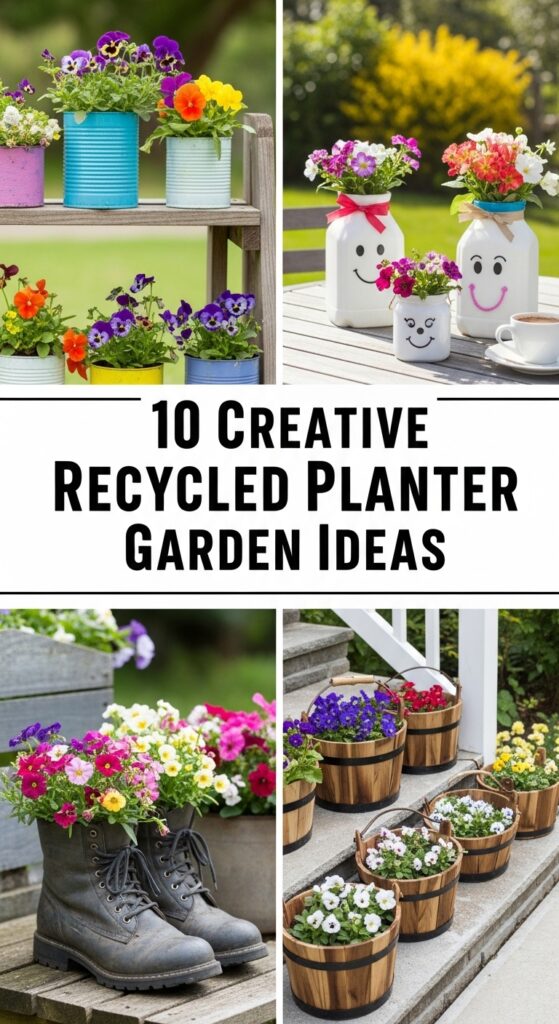
Recycled planters are one of the easiest ways to add charm, personality, and practical growing space to a garden without spending much. They are especially useful for home gardeners, renters, and anyone working with a patio, balcony, or small backyard who wants creative decor that feels personal.
This kind of project turns everyday items into eye-catching features while giving your outdoor space more color, texture, and character. From playful containers to rustic stacked displays, these ideas can help you build a garden that feels welcoming and stylish while making good use of materials you already have at home.
Quick List
- Vintage Tin Can Herb Planters
- Painted Tire Flower Beds
- Wooden Crate Stacked Planter Display
- Old Teapot Succulent Planters
- Rain Boot Flower Planters
- Hanging Plastic Bottle Wall Planters
- Colander Hanging Basket Planters
- Broken Chair Seat Planter Makeover
- Mason Jar Rail Planters
- Repurposed Drawer Garden Planters
Vintage Tin Can Herb Planters

Clean out large tin cans, smooth the edges, and give them a fresh coat of paint or leave a little worn metal showing for a vintage look. They work beautifully for herbs like mint, parsley, or basil, especially when grouped on a shelf, windowsill, or garden table. The mix of greenery and simple metal texture gives the space a cozy, collected feel that looks both practical and decorative.
- Best For: Small patios, balconies, and kitchen-adjacent garden corners. They are especially useful for gardeners who want compact edible plants nearby.
- Budget Tip: Save food cans over time instead of buying containers all at once. A few coats of leftover paint can make them feel coordinated.
- Styling Idea: Use muted whites, soft greens, or distressed finishes for a cottage or farmhouse mood.
- Practical Note: Add drainage holes at the bottom and place the cans on trays if using them on wood surfaces.
Painted Tire Flower Beds

Old tires can become bold flower beds with a little paint and thoughtful placement. Set them directly on the ground, fill them with soil, and plant cheerful flowers that spill over the edges. Soft colors can make them look surprisingly polished, while bright blooms create a strong contrast against the rounded shape. They are great for adding structure and color to plain garden areas.
- Best For: Larger yards, kid-friendly gardens, or spots that need a focal point.
- Budget Tip: Ask local garages if they have unwanted tires, then refresh them with leftover outdoor paint.
- Styling Idea: Choose one color palette, such as white and pastel blooms, for a cleaner and more intentional look.
- Practical Note: Place them where water drains well so they do not collect excess moisture around the base.
Wooden Crate Stacked Planter Display

Recycled wooden crates are perfect for building height in the garden. Stack them in a staggered arrangement and fill each level with flowers, herbs, or trailing plants to create a layered display. The natural wood adds warmth and texture, while the stepped shape helps even a small corner feel fuller and more styled. It is a simple way to make a blank wall or fence feel more alive.
- Best For: Small gardens, patios, and narrow side yards that need vertical interest.
- Budget Tip: Use secondhand fruit crates or old storage boxes instead of buying tiered stands.
- Styling Idea: Leave the wood natural for a rustic feel or stain it darker for a more refined outdoor look.
- Care & Maintenance: Line the crates if needed and check for rot once or twice a season, especially after heavy rain.
- Extra Idea: Mix trailing ivy with upright flowers to make the display feel lush and balanced.
Old Teapot Succulent Planters

Old teapots make charming planters for succulents because their shape already feels decorative. Their curved handles and spouts add a whimsical touch, while compact succulents bring in lovely texture with very little fuss. Place them on a garden table, bench, or shelf where the details can be appreciated up close. They are small, elegant, and ideal for adding personality without clutter.
- Best For: Tabletop styling, porch shelves, and decorative corners with good light.
- Budget Tip: Look for chipped or unmatched teapots at thrift shops, since they are often inexpensive and still beautiful for garden use.
- Styling Idea: Pair white, floral, or slightly worn teapots with soft gray-green succulents for a romantic vintage mood.
- Care & Maintenance: Use gritty soil and avoid overwatering so the roots stay healthy in smaller containers.
Rain Boot Flower Planters

Outgrown or worn rain boots can become playful flower planters that bring instant color to the garden. Fill them with soil, add drainage holes, and plant bright seasonal blooms for a fun display near a doorway, path, or fence. Their tall shape works well for upright flowers and trailing accents, and they add a cheerful, informal touch that feels creative without much effort.
- Best For: Family gardens, entry paths, and casual outdoor spaces that need a pop of personality.
- Budget Tip: Use old boots from around the house rather than buying decorative containers.
- Styling Idea: Match bloom colors to the boot color for a tidy look, or mix contrasting shades for something more playful.
- Practical Note: Place them where they will not tip easily, especially after watering or strong wind.
Hanging Plastic Bottle Wall Planters

Plastic bottles can be repurposed into useful wall planters for herbs, trailing greenery, or compact flowers. Cut them neatly, add drainage, and mount them along a fence or railing in tidy rows. This creates a vertical garden that saves floor space while adding a soft green backdrop. When done carefully, the arrangement looks clean, fresh, and surprisingly stylish for such a low-cost project.
- Best For: Renters, balcony gardeners, and anyone working with very limited ground space.
- Budget Tip: Reuse bottles you already have and build the display gradually as more become available.
- Styling Idea: Keep all bottles aligned at the same height for a modern, organized appearance.
- Practical Note: Secure each planter firmly and avoid overloading them with heavy, water-hungry plants.
- Care & Maintenance: Small containers dry out faster, so check the soil more often during warm weather.
Colander Hanging Basket Planters

An old colander already has drainage, which makes it a natural fit for a hanging planter. Fill it with cascading flowers or trailing vines, then hang it from a hook, beam, or pergola for instant charm. The perforated metal or enamel surface adds texture, and the overflowing greenery softens the look beautifully. It is a clever way to bring more layers and movement into your garden design.
- Best For: Porches, pergolas, and patio seating areas where hanging decor adds softness.
- Budget Tip: Use secondhand kitchen pieces rather than buying new baskets.
- Styling Idea: White enamel colanders suit cottage gardens, while plain metal ones work well in rustic or industrial spaces.
- Practical Note: Use sturdy hooks and check the weight after watering, since hanging containers become heavier when wet.
Broken Chair Seat Planter Makeover

A damaged chair can still become a standout garden feature. Remove the broken seat, place a basket or pot in the opening, and fill it with colorful flowers or trailing greenery. The chair frame adds height and structure, while the plants soften it into something decorative and charming. It looks especially lovely tucked into a border or placed on gravel as a whimsical focal point.
- Best For: Cottage-style gardens, backyard corners, and decorative flower beds.
- Budget Tip: Use a chair that is no longer safe indoors instead of throwing it away.
- Styling Idea: Distressed paint, soft florals, and trailing foliage create a relaxed, storybook feel.
- Care & Maintenance: Protect wood with outdoor sealer if you want the chair to last longer through changing weather.
- Extra Idea: Add a second smaller pot underneath the chair for a fuller layered display.
Mason Jar Rail Planters

Mason jars can be attached to railings or narrow wooden boards to create charming mini planters for herbs and small flowers. Their clear glass catches the light beautifully, and the compact size makes them ideal for porches and balconies. They give a fresh, handmade look that feels neat rather than crowded, especially when lined up evenly and planted with simple greenery.
- Best For: Balconies, porch rails, and narrow spaces where floor room is limited.
- Budget Tip: Reuse jars from the kitchen and attach them with simple clamps or holders.
- Styling Idea: Plant matching herbs for a clean look or mix flowers and greenery for a softer feel.
- Practical Note: Make sure the jars are securely fastened and do not block walking or seating areas.
Repurposed Drawer Garden Planters

Old drawers can become beautiful garden planters with a layered vintage feel. Place them on steps, gravel, or directly in a border, then fill them with herbs, flowers, or trailing plants that spill over the edges. Their boxy shape gives structure, while peeling paint or worn wood adds character. Grouping several drawers in different sizes creates a collected display that looks thoughtful and creative.
- Best For: Patio styling, decorative corners, and gardens with a rustic or vintage theme.
- Budget Tip: Use mismatched drawers from old furniture rather than buying ready-made planter boxes.
- Styling Idea: Soft faded paint and loose, overflowing flowers create a relaxed antique garden mood.
- Practical Note: Drill drainage holes and raise the drawer slightly off the ground to help prevent rot.
- Care & Maintenance: Refresh the finish or liner when needed if the wood begins to wear from regular watering.
Conclusion
Recycled planters can make a garden feel warmer, more personal, and much more creative without a big budget. Even one or two simple projects can add color, texture, and charm to an outdoor space. Start with the materials you already have, choose a style you enjoy, and build from there until your garden feels both useful and beautifully lived-in.
FAQs
1. What are the cheapest recycled planter ideas to start with?
Tin cans, plastic bottles, and old jars are usually the easiest and least expensive options. Most people already have them at home, and they only need basic cleaning, drainage holes, and a little styling to look attractive.
2. Which recycled planters are best for renters?
Portable options like tin cans, teapots, colanders, mason jars, and drawers are great for renters because they can move with you. They also avoid permanent changes to the ground, which makes them easier to use on balconies, patios, or temporary outdoor setups.
3. What recycled planters are easiest to maintain?
Succulent planters in teapots, sturdy crate displays, and larger drawer planters are fairly easy to manage. They usually need less frequent watering than tiny containers, and they can be planted in simple, low-maintenance combinations.
4. Can recycled planters work in very small spaces?
Yes, especially vertical ideas like bottle wall planters, rail-mounted jars, and stacked crates. These make use of walls, railings, and corners, which helps you grow and decorate without taking up valuable floor space.
5. How do I make recycled planters look stylish instead of messy?
Use a clear color palette, repeat a few materials, and group containers in a tidy way. Even very simple recycled items look more polished when they are clean, well-planted, and arranged with some balance in height, color, and spacing.
6. Is it safe to mix plants and decor in reused containers?
Yes, as long as the containers are clean, have good drainage, and are suitable for outdoor use. Avoid anything with sharp edges, unstable bases, or materials that break down too easily in wet conditions.


