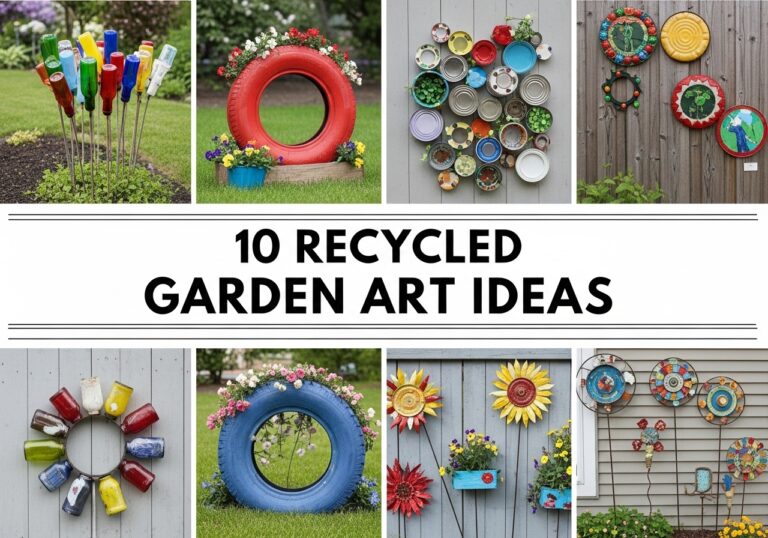
10 Recycled Shoe Planter Ideas for Small Spaces
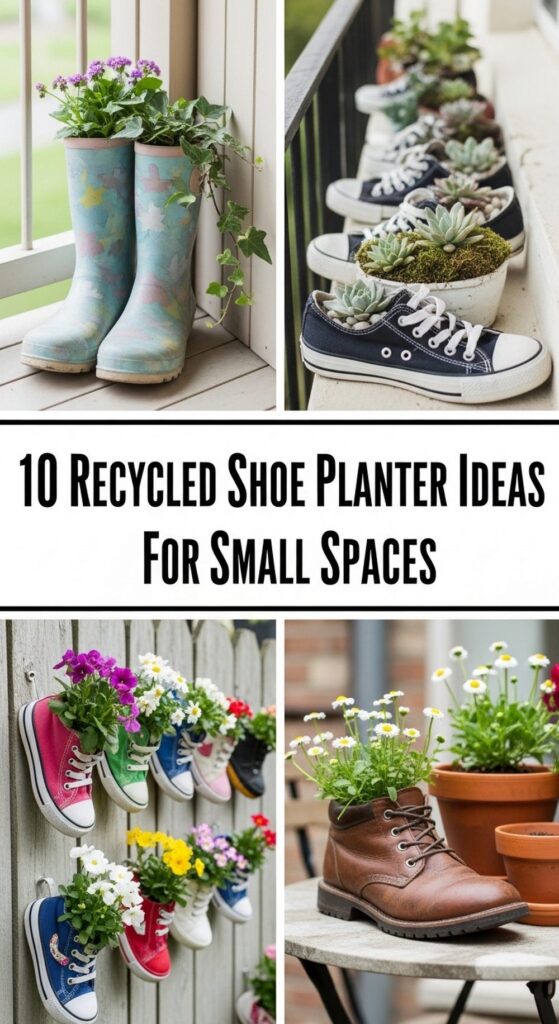
If your home is short on outdoor space but big on personality, recycled shoe planters are a fun way to squeeze more green into every corner. Old sneakers, boots, and even baby shoes can become quirky little plant homes that brighten balconies, windowsills, and tiny patios.
In this post, you’ll find simple, practical ways to turn worn-out footwear into clever planters that suit renters, small-space dwellers, and budget-conscious gardeners. These ideas focus on easy setups, minimal tools, and creative styling so you can transform forgotten shoes into charming mini gardens that make your space feel more lively, personal, and inviting.
Quick List
- Colorful Sneaker Herb Rail
- Kids’ Rain Boot Balcony Garden
- Chic High-Heel Succulent Display
- Rustic Leather Boot Wall Planters
- Flip-Flop Mini Cactus Row
- Sturdy Work Boot Doorstep Planters
- Cozy Slipper Window Ledge Garden
- Mismatched Shoe Crate Planter Cluster
- Baby Shoe Micro-Planter Collection
- Vintage Shoe Ladder Vertical Garden
1. Colorful Sneaker Herb Rail

Turn old sneakers into a playful herb garden by tying them along a balcony railing or slim wall-mounted bar. Line the insides with a bit of plastic or landscape fabric, punch drainage holes, and fill with lightweight potting mix and compact herbs like basil, chives, or parsley. The bright shoe colors pop beautifully against green foliage, and the long, narrow rail setup makes this perfect for tight balconies where every inch counts.
- Best For: Narrow balconies or railings that need a burst of color and greenery.
- Budget Tip: Use worn-out family sneakers and leftover paint or fabric markers for a refresh instead of buying new decor.
- Styling Idea: Stick to one color palette (all pastels, all primary colors, or black-and-white) to keep the look cohesive rather than cluttered.
- Practical Note: Tie or wire sneakers securely so they don’t swing in strong winds or slip off the rail.
- Care & Maintenance: Choose herbs that you actually cook with and trim regularly to keep them compact and healthy.
2. Kids’ Rain Boot Balcony Garden

Those outgrown rain boots are perfect for small-space planters, especially on a balcony ledge. Their sturdy shape and waterproof material make them ideal for cheerful flowers or small grasses. Drill a few drainage holes in the soles, add gravel at the bottom, and top with potting mix. Group several boots in a row along the ledge or on a narrow shelf for a bright, playful mini garden that instantly softens hard balcony edges.
- Best For: Families who want a cute, kid-friendly balcony garden without buying new containers.
- Budget Tip: Mix and match old boots from friends or relatives to build a full row of planters for free.
- Styling Idea: Arrange boots in a rainbow order or alternate patterns (stripes, polka dots, solids) for a fun, graphic look.
- Practical Note: Use clamps or discreet brackets on the underside of the ledge to keep boots stable and safe.
- Care & Maintenance: Choose hardy blooms like marigolds or pansies that cope well with changing balcony conditions.
3. Chic High-Heel Succulent Display
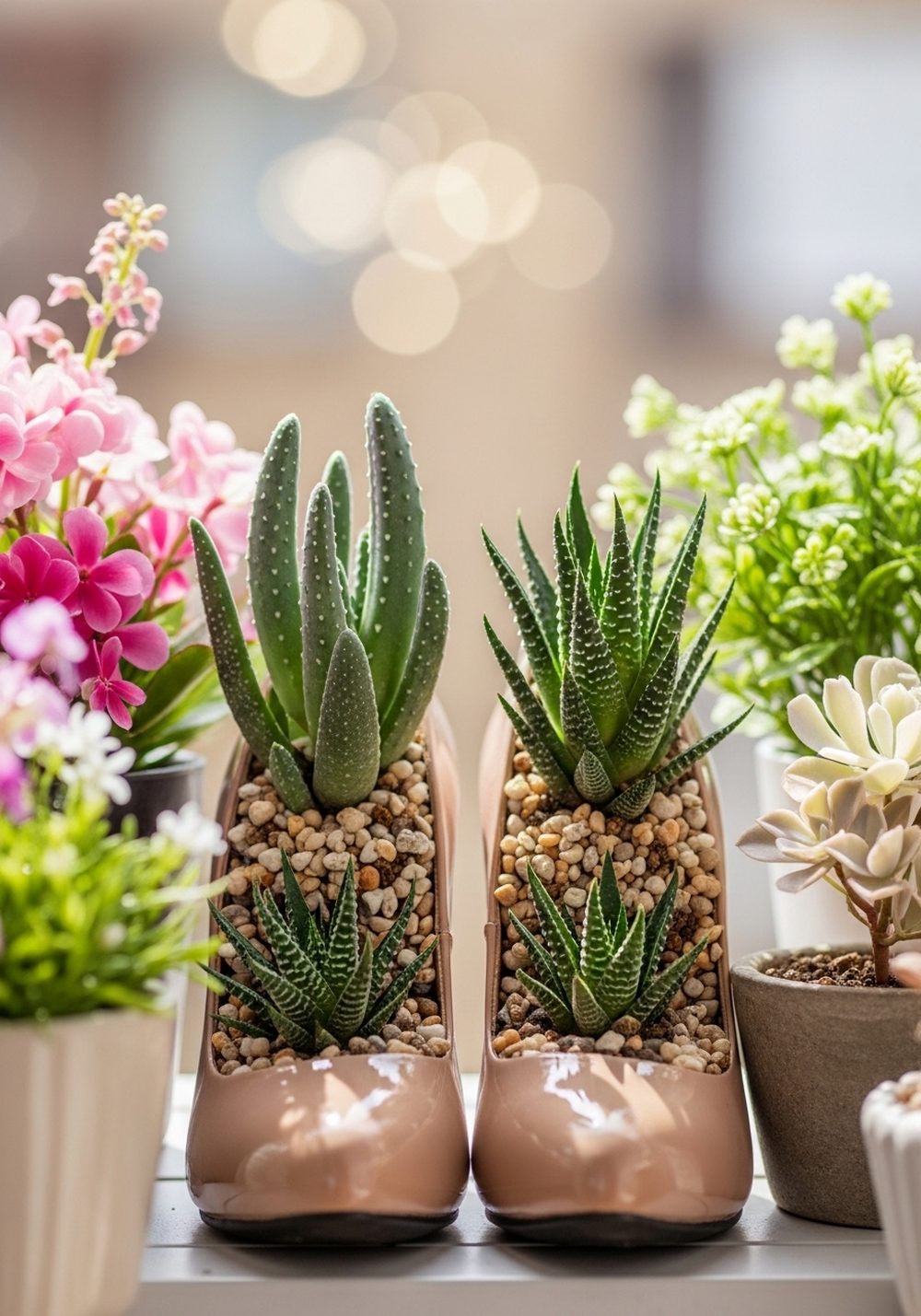
Old high heels can become unexpectedly elegant planters when filled with sculptural succulents. Place them on a narrow balcony shelf, a small patio side table, or a window ledge where they’ll be seen up close. Line the inside with a bit of plastic, add gritty cactus mix, and tuck in a few small succulents or sedums. The contrast between sleek shoe shapes and chunky plants creates a stylish, almost art-like accent in a small area.
- Best For: Fashion lovers who want a chic, conversation-starting planter in a compact space.
- Budget Tip: Use heels that are scuffed or broken instead of throwing them away, and source succulents as cuttings from friends.
- Styling Idea: Stick to neutral shoes (black, nude, metallic) with pale green succulents for a minimalist, modern vibe.
- Practical Note: Keep these planters in a spot where they won’t be knocked over, as they’re lighter and more delicate.
- Care & Maintenance: Water sparingly and ensure there’s drainage so succulents don’t rot.
4. Rustic Leather Boot Wall Planters
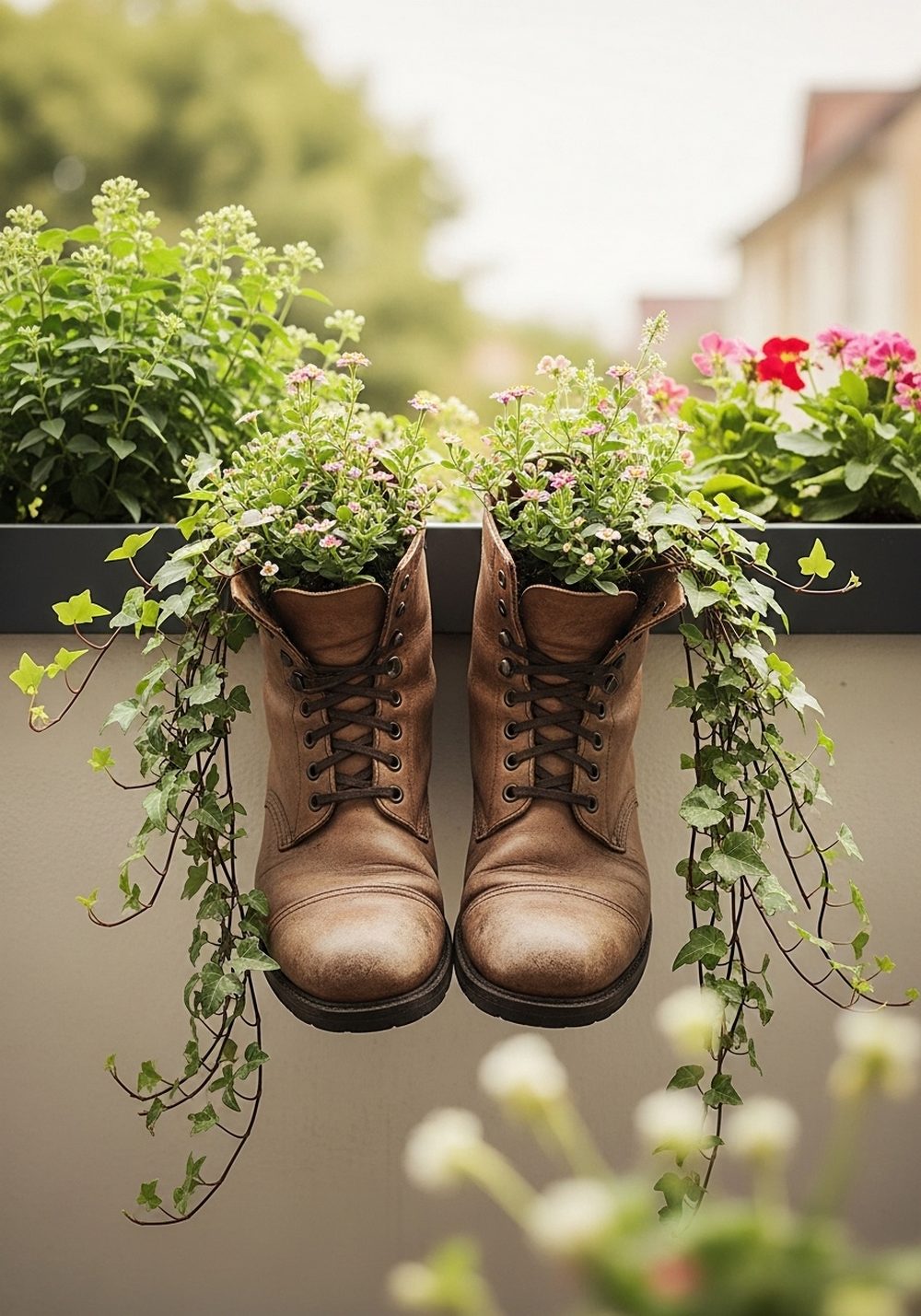
Weathered leather boots look fantastic as rustic wall planters on a small balcony or patio. Hang them from sturdy hooks on a fence, wall, or railing panel, then fill with trailing ivy, lobelia, or small ferns. The aged leather adds warmth and character, while the cascading plants soften vertical surfaces and draw the eye up, which is perfect when floor space is limited.
- Best For: Compact balconies or patio walls that feel bare and need vertical interest.
- Budget Tip: Use old work or hiking boots and a scrap of wood or pallet board as a backing instead of buying wall planters.
- Styling Idea: Pair the boots with other natural textures like jute rope, wooden crates, or metal lanterns for a cozy, rustic look.
- Practical Note: Make sure hooks and fixings can handle the weight of wet soil and plants.
- Care & Maintenance: Choose shade-tolerant plants if the wall doesn’t get much direct sun.
5. Flip-Flop Mini Cactus Row
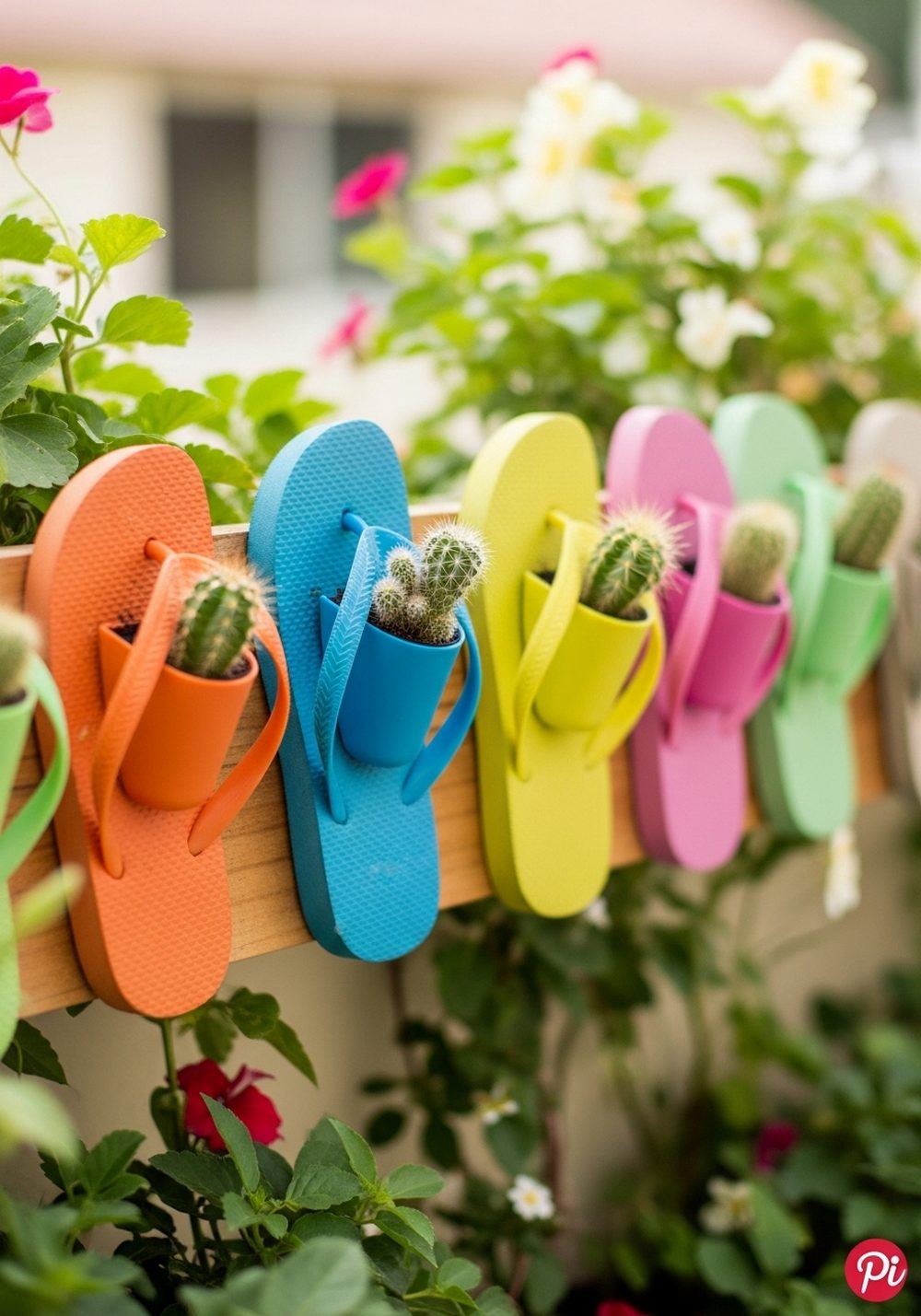
Flat and fun, flip-flops make quirky little “pockets” for tiny cacti or succulents when mounted vertically. Attach them sole-side to a narrow board or directly to a balcony rail, then fix small containers or pockets on top to hold soil and plants. This works brilliantly for very tight spaces where you need something ultra-slim but eye-catching.
- Best For: Super-small balconies or railings where depth is limited but you still want vertical greenery.
- Budget Tip: Use old flip-flops and repurpose small yogurt pots or tin cans as the hidden plant containers.
- Styling Idea: Choose bright, summery colors and repeat two or three shades to keep the display looking intentional.
- Practical Note: Use plants that need very little water to avoid mess on the wall or floor below.
- Care & Maintenance: Cacti and succulents thrive in well-draining soil and full sun, so avoid overwatering.
6. Sturdy Work Boot Doorstep Planters
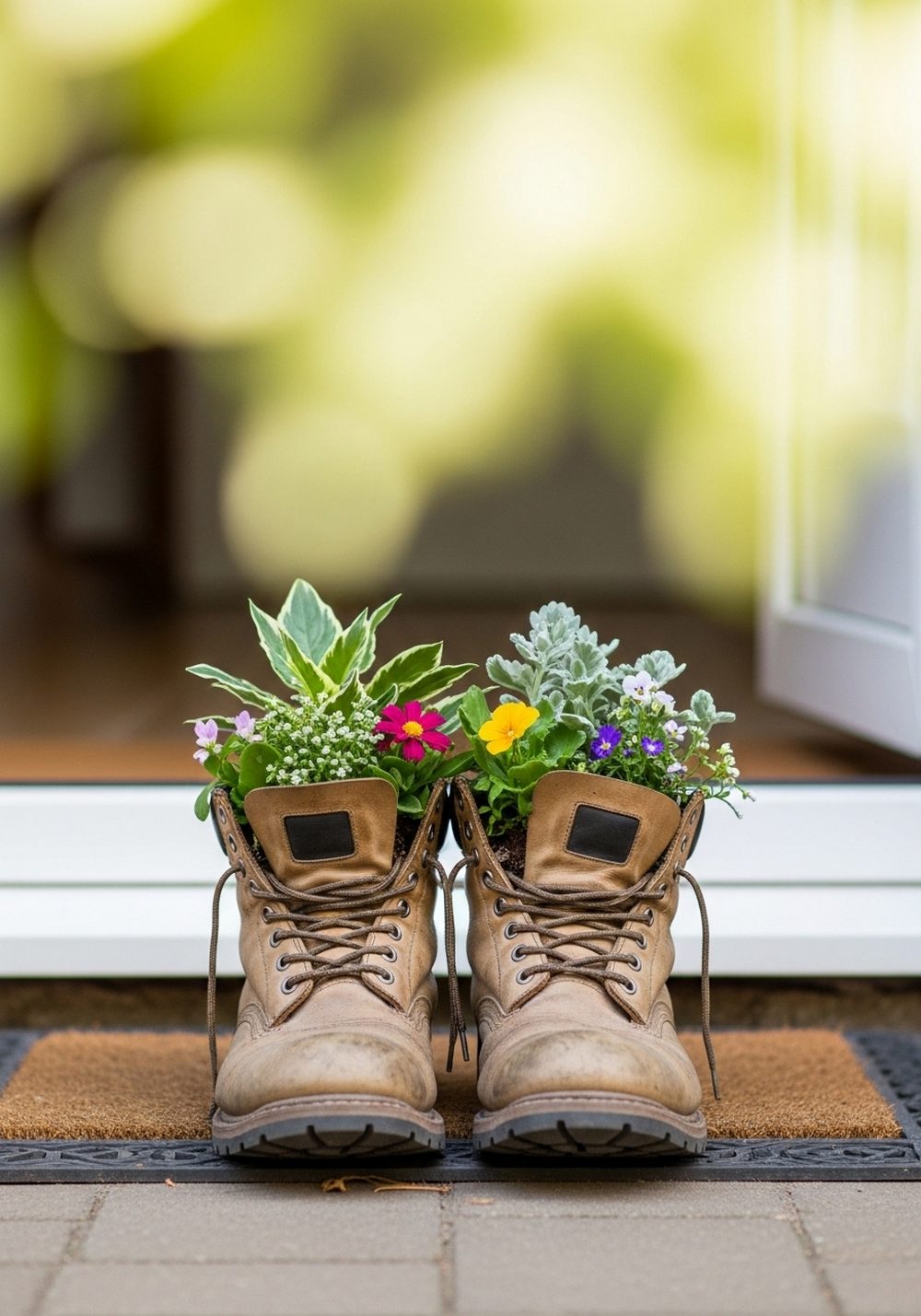
Rugged work boots naturally suit doorstep duty. Their chunky shape and solid soles make them stable enough to sit by a small apartment entrance, framing the door with greenery. Fill them with tough, compact plants such as dwarf boxwood, small grasses, or seasonal flowers. They bring instant personality to an otherwise plain entry and set a friendly tone before guests even step inside.
- Best For: Apartment or townhouse doorsteps that feel bare and need a welcoming touch.
- Budget Tip: Use old work or hiking boots and refill them seasonally with inexpensive bedding plants.
- Styling Idea: Add a simple coir doormat and a lantern or two for a snug, cottage-style entry in even the smallest space.
- Practical Note: Place a shallow tray underneath to protect surfaces from drainage and mud.
- Care & Maintenance: Refresh soil once or twice a year and check the boots for cracks over time.
7. Cozy Slipper Window Ledge Garden
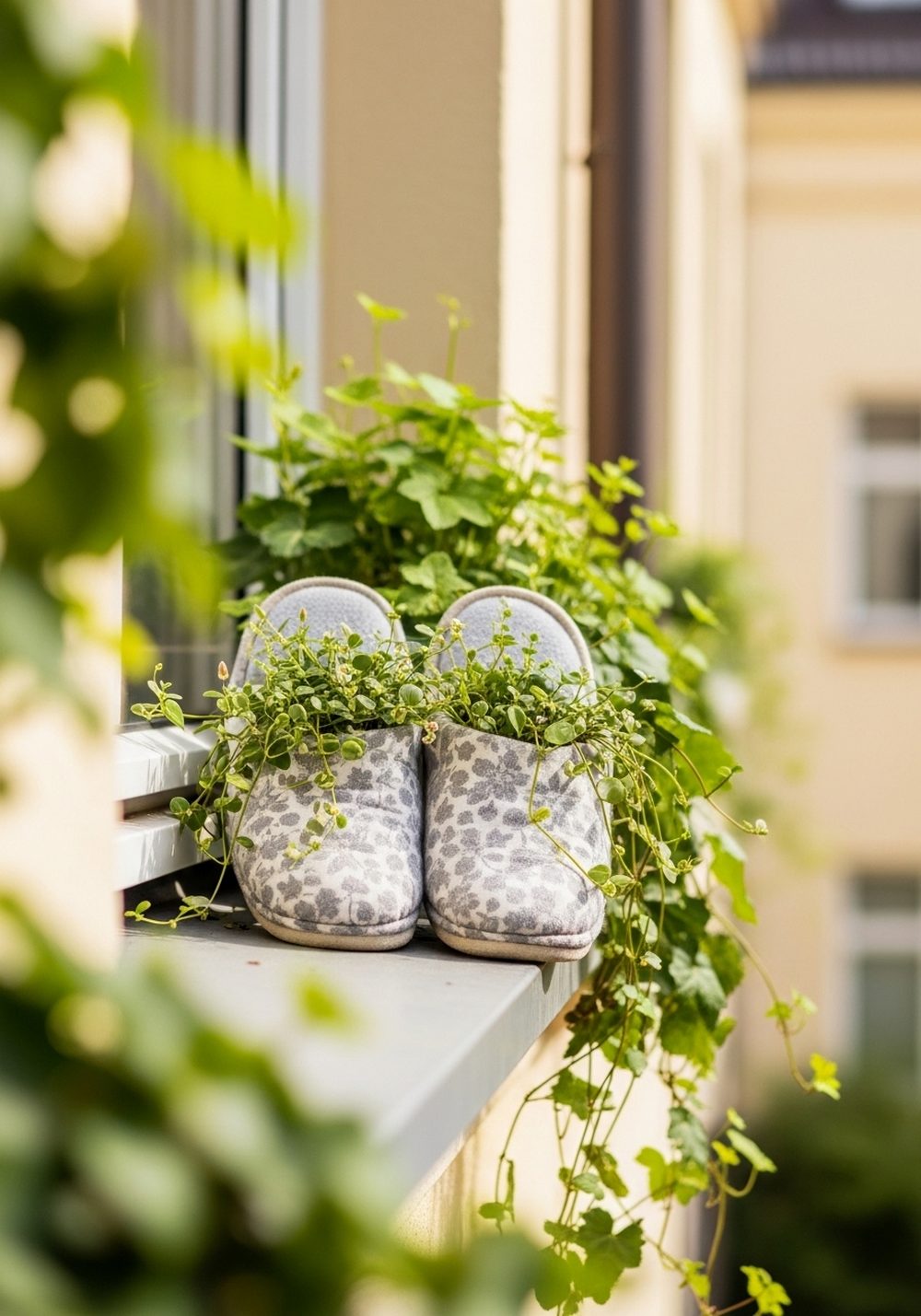
Soft slippers have a charming, homey feel when turned into tiny window ledge planters. Line them with plastic or foil, poke a few drainage holes, and fill with lightweight potting mix and delicate trailing plants like ivy, creeping Jenny, or baby tears. Perched on an exterior ledge or narrow shelf, they create the impression of a tiny garden curling gently over the edge of your window.
- Best For: Small homes where the window ledge is one of the only available outdoor surfaces.
- Budget Tip: Repurpose worn slippers and leftover fabric to create matching or contrasting pairs without buying new decor.
- Styling Idea: Choose neutral, knitted, or faux-fur slippers for a soft, cozy look that feels like indoor comfort spilling outside.
- Practical Note: Secure slippers so they cannot fall—use discreet brackets, screws, or a narrow tray.
- Care & Maintenance: Opt for plants that tolerate partial shade and occasional missed waterings.
8. Mismatched Shoe Crate Planter Cluster
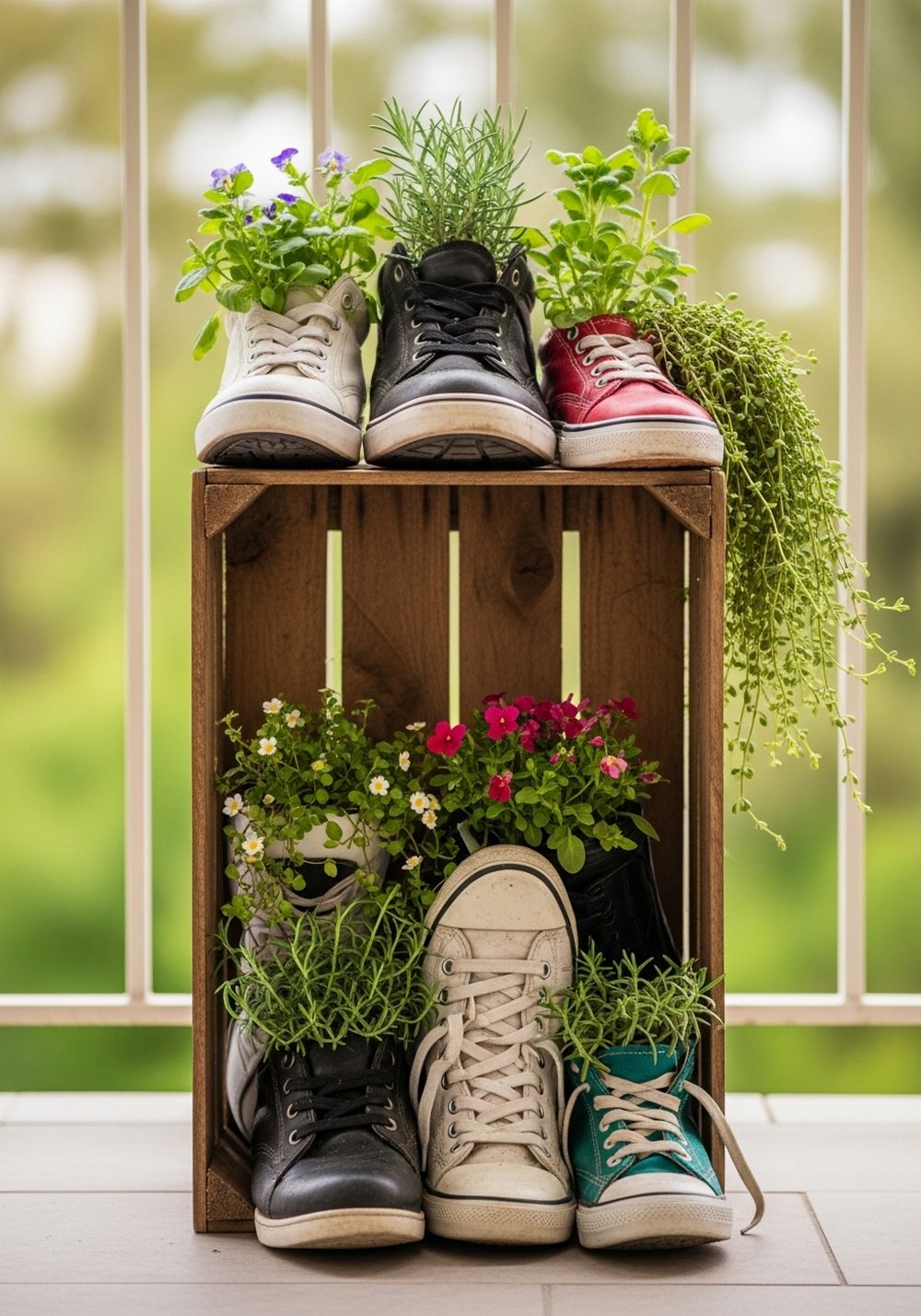
If you have several single shoes with missing partners, turn them into a playful planter cluster inside a shallow wooden crate. Fill each shoe with soil and a different plant type—herbs, flowers, or trailing vines—then snug them together in the crate so they support one another. This creates a contained, movable mini garden that works beautifully on a tiny balcony floor or low shelf.
- Best For: People with a collection of odd shoes and a small floor area that needs a statement piece.
- Budget Tip: Use a second-hand crate or leftover shipping box lined with plastic instead of buying a planter box.
- Styling Idea: Embrace the mix-and-match look by combining different colors and styles but repeat one element (like white flowers) to tie it together.
- Practical Note: Add a layer of gravel at the bottom of the crate to catch excess water and improve drainage.
- Care & Maintenance: Group plants with similar light and watering needs to make care easier.
9. Baby Shoe Micro-Planter Collection
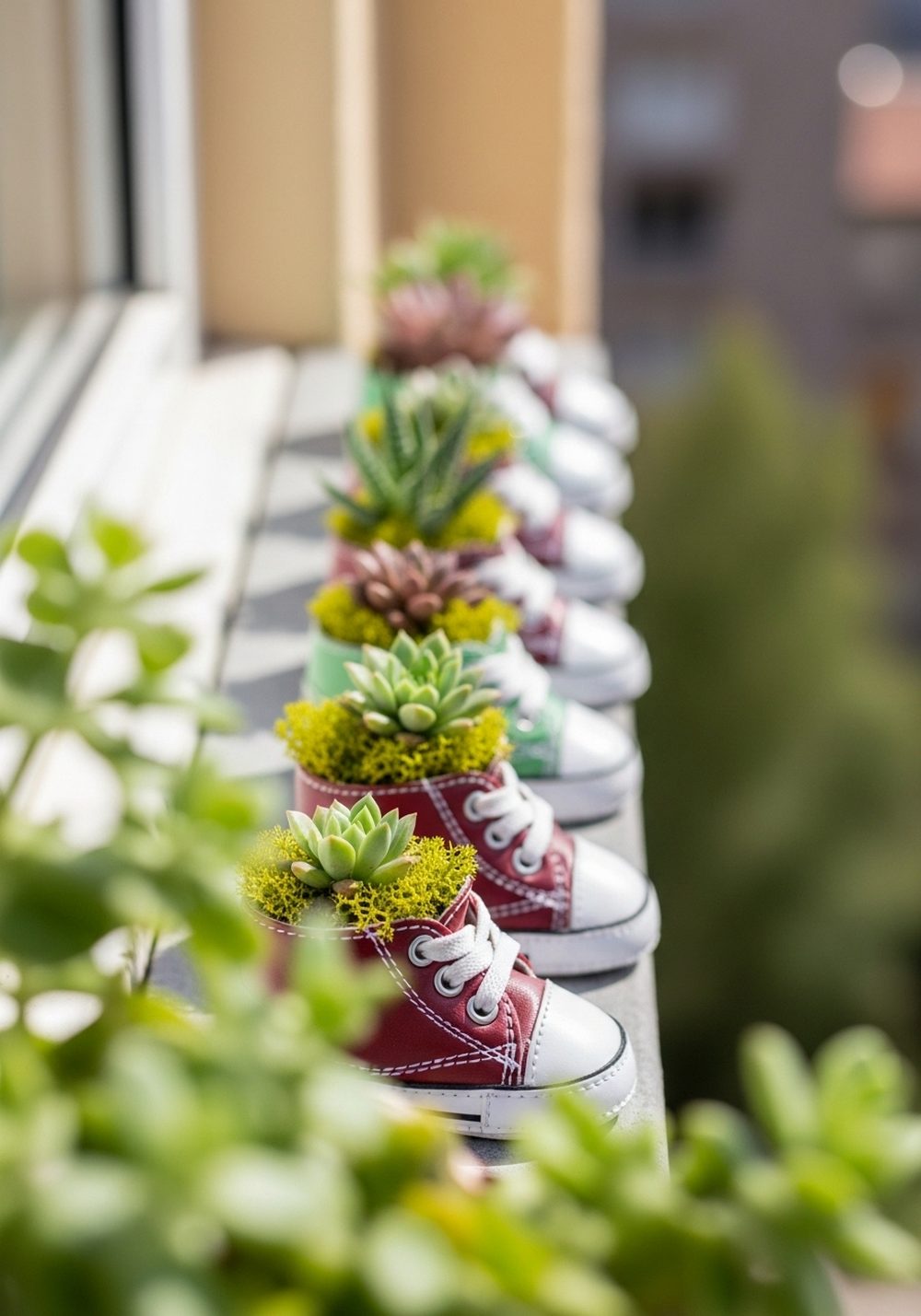
Tiny baby shoes are perfect for micro-planters, especially for succulents, moss, or teeny groundcovers. Line them up on a narrow shelf, windowsill, or balcony rail where space is at a premium. Their small size keeps the arrangement delicate and manageable, while their sentimental value makes them especially meaningful if they belonged to your children or family members.
- Best For: Very small spaces or renters who only have a slim windowsill to decorate.
- Budget Tip: Reuse family baby shoes or pick up a few pairs from thrift shops for very little cost.
- Styling Idea: Keep the color palette soft and simple—think whites, creams, and pale blues with gentle green plants—to avoid visual clutter.
- Practical Note: Because the soil volume is tiny, these planters can dry out quickly and need more frequent checks.
- Care & Maintenance: Choose plants that stay very small and tolerate being slightly root-bound.
10. Vintage Shoe Ladder Vertical Garden

Combine several pairs of recycled shoes with a narrow wooden ladder for a vertical garden that fits against a wall or balcony corner. Rest shoes on each rung or attach them securely with wire, filling them with a mix of herbs, flowers, and trailing plants. The ladder adds height, while the shoes supply character, giving you a layered, eye-catching feature without taking up much floor space.
- Best For: Tiny patios or balconies where vertical gardening is the easiest way to add more plants.
- Budget Tip: Look for old ladders at thrift stores or reuse one from home, and fill with repurposed shoes instead of buying pots.
- Styling Idea: Stick to one theme—like all leather shoes, or all white trainers—for a unified, intentional display.
- Practical Note: Ensure the ladder is stable and, if possible, secured to a wall or railing for safety.
- Care & Maintenance: Place thirstier plants on lower rungs where they’re easier to water and less exposed to wind.
Conclusion
Recycled shoe planters prove you do not need a big yard or expensive pots to create a garden with personality. By reusing what you already have and working vertically, you can fill tiny balconies, windowsills, and doorsteps with greenery and charm. Start with a single pair of shoes, see how it transforms your space, and slowly build your own unique “shoe garden” that reflects your style and story.
FAQs
Q1. How can I make recycled shoe planters on a very small budget?
Focus on using shoes you already own or can get for free from friends and family. Old boots, sneakers, and baby shoes all work well. Use inexpensive potting mix, take cuttings from existing plants, or swap small plants with neighbors. You can also repurpose crates, boards, and leftover paint to create supports and add color without buying new decor.
Q2. Are shoe planters suitable for renters who can’t make permanent changes?
Yes, shoe planters are ideal for renters. Most ideas in this list can sit on shelves, ledges, or the floor, or hang from removable hooks and railing brackets. Avoid drilling into walls if your lease doesn’t allow it; instead, rely on freestanding ladders, crates, and over-rail hangers that can be removed easily when you move out.
Q3. What plants work best in recycled shoe planters for low maintenance?
Low-maintenance choices include succulents, small cacti, hardy herbs like thyme and rosemary, and trailing plants such as ivy or creeping Jenny. These plants tolerate slightly cramped roots and don’t need constant watering. Always match your plant choice to the light conditions—sun-loving plants for bright spots, shade-tolerant ones for darker corners—to keep care simple and successful.
Q4. How do I prevent water damage or mess from shoe planters in small spaces?
Always add drainage holes to the shoes and place a tray, crate, or layer of gravel underneath to catch excess water. Use lightweight, well-draining potting mix instead of heavy garden soil. Position planters where drips won’t fall onto neighbors’ balconies or damage wooden flooring. Regularly check for leaks and adjust watering if you notice puddles or staining.
Q5. Can I mix plants and decor safely in tight areas like narrow balconies?
Yes, but keep safety and practicality in mind. Avoid blocking doors or walkways, and choose stable, low-profile setups where there’s a risk of bumping into planters. Use sturdy fixings for anything hung or raised and consider wind exposure on higher floors. Keep heavier shoe planters low and lighter ones higher, and always ensure you can water and maintain them comfortably without leaning over railings.