10 Repurposed Planter Ideas

Repurposed planters are a simple way to give your garden more personality without spending a lot. They turn everyday items into decorative features that feel creative, useful, and full of character. Whether you have a large backyard, a small patio, or just a sunny balcony, these ideas can help you make your outdoor space feel more personal and inviting.
This post is great for home gardeners, renters, and anyone who enjoys budget-friendly decorating. You will find easy planter ideas that reuse old items in stylish ways while adding color, texture, and charm. From rustic wooden pieces to playful containers with a vintage touch, these ideas can help you create a garden that feels more relaxed, welcoming, and truly your own.
Quick List
- Vintage Teacup Herb Planters
- Rain Boot Flower Planters
- Wooden Crate Tiered Planter Display
- Colander Hanging Flower Basket
- Drawer Turned Into A Rustic Flower Box
- Tin Can Painted Succulent Planters
- Birdcage Blooming Planter Accent
- Wheelbarrow Overflow Planter
- Mason Jar Wall Herb Garden
- Broken Chair Seat Planter Makeover
Vintage Teacup Herb Planters

Small teacups make lovely mini planters for herbs and tiny greenery. Their delicate shape adds a soft, vintage look that feels especially charming on a patio table, windowsill, or garden shelf. Choose cups with matching patterns for a tidy display or mix different styles for a collected feel. Add a little drainage material at the bottom, then plant compact herbs like thyme or mint. The contrast between fine china and fresh green leaves creates a decorative touch that feels both elegant and playful.
- Best For: Small patios, balconies, and table displays where space is limited.
- Budget Tip: Use thrifted cups or mismatched pieces you already have at home.
- Styling Idea: Pair floral teacups with cottage-style pots, soft pink blooms, and weathered wood.
- Practical Note: Water lightly since teacups are small and can stay wet for too long.
Rain Boot Flower Planters

Old rain boots can become cheerful planters that instantly brighten a garden path or porch. Their upright shape works well for flowers with a little height and a bit of trailing growth. Drill drainage holes in the bottom, then fill them with potting mix and colorful blooms like petunias or pansies. Bright boots bring a fun, informal feel, while neutral ones blend into a rustic setting. Set them in pairs or line up several for a playful display full of color and personality.
- Best For: Family gardens, porches, and casual outdoor spaces that need a fun accent.
- Budget Tip: Repurpose outgrown children’s boots or worn pairs that are no longer useful.
- Styling Idea: Use bright flowers for a lively look or all-white blooms for something softer.
- Care & Maintenance: Check drainage after rain so water does not collect inside the boots.
Wooden Crate Tiered Planter Display

Wooden crates are useful for creating height and structure in a garden. Stack them securely to form a tiered planter display, then fill each level with different plants such as herbs, flowers, or trailing greenery. This setup helps you fit more planting into a smaller footprint while making the whole area look layered and styled. The rough wood adds warmth and texture, especially when paired with terracotta pots or soft greenery. It works beautifully in corners that need a little shape and visual interest.
- Best For: Small yards, patio corners, and anyone wanting more vertical interest.
- Budget Tip: Use secondhand crates or unfinished wooden boxes instead of buying a plant stand.
- Styling Idea: Mix herbs on top, flowers in the middle, and trailing plants below for balance.
- Practical Note: Make sure the crates are stable and level before adding heavy pots.
Colander Hanging Flower Basket

An old colander makes a surprisingly pretty hanging planter thanks to its built-in drainage and airy shape. Metal colanders suit cottage, farmhouse, or rustic garden styles and look especially lovely filled with trailing flowers. Add coco liner or moss inside so the soil stays in place, then plant blooms that spill gently over the edge. Hung near a doorway, pergola, or fence, this planter adds movement and color at eye level. It is a simple way to reuse something practical in a decorative way.
- Best For: Porches, pergolas, fence hooks, and small gardens needing vertical decor.
- Budget Tip: Use an old kitchen colander you already own instead of buying a hanging basket.
- Styling Idea: Pair silver metal with white, purple, or pink flowers for a soft garden mood.
- Care & Maintenance: Hanging planters dry out faster, so check moisture more often in warm weather.
Drawer Turned Into A Rustic Flower Box

A single old drawer can become a rustic flower box full of charm. The deep shape is ideal for shallow-rooted flowers, mixed annuals, or even a few herbs. Sand rough edges if needed, add drainage holes, and place the drawer on a patio, garden bench, or gravel area. The worn wood gives the planting a cozy, lived-in look that works beautifully in cottage or farmhouse spaces. A drawer planter also feels more decorative than a standard pot and can help fill an empty spot with color.
- Best For: Patios, entry areas, and rustic gardens with vintage-inspired decor.
- Budget Tip: Repurpose one leftover drawer instead of replacing a whole old piece of furniture.
- Styling Idea: Combine soft flowers with trailing ivy for a layered, relaxed look.
- Practical Note: Raise the drawer slightly off the ground to help drainage and protect the wood.
Tin Can Painted Succulent Planters

Tin cans are one of the easiest items to turn into planters, especially for succulents. Once cleaned and painted, they can look neat, modern, playful, or rustic depending on the finish you choose. Use soft neutral shades for a calm look or muted pastels for something cheerful. Since succulents need little soil and minimal water, they suit small cans very well. Group several together on a shelf or outdoor table for a simple display that adds texture without taking up much space.
- Best For: Beginners, balconies, and compact outdoor shelves or tabletops.
- Budget Tip: Save food cans from home and paint them instead of buying small decorative pots.
- Styling Idea: Stick to one color family for a tidy display, or mix tones for a casual look.
- Care & Maintenance: Add drainage holes and avoid overwatering, especially after rainy weather.
Birdcage Blooming Planter Accent

A vintage birdcage can become a romantic garden accent when filled with flowers and soft greenery. It works more as a decorative planter than a large growing container, so it is ideal for moss, small flowering plants, or trailing vines. The open metal shape adds height and detail while still feeling light and airy. Set it on a side table, tuck it into a garden bed, or hang it near a seating area for extra charm. It brings a storybook quality to the space without needing much room.
- Best For: Cottage gardens, decorative corners, and garden seating areas.
- Budget Tip: Look for older birdcages at secondhand shops or reuse one as a seasonal display piece.
- Styling Idea: Use pastel blooms and trailing greenery for a soft, romantic mood.
- Practical Note: Line the base carefully so soil stays secure and watering stays controlled.
Wheelbarrow Overflow Planter
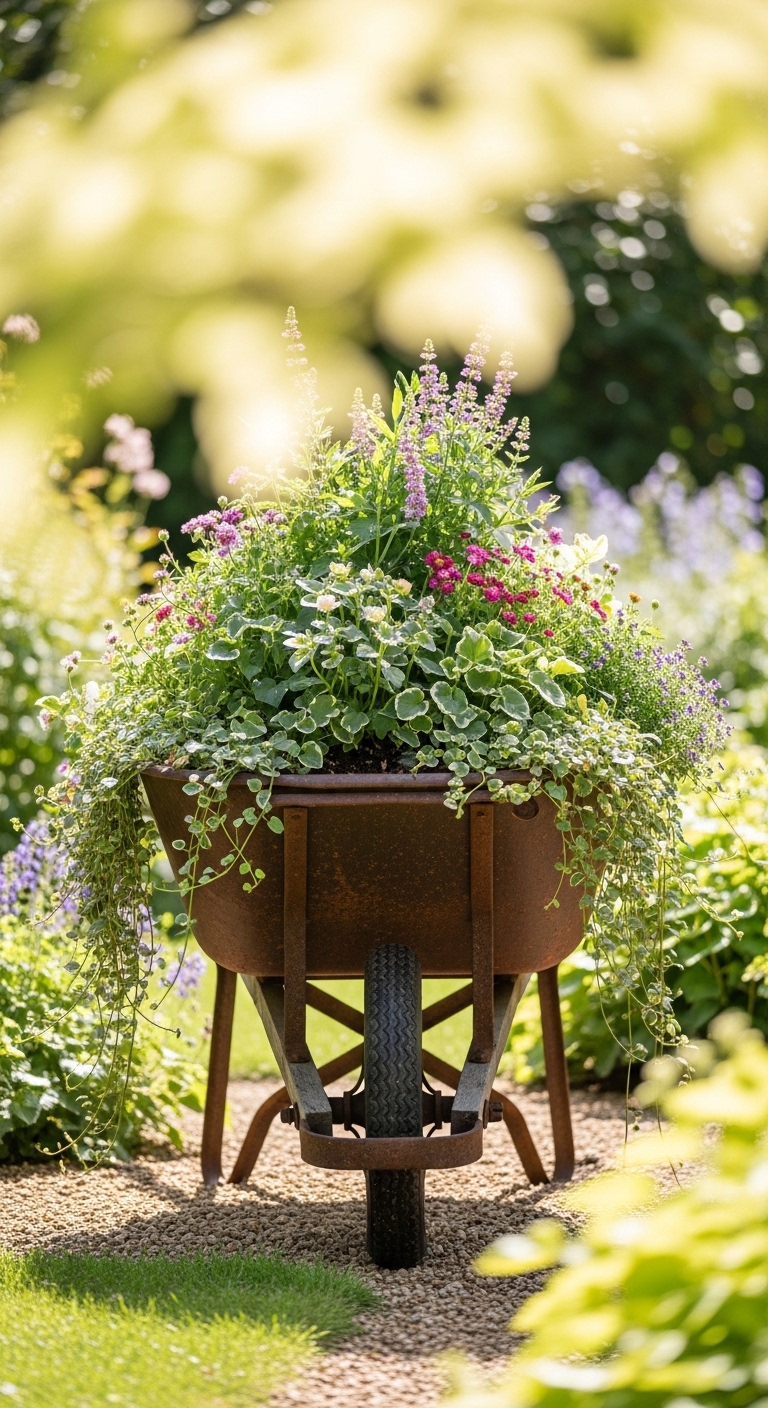
An old wheelbarrow makes a standout planter that feels generous, rustic, and full of garden character. Its large size is perfect for creating an overflowing arrangement of flowers, ornamental grasses, or trailing plants. Place it near a garden bed, at the edge of a lawn, or beside a path where it can act like a focal point. The worn wood or aged metal adds texture, while the planted mix softens the look. It is a wonderful way to reuse a tool that still deserves a place outdoors.
- Best For: Larger gardens, farmhouse-style spaces, and focal points near paths or lawns.
- Budget Tip: Use an old wheelbarrow with character even if it is no longer usable for yard work.
- Styling Idea: Mix upright flowers with trailing plants for a full, overflowing effect.
- Care & Maintenance: Check that water can drain well so roots do not sit in soggy soil.
Mason Jar Wall Herb Garden

Mason jars mounted on a wooden board can create a tidy herb garden that also works as wall decor. This idea is especially useful for patios, balconies, and compact spaces where floor space is limited. Use sturdy brackets or clamps to secure the jars, then plant herbs that stay fairly compact. The glass adds a clean, simple look, while the wood backing brings warmth and texture. Placed on a fence or sunny wall, this planter idea feels practical, decorative, and easy to enjoy every day.
- Best For: Small spaces, balconies, patios, and sunny fence walls.
- Budget Tip: Reuse jars from home and mount them on scrap wood for a low-cost project.
- Styling Idea: Pair clear jars with rustic wood for a simple mix of fresh and natural textures.
- Practical Note: Watch sunlight and watering closely since glass containers can heat up quickly.
Broken Chair Seat Planter Makeover

A broken wooden chair can become a striking planter once the seat is removed and replaced with a planted container. The chair frame adds height and structure, making the display feel decorative even before the flowers fill in. Place it among flower beds, near an entryway, or on a patio for a touch of vintage charm. Bright flowers soften the worn wood, while trailing greenery helps the piece blend into the garden. It is creative, eye-catching, and a great way to reuse furniture that no longer works indoors.
- Best For: Garden entrances, patio decor, and vintage-inspired outdoor spaces.
- Budget Tip: Repurpose a damaged chair instead of throwing it away or buying a garden feature.
- Styling Idea: Use cheerful blooms for a colorful look or stick to one shade for something elegant.
- Care & Maintenance: Protect wood with an outdoor seal if you want the chair to last longer outside.
Conclusion
Repurposed planters can make a garden feel more creative, welcoming, and personal without requiring a big budget. A few simple changes can add texture, color, and charm in ways that standard pots often do not. Start with one or two easy ideas that fit your space, then build from there as your garden style grows more confident and unique.
FAQs
1. What are the easiest repurposed planter ideas for beginners?
Tin cans, rain boots, and wooden drawers are some of the easiest options to start with. They are simple to fill, easy to place, and do not require complicated tools. Just make sure you add drainage holes and use the right soil for your plants.
2. Can I make repurposed planters on a small budget?
Yes, many repurposed planters cost very little because they use items you already have at home. Old kitchenware, furniture pieces, jars, and containers can all be turned into attractive planters. A little paint or cleaning is often enough to make them look fresh again.
3. Are repurposed planters good for renters?
They can be a great choice for renters because many of them are portable and non-permanent. Items like crates, boots, drawers, and chairs can move easily with you and do not require digging or major installation. Wall-mounted options should only be used where allowed.
4. Which repurposed planter ideas work best in very small spaces?
Teacups, tin cans, mason jars, and hanging colanders are especially useful in small areas. They fit on shelves, railings, tables, or walls without taking up much floor space. Choosing vertical or tabletop options helps keep a tiny garden looking tidy.
5. How do I make sure repurposed planters are safe for plants?
The main things to check are drainage, clean materials, and enough room for root growth. Avoid containers that hold standing water for too long, and do not use anything that may contain harmful residue. Matching the planter size to the plant will also help it stay healthy.
6. What types of plants work best in repurposed containers?
Herbs, succulents, trailing flowers, and compact annuals are usually the best choices. They adapt well to smaller or unusual containers and still give plenty of color and texture. Larger planters like wheelbarrows or crates can handle bigger mixed arrangements more easily.


