10 Concrete Planter Ideas Outdoor
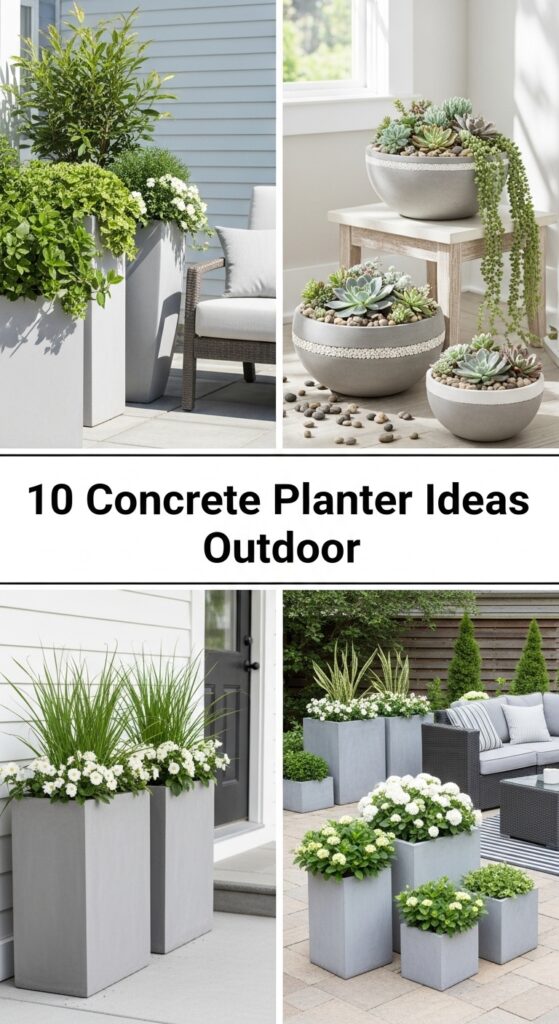
Concrete planters are one of the easiest ways to make an outdoor space look more polished, modern, and thoughtfully styled. They work well in all kinds of settings, from small patios and front porches to larger backyards and garden paths. If you want decor that feels sturdy, timeless, and easy to mix with plants, concrete is a smart choice.
This post is for home gardeners, beginners, renters with temporary outdoor setups, and anyone who wants simple upgrades that look high-end without feeling too complicated. These outdoor concrete planter ideas will help you add structure, texture, and personality to your space while keeping the overall look practical, durable, and easy to maintain.
Quick List
- Modern Minimalist Concrete Cube Planters
- Tall Concrete Planters For Entryways
- Round Concrete Bowl Planters With Succulents
- Concrete Planter Wall With Herbs
- Oversized Concrete Statement Planters
- Concrete Trough Planters Along A Patio Edge
- Clustered Concrete Pots In Mixed Sizes
- Concrete Planters With Wooden Stands
- Textured Concrete Planters In A Rustic Garden
- Concrete Planter Corner With Small Trees
Modern Minimalist Concrete Cube Planters
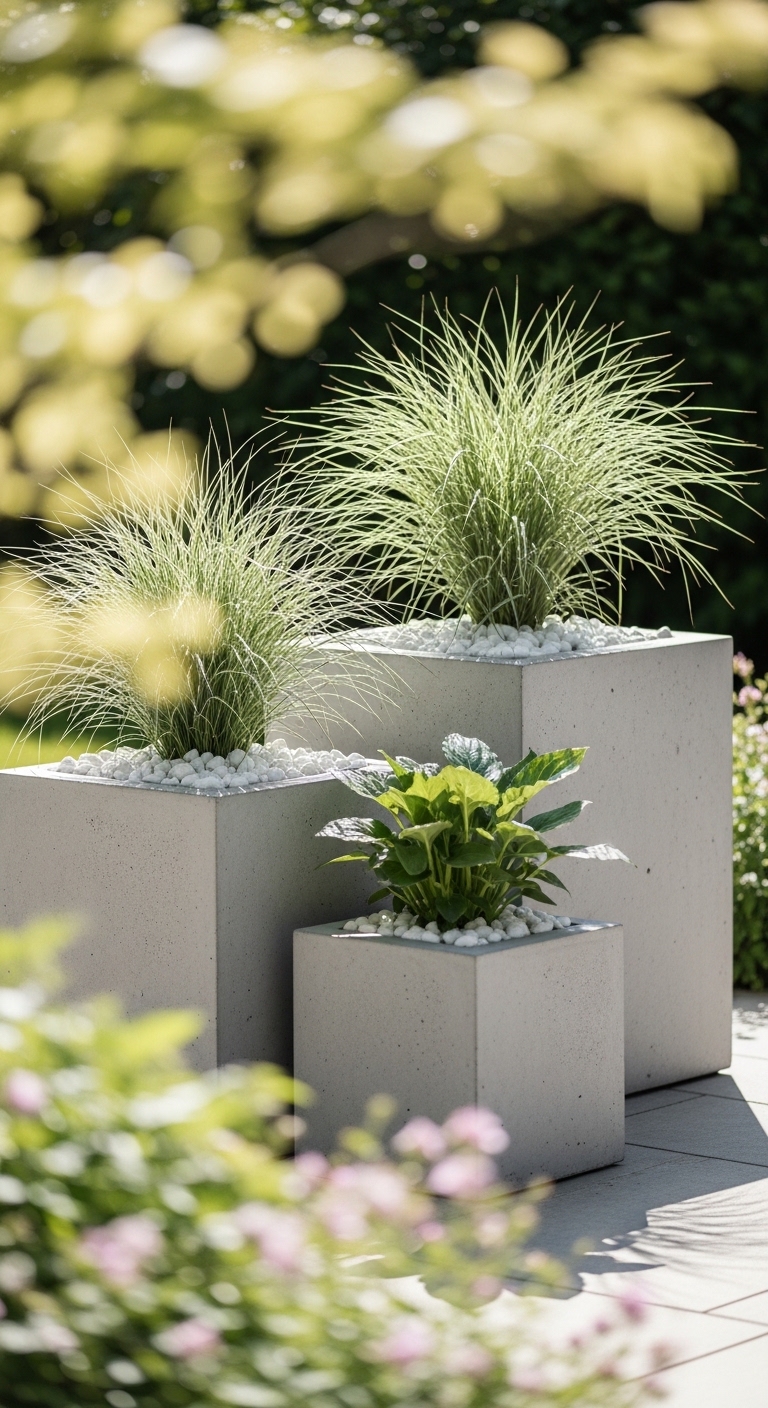
Concrete cube planters bring a clean, modern shape that instantly makes an outdoor space feel more organized. They look especially good on patios, beside steps, or near seating areas where their simple lines can stand out against soft greenery. Try using two or three in different sizes and plant them with ornamental grasses, compact shrubs, or leafy plants for contrast. A layer of white stone or dark gravel on top gives them a more finished look and adds a neat, designer feel.
- Best For: Modern patios, front porches, and small courtyard spaces that need structure.
- Budget Tip: Start with one larger cube planter as a focal point, then add smaller matching pieces later.
- Styling Idea: Pair the cool concrete finish with black metal, light wood, or white gravel for a calm contemporary mood.
- Practical Note: Make sure each planter has drainage holes so roots do not sit in heavy wet soil.
Tall Concrete Planters For Entryways
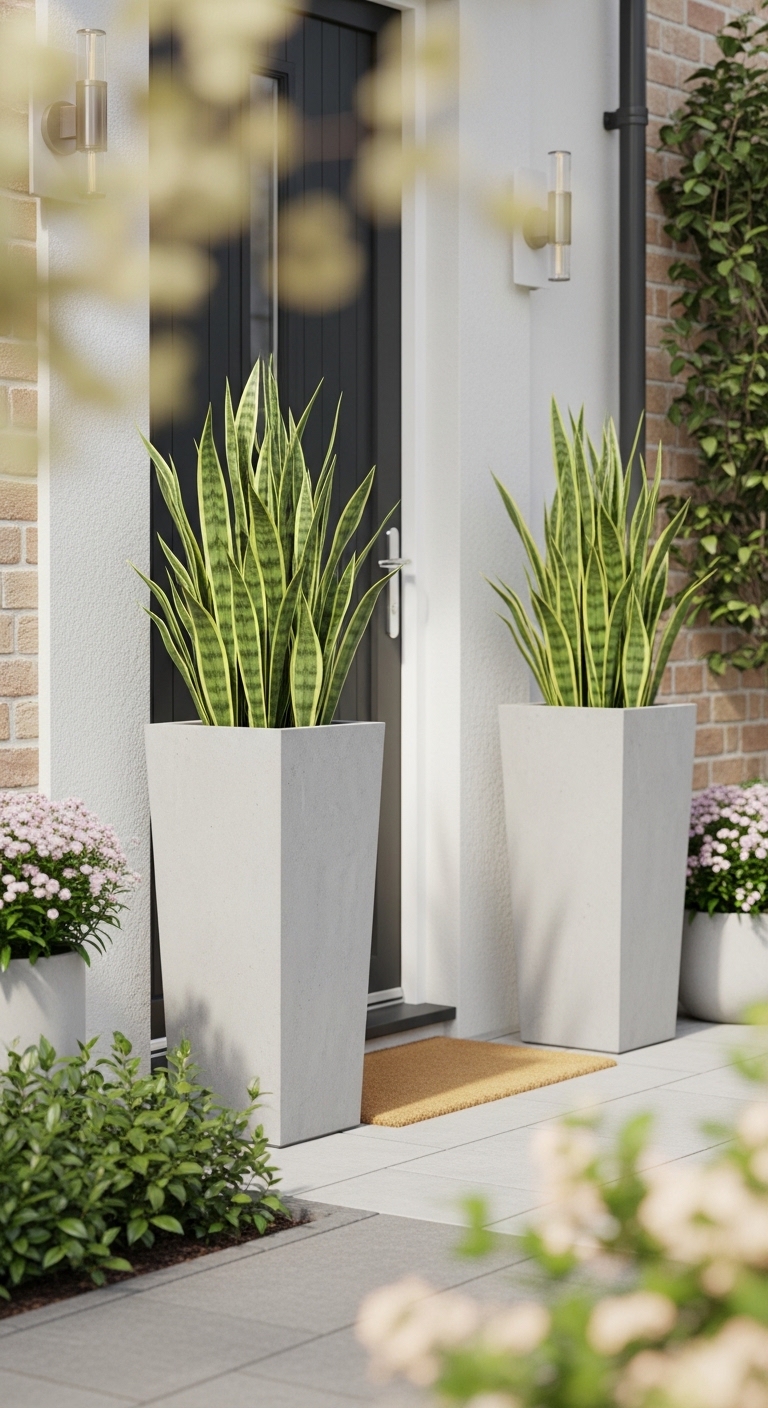
Tall concrete planters are a simple way to frame a front door or gate and make the entrance feel more welcoming. Their height draws the eye upward, which helps smaller entry spaces feel more intentional and balanced. Use a matching pair on each side of the doorway and plant them with upright greenery such as grasses, dwarf shrubs, or architectural plants. This setup looks elegant all year and can be refreshed seasonally with small flowering plants around the base if needed.
- Best For: Front doors, garden gates, and narrow porch areas.
- Budget Tip: Use two identical planters but keep the planting simple with one strong plant in each.
- Styling Idea: A symmetrical layout creates a polished, formal look that suits modern and classic homes.
- Care & Maintenance: Choose hardy plants that can handle outdoor exposure and trim them regularly to keep the shape tidy.
Round Concrete Bowl Planters With Succulents
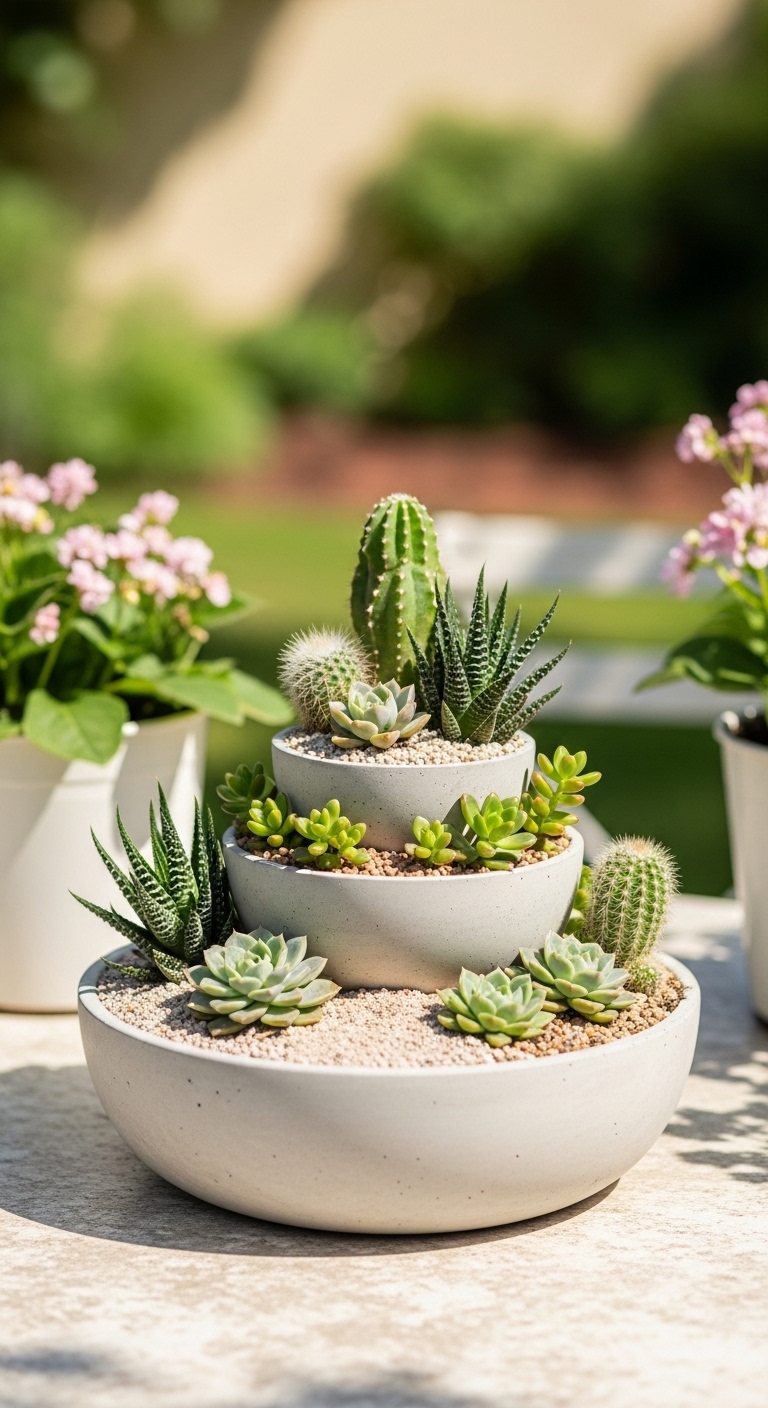
Round concrete bowl planters are ideal for low, sculptural plant displays that feel relaxed but still stylish. Their shallow shape works beautifully with succulents, cacti, and trailing plants because it lets you create layered arrangements with texture and color. Place one on an outdoor coffee table, patio step, or sunny corner where the soft curves can break up straight lines in the space. Add pebbles or coarse sand on top for a clean finish that also helps the display feel intentional.
- Best For: Sunny patios, small terraces, and low table styling.
- Budget Tip: Succulents are easy to divide and replant, so one arrangement can grow into several over time.
- Styling Idea: Mix silvery green, dusty blue, and soft sage tones for a calm desert-inspired mood.
- Practical Note: Use fast-draining soil so the planter does not stay too damp after watering.
Concrete Planter Wall With Herbs
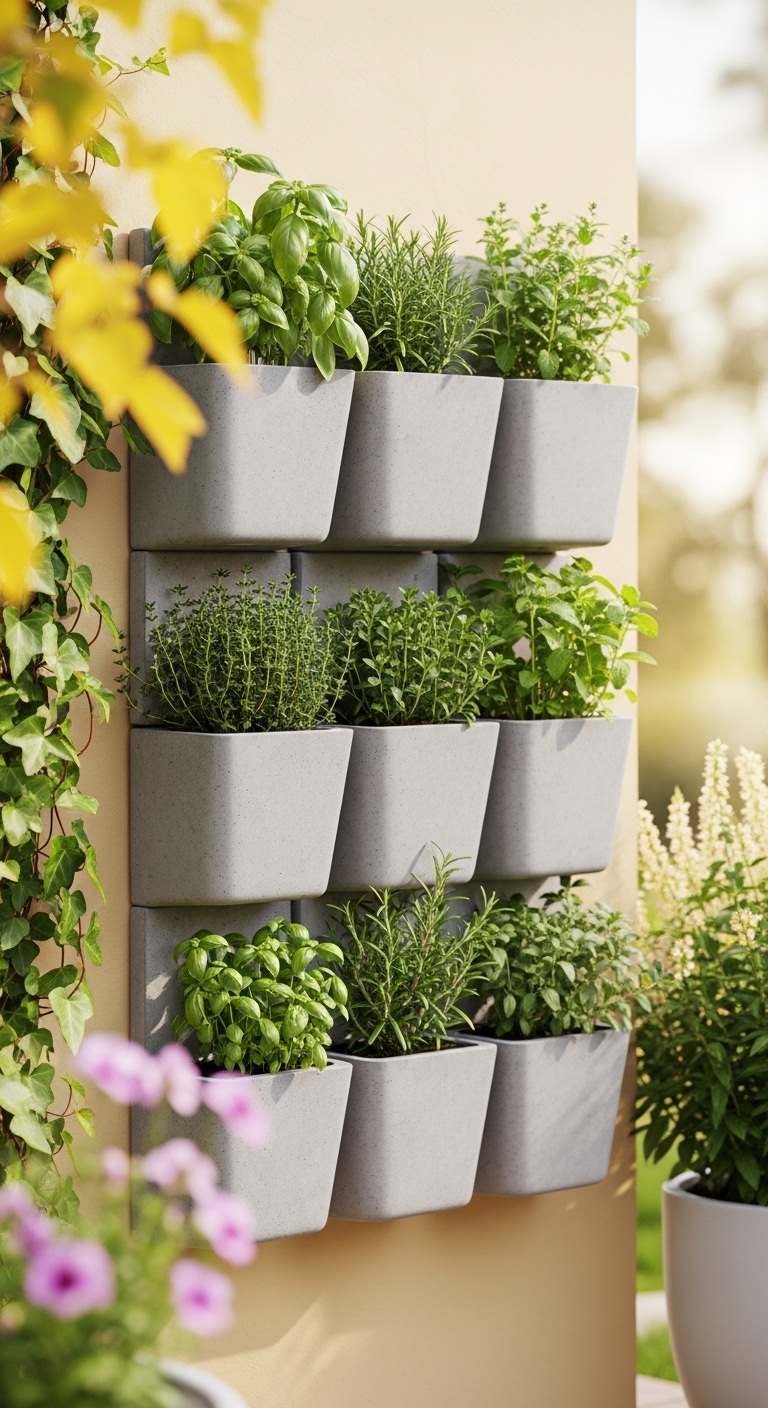
A concrete planter wall is both decorative and practical, especially if you want greenery without taking up much floor space. It turns a plain fence or wall into a feature while giving you easy access to fresh herbs for cooking. Use stacked, mounted, or tiered concrete planters and fill them with rosemary, thyme, mint, basil, and other compact herbs. The mix of soft foliage and sturdy planter texture creates a lovely contrast and makes even a small outdoor space feel full and useful.
- Best For: Small patios, balconies, and narrow garden spaces.
- Budget Tip: Build the wall gradually by adding a few planters at a time instead of doing the whole setup at once.
- Styling Idea: Keep the arrangement neat and repeated for a modern look, or vary herb types for a more relaxed cottage feel.
- Practical Note: Mount planters securely and place sun-loving herbs where they will get enough light.
Oversized Concrete Statement Planters
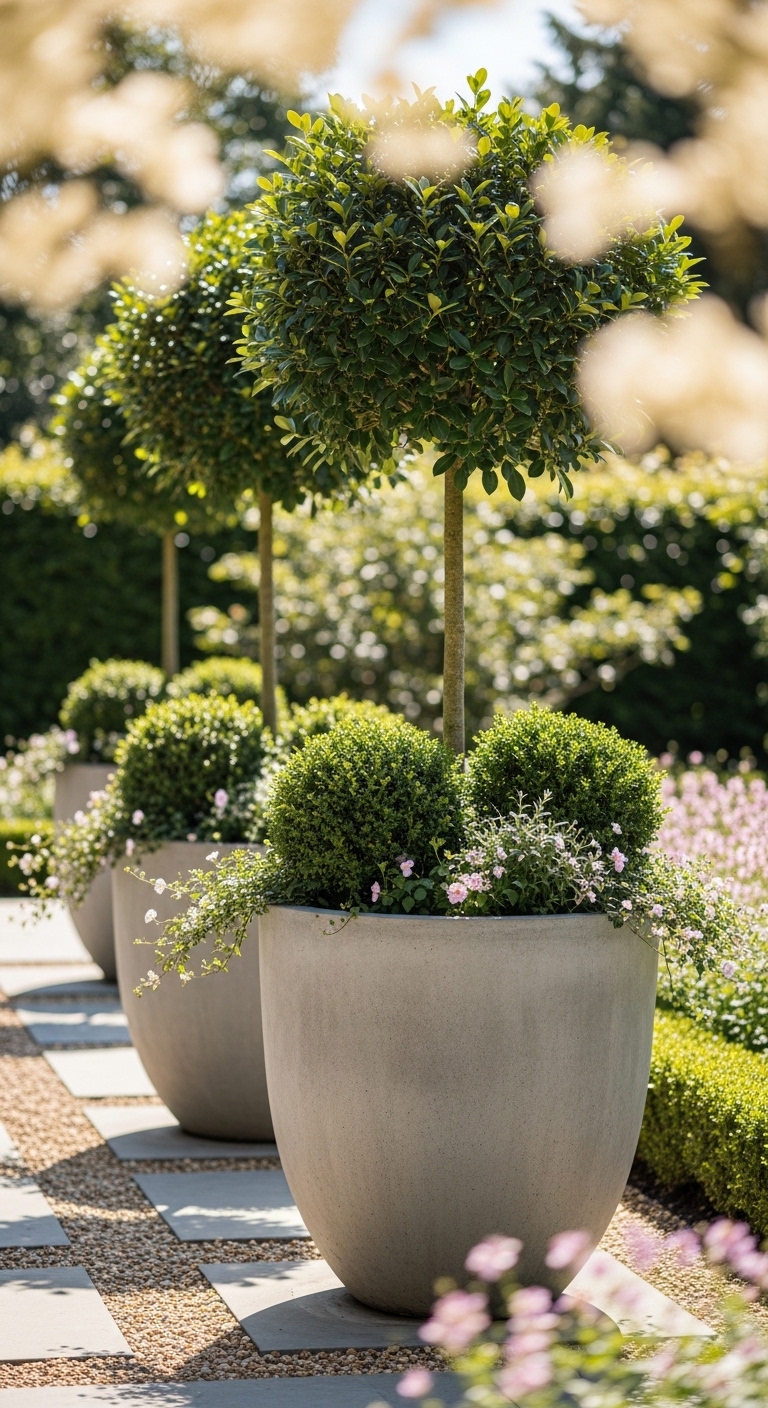
Oversized concrete planters make a bold impact and can anchor an outdoor design with very little effort. One large planter filled with a small tree, dramatic foliage plant, or dense shrub can do the work of several smaller pots. These pieces are especially useful in open spaces that need a focal point, such as a courtyard, poolside area, or wide patio. Their weight and scale make the garden feel more permanent and grounded, while the simple material keeps the look timeless rather than overdone.
- Best For: Spacious patios, open backyards, and modern courtyards.
- Budget Tip: Use one oversized planter as your main feature instead of buying many smaller containers.
- Styling Idea: Pair large concrete forms with gravel, stone, and clipped greenery for a clean architectural mood.
- Practical Note: Place heavy planters in their final position before filling them with soil to avoid difficult lifting later.
Concrete Trough Planters Along A Patio Edge
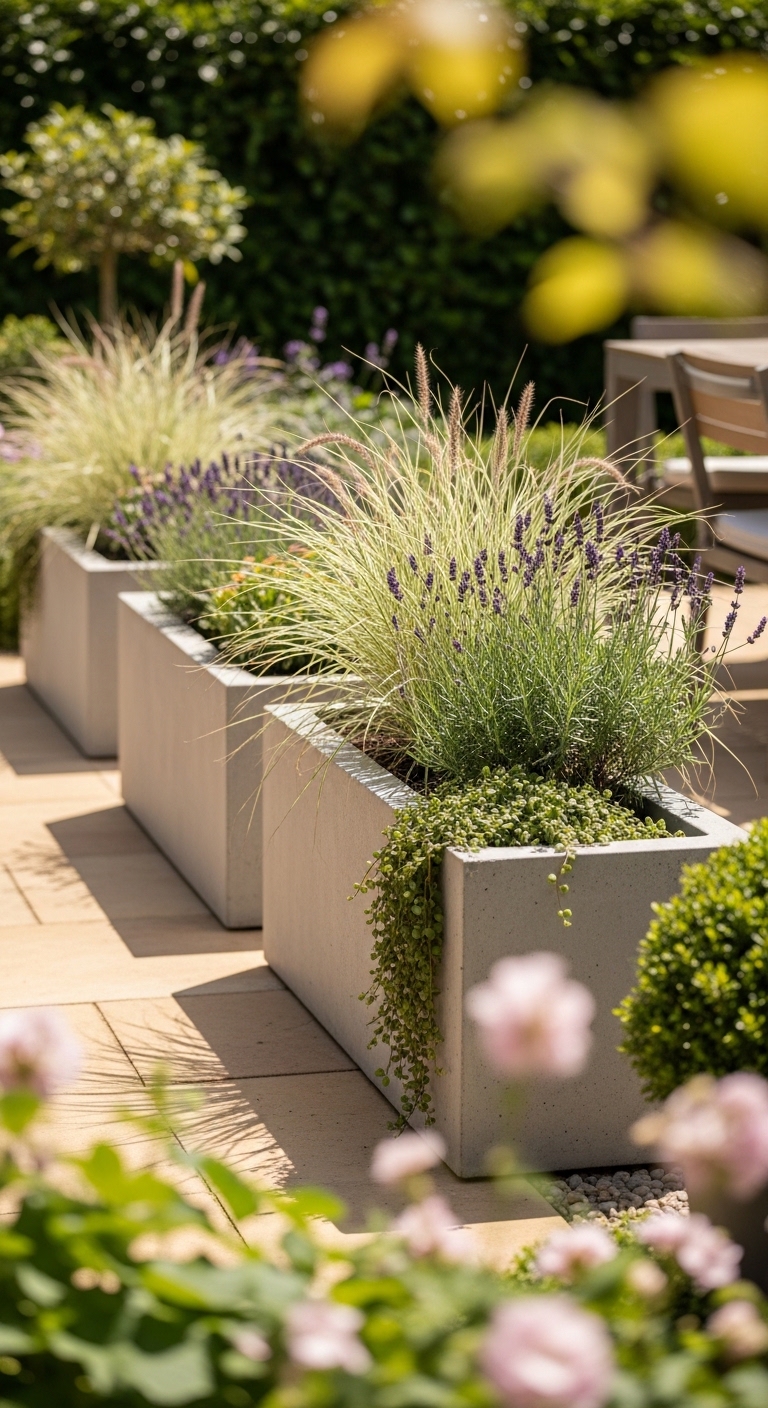
Concrete trough planters are excellent for defining borders and softening hard surfaces around patios or decks. Their long rectangular shape creates a tidy line that helps the whole area feel more finished and intentional. Plant them with ornamental grasses, lavender, trailing greenery, or seasonal flowers depending on the look you want. They can also work as a gentle divider between a seating area and the rest of the garden. This idea brings in texture and color without making the space feel crowded.
- Best For: Patio edges, decks, and outdoor dining areas.
- Budget Tip: Use fewer, longer planters to cover more space without buying lots of individual pots.
- Styling Idea: Lavender and grasses create a soft Mediterranean mood, while leafy greens keep it more modern.
- Care & Maintenance: Check watering more often in long planters because soil can dry unevenly in sunny spots.
Clustered Concrete Pots In Mixed Sizes
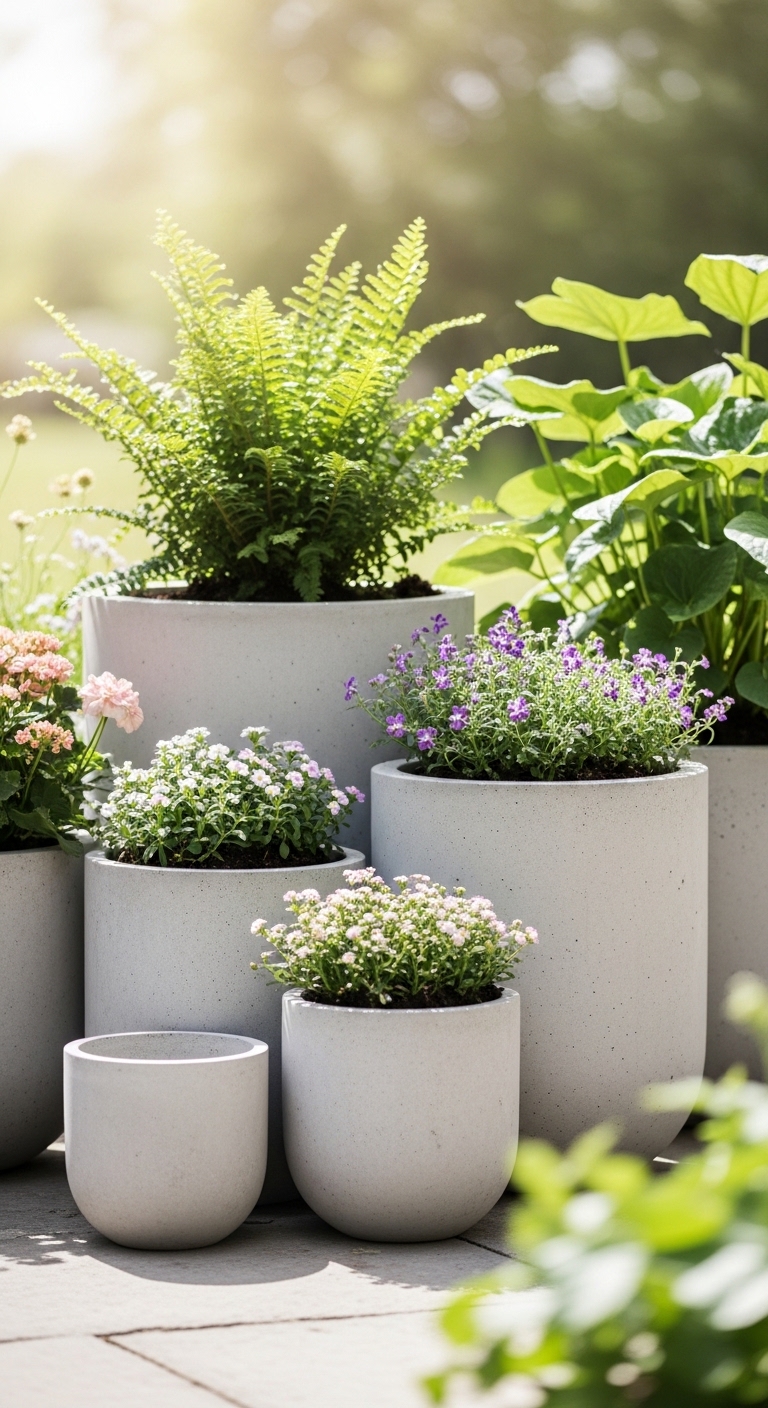
Grouping concrete pots in different sizes is a simple styling trick that adds depth and makes a garden corner feel curated. Instead of placing planters evenly around the space, cluster three to five together with varied heights and plant shapes. Use a combination of leafy plants, soft flowers, and one taller feature plant to build a layered look. This approach works especially well near a bench, beside steps, or in an empty corner that needs more warmth and personality without major changes.
- Best For: Empty corners, patio edges, and near seating zones.
- Budget Tip: Mix one new planter with older concrete-style pots to create the look without replacing everything.
- Styling Idea: Vary plant heights and leaf shapes to make the grouping feel fuller and more relaxed.
- Extra Idea: Add a small lantern, smooth stones, or mulch around the base to tie the whole display together.
Concrete Planters With Wooden Stands
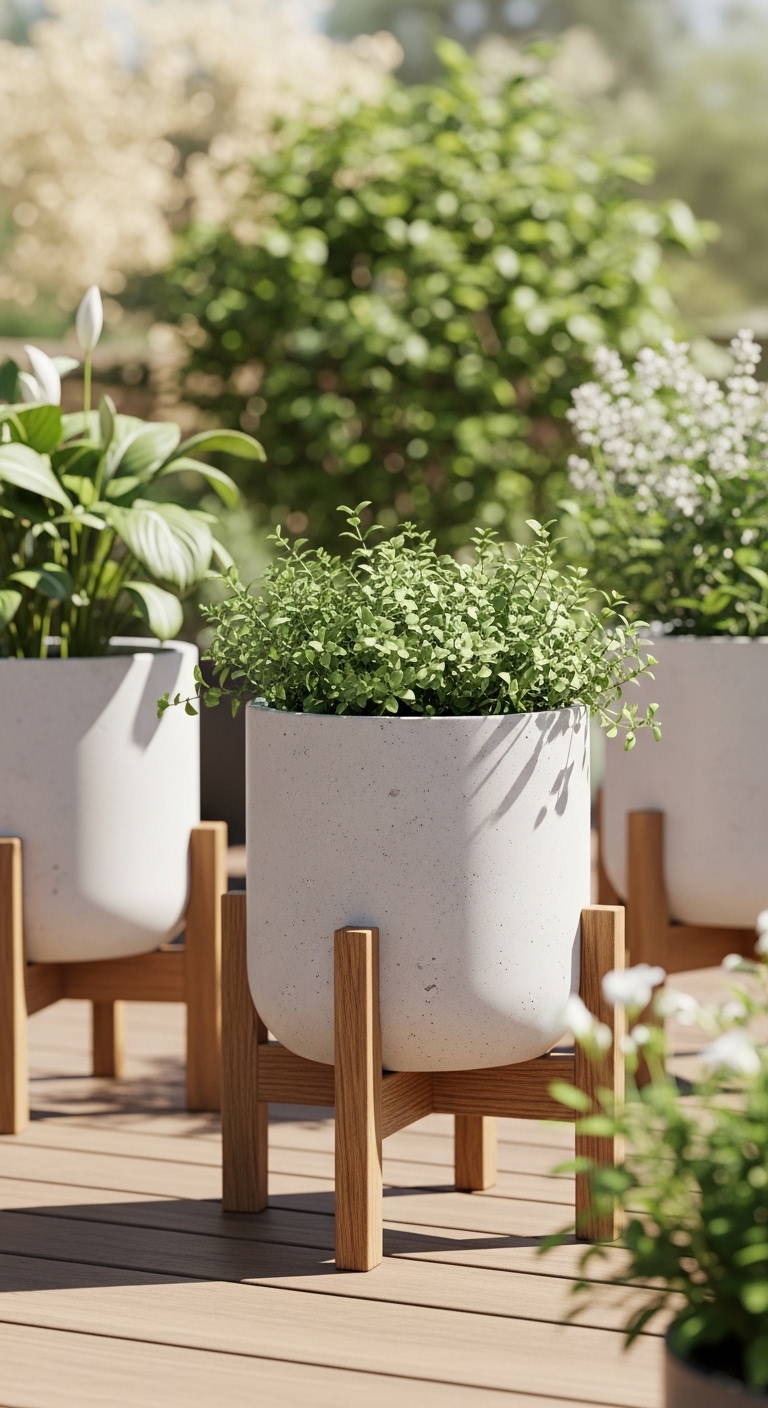
Concrete planters on wooden stands bring a nice balance of cool and warm materials, which helps outdoor spaces feel modern but still inviting. The raised height also makes plants more visible, especially on decks, porches, or compact patios where everything sits close together. Use this idea for leafy plants, compact ornamentals, or even herbs near an outdoor seating area. The clean shape of the concrete paired with natural wood creates a softer look than concrete alone and fits many decor styles.
- Best For: Decks, patios, and small outdoor seating spaces.
- Budget Tip: Use a few raised planters as accent pieces rather than elevating every pot in the area.
- Styling Idea: This combination suits Scandinavian, modern rustic, and relaxed contemporary outdoor spaces.
- Practical Note: Choose treated or weather-safe wood stands so they hold up better outdoors.
Textured Concrete Planters In A Rustic Garden
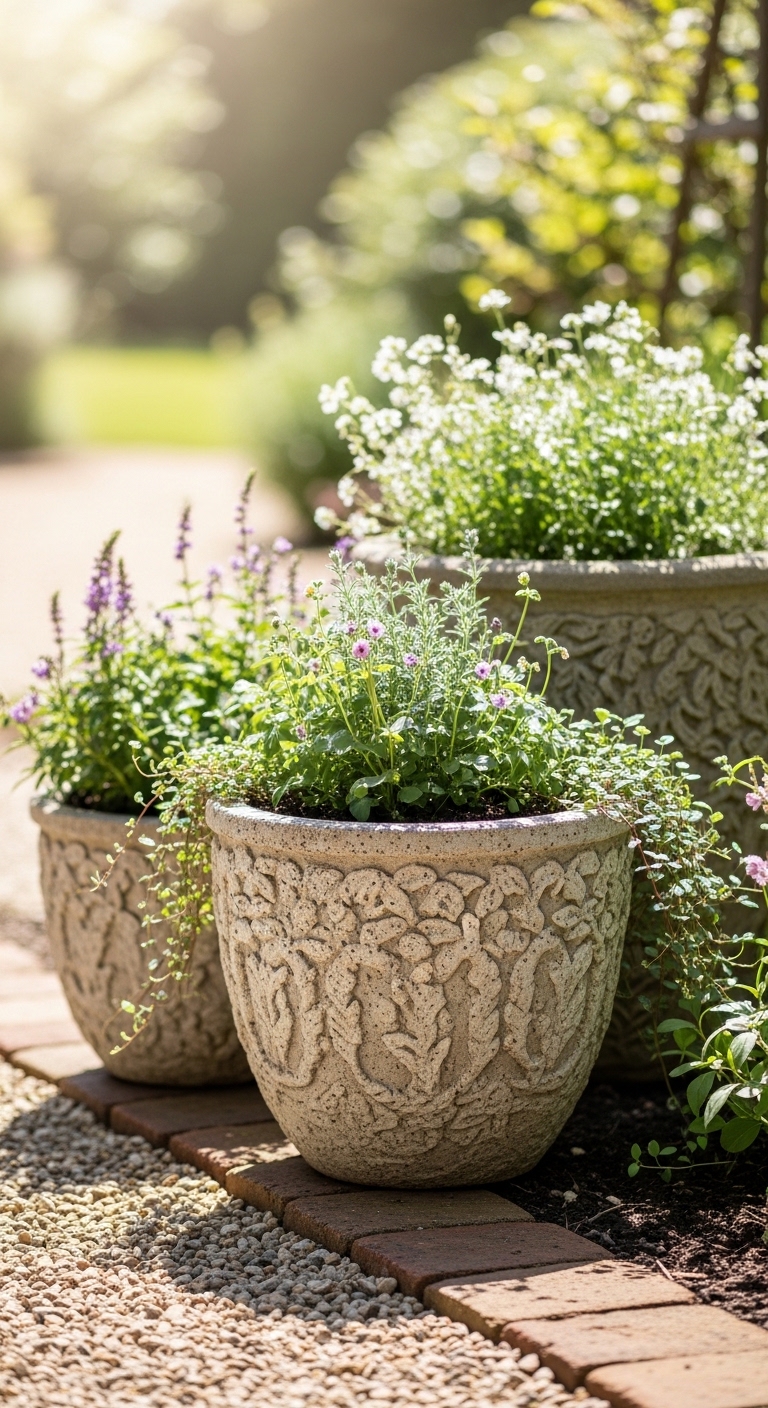
Textured concrete planters with a weathered or slightly aged finish feel right at home in rustic gardens. They blend beautifully with gravel, old brick, climbing plants, and soft cottage-style flowers. Fill them with lavender, trailing ivy, geraniums, or herbs to create a relaxed layered look with plenty of character. These planters do not need to look perfect to be attractive, which is part of their charm. They help a garden feel settled, personal, and comfortably lived-in rather than too polished.
- Best For: Cottage gardens, rustic patios, and relaxed backyard spaces.
- Budget Tip: Look for simple unfinished concrete pots and let natural weathering add character over time.
- Styling Idea: Pair them with terracotta, aged wood, and soft pink or purple blooms for a warm cottage mood.
- Care & Maintenance: Remove dead flowers and check for moss buildup if you want the pots to stay neat but still natural-looking.
Concrete Planter Corner With Small Trees
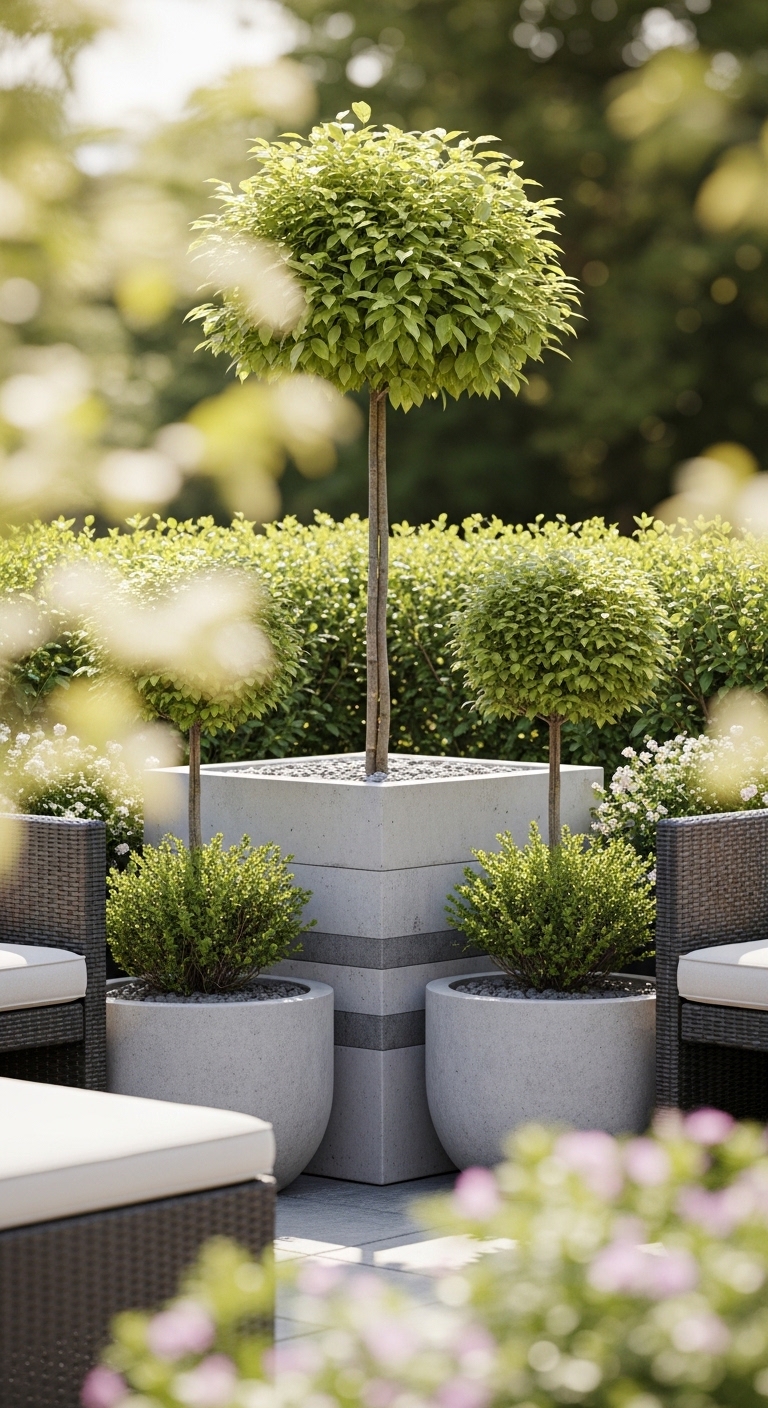
A planter corner built around small trees can turn an overlooked outdoor spot into a calm focal area. Use two or three concrete planters with compact ornamental trees, then add lower greenery around them for softness and balance. This works well beside a seating area, near a fence, or in a bare patio corner that needs height. The trees bring vertical interest while the concrete keeps the design grounded and clean. It is a simple way to create privacy, shade, and a more layered garden look.
- Best For: Patio corners, seating zones, and areas needing height or screening.
- Budget Tip: Start with one small tree in a large planter, then add smaller surrounding pots later.
- Styling Idea: Keep the palette green and neutral for a peaceful, upscale atmosphere.
- Practical Note: Choose tree varieties that stay compact and do well in containers over the long term.
Conclusion
Outdoor concrete planters can make a garden feel more stylish, structured, and welcoming without needing a full redesign. Whether you prefer clean modern lines or a softer rustic look, there is an idea here that can work for your space and budget. Start with one or two simple planter upgrades, see how they change the mood of your garden, and build from there over time.
FAQs
1. Are concrete planters good for outdoor use?
Yes, concrete planters are a strong choice for outdoor spaces because they are durable, sturdy, and work with many garden styles. They hold up well in sun and wind, though proper drainage is important so plants stay healthy.
2. How can I decorate with concrete planters on a small budget?
Start with one or two key pieces in visible spots like an entryway or patio corner. You can keep costs down by using simple plants, repeating the same planter style, and building your collection slowly over time.
3. Are concrete planters suitable for renters?
They can be, especially if you choose portable sizes rather than very large permanent pieces. Grouped planters, troughs, and raised planters can all add style without changing the actual structure of the outdoor space.
4. What plants look best in outdoor concrete planters?
Ornamental grasses, herbs, succulents, compact shrubs, trailing plants, and small trees all work well. The best choice depends on the planter size, sunlight, and the overall mood you want, whether that is modern, rustic, or lush and layered.
5. Do concrete planters need special care?
They are fairly low-maintenance, but it helps to check for cracks, clean off dirt buildup, and make sure drainage holes stay open. Using the right potting mix and not overwatering will also protect both the planter and the plant roots.
6. What is the easiest concrete planter idea for beginners?
Clustered pots in mixed sizes are often the easiest place to start. You only need a few planters, a simple mix of plants, and a corner or patio edge where you want more texture, height, and visual interest.


